


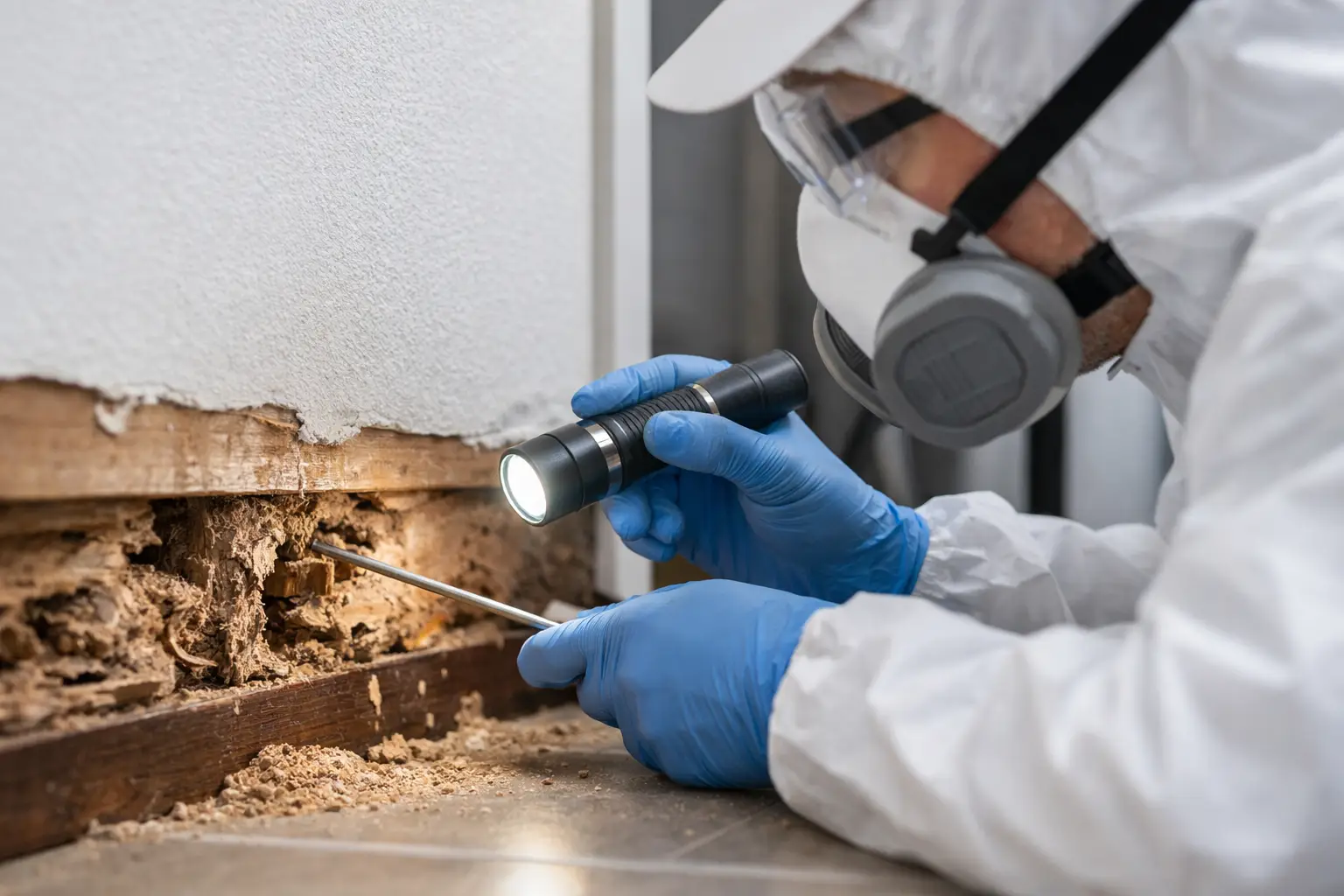
A door that suddenly sticks, a hollow sound from a wall, or a thin line of mud near a skirting board can point to a far bigger problem. The early signs of termite damage are often quiet and easy to dismiss, but subterranean termites can keep feeding inside timber, flooring, and concealed structural areas long before obvious damage appears.
For homeowners, that can mean avoidable repair costs and disruption. For property and facility managers, it can also affect building condition, tenant confidence, operations, and maintenance budgets. Acting on the first credible warning signs gives a professional termite inspection the best chance of locating the activity before it spreads.
Why Termite Damage Is So Easy to Miss
Subterranean termites avoid open air and light. Rather than eating exposed wood in plain sight, they travel through soil, wall voids, cracks around pipes, and protected routes behind finishes. Their food source is cellulose, which is found not only in structural timber but also in door frames, built-in cabinets, wood flooring, cardboard, paper products, and some decorative materials.
In Singapore’s warm, humid conditions, moisture and ground contact can create favorable conditions around a property. A small colony does not always create visible damage straight away, and a large colony may remain concealed behind paint, tiles, or furniture. That is why a surface check alone cannot confirm that a property is clear of termites.
7 Signs of Termite Damage to Check Carefully
1. Hollow-sounding or weak wood
Termites often consume wood from the inside out, leaving a thin outer layer that can look intact at first glance. Tap gently on suspect door frames, baseboards, cabinet panels, or exposed beams. A hollow sound, a papery feel, or wood that gives way under light pressure deserves attention.
Do not assume every hollow sound means termites. Water damage, timber decay, or poor-quality materials can create similar symptoms. The concern increases when weak wood appears alongside mud tubes, shed wings, or unexplained cracks.
2. Mud tubes on walls, foundations, or pipes
Pencil-sized mud tubes are among the clearest signs of subterranean termite activity. These covered tunnels protect termites as they move between the ground and a food source. Look along exterior walls, foundation edges, utility lines, crawl spaces, under sinks, around air-conditioning pipe entries, and in service areas.
Breaking a tube open may reveal pale, soft-bodied termites, but an empty tube does not mean the problem has ended. Termites may have moved temporarily or created another route nearby. A trained inspection is needed to trace the activity and identify the extent of the infestation.
3. Doors and windows that become difficult to open
A sticking door or window is commonly blamed on humidity, settlement, or aging hardware. Sometimes that is correct. However, termite feeding can weaken the surrounding timber and lead to subtle warping, while termite activity can introduce moisture into damaged wood.
Pay attention when a previously smooth-fitting door starts catching without a clear reason, especially if the frame also sounds hollow or has fine cracks in the paint. Repeated adjustments to the door may mask a pest issue rather than solve it.
4. Blistered paint, bubbling finishes, or unexplained surface marks
Paint that bubbles, peels, or appears uneven can resemble a moisture issue. In some cases, termites feeding close to the surface create changes that show through paint, wallpaper, or laminate finishes. Small raised areas on walls, ceilings, or wooden fixtures should be investigated if there is no known leak.
This is not a reason to remove finishes or start repairs immediately. Opening affected areas without a clear treatment plan can disturb active termites and make their movement harder to track. Document the location, avoid painting over it, and arrange an assessment.
5. Fine cracks in wood, flooring, or trim
As termites tunnel through timber, the remaining outer surface can split, crack, or show narrow channels. Damaged flooring may feel softer than usual, sag slightly, or produce a new creaking sound. Wooden trim and cabinet edges may show small cracks that were not present before.
These signs can also come from normal movement, changing humidity, or wear. What matters is the pattern. Multiple new defects in timber elements, particularly near moist areas or ground-level locations, should not be treated as routine cosmetic damage.
6. Swarmers or discarded wings indoors
Winged termites, often called swarmers, emerge when a mature colony is looking to establish new nesting sites. They are frequently confused with flying ants, but termite swarmers have straight antennae, a broad waist, and wings that are similar in size.
You may not see the insects themselves. Instead, you may find clusters of equal-length discarded wings near windows, light fixtures, doorways, or ventilation points. This can indicate termite activity in or close to the building and warrants prompt professional attention.
7. Frass-like debris or small piles near timber
Drywood termites produce pellet-like droppings, while subterranean termites typically use soil and debris to construct their tunnels. Although subterranean termites are a major concern in Singapore, any unexplained pile of granular material near wood should be checked rather than brushed away.
The material may be sawdust from repairs, insect debris, or another pest. A pest professional can identify what is present and avoid a treatment decision based on guesswork.
Areas Where Termites Commonly Start
Termite activity is more likely where timber, moisture, and concealed access come together. Homeowners should pay close attention to bathrooms, kitchens, utility spaces, storerooms, balconies, planter edges, and locations where plumbing enters the building. Stored cardboard boxes, timber offcuts, and wood-based furniture placed directly on floors can also make inspections more difficult.
In commercial settings, inspect loading areas, false ceilings, pantry cabinets, partition walls, storerooms, electrical and plumbing service zones, and perimeter landscaping. F&B operators should be particularly careful around damp service areas and storage spaces, where hygiene requirements make early detection and controlled treatment especially valuable.
A property can be clean and still have termites. Poor housekeeping may create hiding places, but subterranean termite risk is mainly about access, moisture, and available cellulose rather than cleanliness alone.
What to Do When You Suspect Termites
Avoid spraying household insecticide into a suspected termite entry point. It may kill a few visible insects but will not address the colony, and it can cause termites to retreat and establish alternate routes. Similarly, avoid pulling down damaged panels, removing mud tubes, or carrying affected wooden items through the building before an inspection.
Instead, take clear photos, note the location and date, and keep the area accessible. If you see wings or insects, collect a small sample in a sealed container only if it can be done safely. Then arrange a professional termite inspection. A proper assessment considers visible evidence, likely entry points, moisture conditions, construction details, and concealed risk areas before recommending treatment.
Treatment should match the property and the evidence found. Depending on the situation, this may involve targeted soil treatment, baiting systems, localized corrective work, or a combination of methods. The right approach is not necessarily the fastest-looking one. Effective termite control focuses on eliminating active pressure, protecting vulnerable areas, and monitoring for future activity with minimal disruption.
Prevention Still Matters After Treatment
Termite protection is not a one-time task. Fix plumbing leaks promptly, keep timber and cardboard away from damp ground-level areas, and avoid allowing soil or landscaping materials to bridge directly against building surfaces. Routine inspections are especially sensible after renovations, water damage, landscaping changes, or the discovery of termites in a neighboring property.
For businesses, documenting inspections and corrective actions supports more consistent property maintenance. For households, it offers reassurance that small changes are being assessed before they turn into extensive repairs. Servcare’s professional termite control approach is built around inspection-led recommendations and long-term prevention, not a temporary surface fix.
If something in your property looks different, sounds hollow, or feels weaker than it should, trust that observation. Early action is often the most practical way to protect the structure, the people using it, and your peace of mind.