

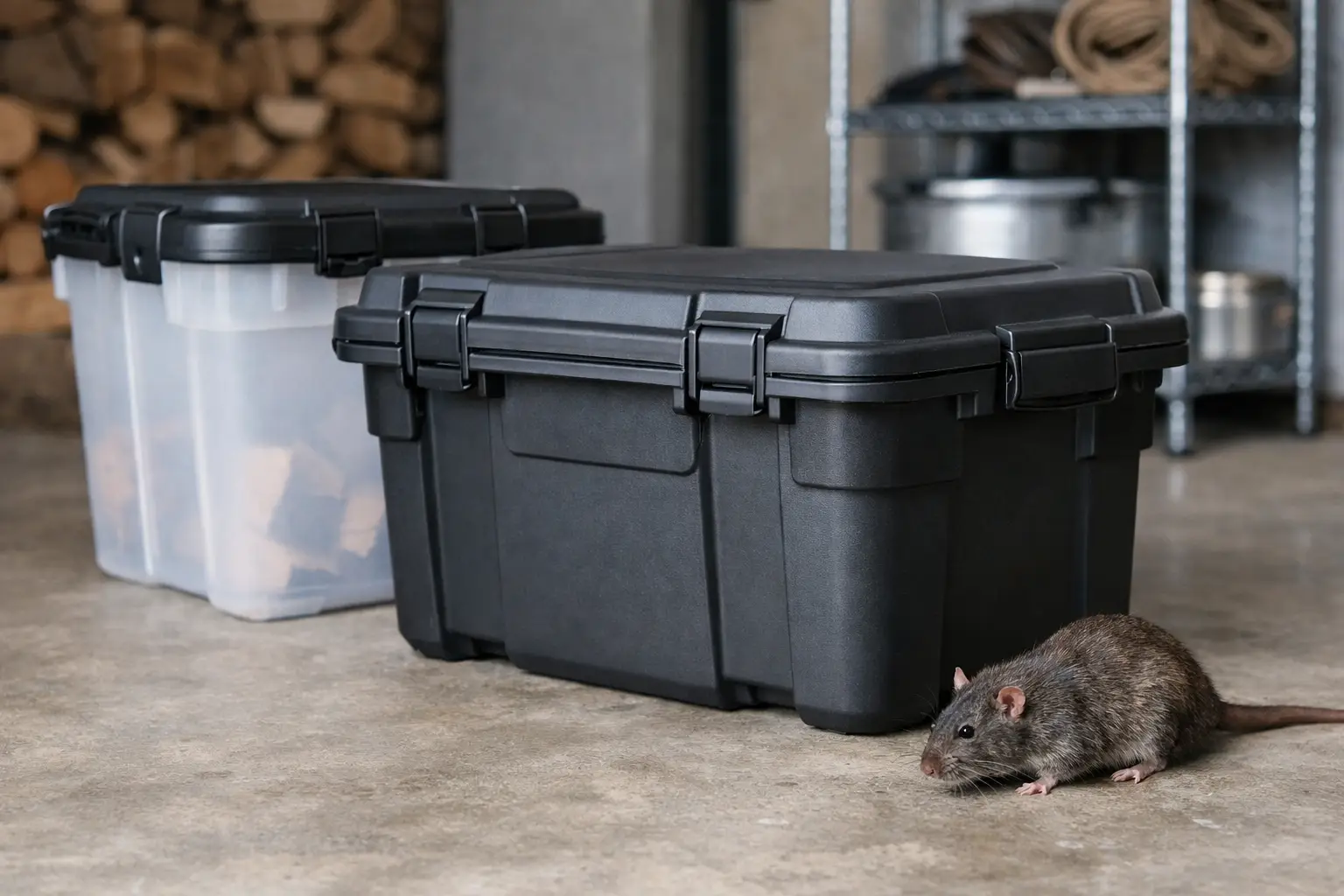
A torn rice bag, scattered pet food, or chew marks on a cardboard carton is more than a storage problem. It is a sign that rodents have found a dependable food source. The best rodent proof storage containers help remove that opportunity, protecting food, supplies, and stock while making early signs of pest activity easier to spot.
For homes, the right container can prevent pantry contamination and reduce waste. For F&B operators, retailers, offices, and industrial facilities, it supports hygiene standards, protects inventory, and reduces the operational risk that comes with a rodent sighting. The key is choosing a container that rodents cannot chew through, pry open, or access through a poorly fitted lid.
What Makes Storage Containers Rodent Proof?
A container is not rodent proof simply because it has a lid. Rats and mice can chew through paper, thin plastic, fabric, and many lightweight plastic bins. They can also exploit small gaps around loose lids or damaged seals.
A genuinely protective container has three features: a chew-resistant body, a tight-closing lid, and a design that remains secure during normal handling. Smooth, hard surfaces are preferable because they offer fewer edges for rodents to grip or gnaw. The lid should close evenly around the rim without warping, cracking, or leaving a visible gap.
No container should be treated as a complete substitute for rodent control. If droppings, gnaw marks, greasy rub marks, nesting material, or live rodents are present, the source of the infestation still needs professional attention. Storage is one part of prevention, not the entire solution.
Best Rodent Proof Storage Containers by Material
The right material depends on what you need to store, how often staff or family members access it, and whether the container will be exposed to moisture, heat, or frequent movement.
Metal containers for high-risk food storage
Galvanized steel, stainless steel, and other heavy-gauge metal containers are among the strongest choices for dry goods. Rodents cannot chew through properly constructed metal, making these containers particularly useful for rice, flour, grains, cereal, pet food, bird seed, and bulk ingredients.
Look for a close-fitting metal lid with a secure latch or clamp. A loose metal lid is still vulnerable if a rodent can push it aside. Metal containers may cost more and can be heavier to move, but their long service life often makes them a sensible choice for bulk storage areas and commercial back-of-house operations.
For food businesses, metal containers also have a practical hygiene advantage. They are durable, easy to inspect, and less likely to absorb odors than porous materials. Keep their exterior clean, however, as grease or food residue can still attract rodent activity around the container.
Thick, hard plastic containers for everyday organization
Heavy-duty plastic bins with locking lids are convenient for household supplies, packaged goods, cleaning materials, and non-food stock. They are lighter than metal, stack easily, and are often transparent, which helps teams see what is inside without opening every box.
The trade-off is that not all plastic is equal. Thin, brittle, or flexible plastic can be chewed or cracked. Choose rigid, food-safe plastic with a reinforced rim and multiple locking points. Inspect it regularly for bite marks, stress cracks, and warped lids, especially if it is stored in a garage, warehouse, storeroom, or utility area where rodent pressure may be higher.
Hard plastic is a good option for items that need frequent access. For high-value food ingredients or areas with confirmed rodent activity, metal provides greater reassurance.
Glass jars for small dry goods
Glass jars with tightly fitted screw-top lids work well for smaller quantities of spices, tea, coffee, baking ingredients, snacks, and dried goods. Glass is chew-proof, nonporous, and easy to clean. Clear jars also make it easier to notice spoilage, insects, or low stock levels.
Their limitation is breakage. Glass may not be suitable in busy kitchens, storage rooms with heavy traffic, or facilities where a dropped container could create a safety and contamination concern. If you use glass, place jars on stable shelves and avoid overstacking them.
Food-grade buckets with gasket lids
Food-grade buckets can be a practical middle ground for bulk dry ingredients, animal feed, and emergency supplies. Select heavy-duty buckets with gasket-sealed lids that require deliberate force to open. Some lids use screw-on designs, while others use tight snap seals with a removable access cover.
A standard bucket lid that simply presses into place may not be enough. Check that the lid remains firm after repeated opening and closing. If the bucket shows cracks near the handle, rim, or base, replace it before it becomes an easy entry point.
How to Choose the Right Container Size and Closure
A good container should match the amount of stock you normally keep. Oversized containers create unnecessary empty space, which can make food management harder and lead to stale products. Containers that are too small encourage people to leave excess food in its original bag or carton, defeating the purpose of secure storage.
For households, transfer frequently used dry goods into manageable containers that can be cleaned and refilled easily. Keep backup stock sealed until needed. For commercial premises, use a consistent container system that supports first-in, first-out stock rotation and clear labeling.
Pay close attention to the closure. A screw-top, clamp lid, locking latch, or gasket seal is generally more dependable than a simple loose cover. Test each lid by lifting the container carefully from the top. If it shifts, pops open, or leaves a gap, it is not appropriate for rodent-sensitive storage.
Storage Habits That Make Containers More Effective
Even the strongest container will have limited value if the surrounding storage area gives rodents shelter, water, or other food sources. Place containers on shelves or racks rather than directly on the floor whenever possible. This improves visibility during cleaning and inspection, and it reduces the hidden spaces rodents prefer.
Keep containers a short distance from walls. That gap allows you to check for droppings, gnaw marks, and rub marks along common rodent travel routes. Avoid packing storage rooms so tightly that spills and pest evidence cannot be seen.
For reliable control, maintain these practices:
- Clean up crumbs, spills, and leaking packages promptly.
- Keep cardboard cartons to a minimum, especially in food storage areas.
- Label containers with contents and refill dates so old stock is not forgotten.
- Remove damaged bins, bags, and lids from use immediately.
- Inspect shelves, floor edges, doors, and utility openings for signs of rodent entry.
Cardboard deserves special attention. It is convenient for deliveries, but it can provide harborage and is easily damaged by rodents. Move supplies from delivery cartons into secure containers or clean shelving as soon as practical, particularly in kitchens, storerooms, and stock areas.
Common Mistakes to Avoid
One common mistake is assuming sealed retail packaging is enough. Many food bags, pet food sacks, and snack packages are designed for consumer convenience, not pest exclusion. Once opened, they should be transferred into a suitable container or placed inside a larger secure bin.
Another mistake is relying on containers while ignoring entry points. A rodent can continue to contaminate surfaces, damage wiring, or nest behind equipment even if it cannot reach stored food. Gaps around pipes, damaged door sweeps, poorly sealed utility penetrations, and cluttered corners all require attention.
It is also risky to reuse containers that have been contaminated by rodent droppings or urine without proper cleaning. Wear appropriate protective equipment, avoid sweeping or vacuuming dry droppings, and follow safe cleaning procedures. When in doubt, replace inexpensive or badly damaged storage materials.
When Secure Storage Is Not Enough
If rodent signs continue after food and supplies have been secured, there may be an active nesting site or an access route elsewhere on the property. This is particularly common in shared buildings, food premises, warehouses, and properties with false ceilings, drainage connections, loading areas, or nearby construction activity.
Professional rodent management starts with inspection. The goal is to identify the species, likely access points, food sources, nesting conditions, and travel paths before recommending treatment and exclusion measures. A tailored approach helps address the infestation without relying on temporary fixes alone.
Servcare supports homes and businesses with professional rodent control focused on safe treatment, practical prevention, and long-term protection. Secure storage containers are a valuable first line of defense, but lasting peace of mind comes from keeping rodents out of the property in the first place.
Choose containers that suit your stock and daily workflow, then make inspection and housekeeping part of the routine. A clean, accessible storage area gives rodents fewer opportunities and gives you a much better chance of catching a problem before it grows.