

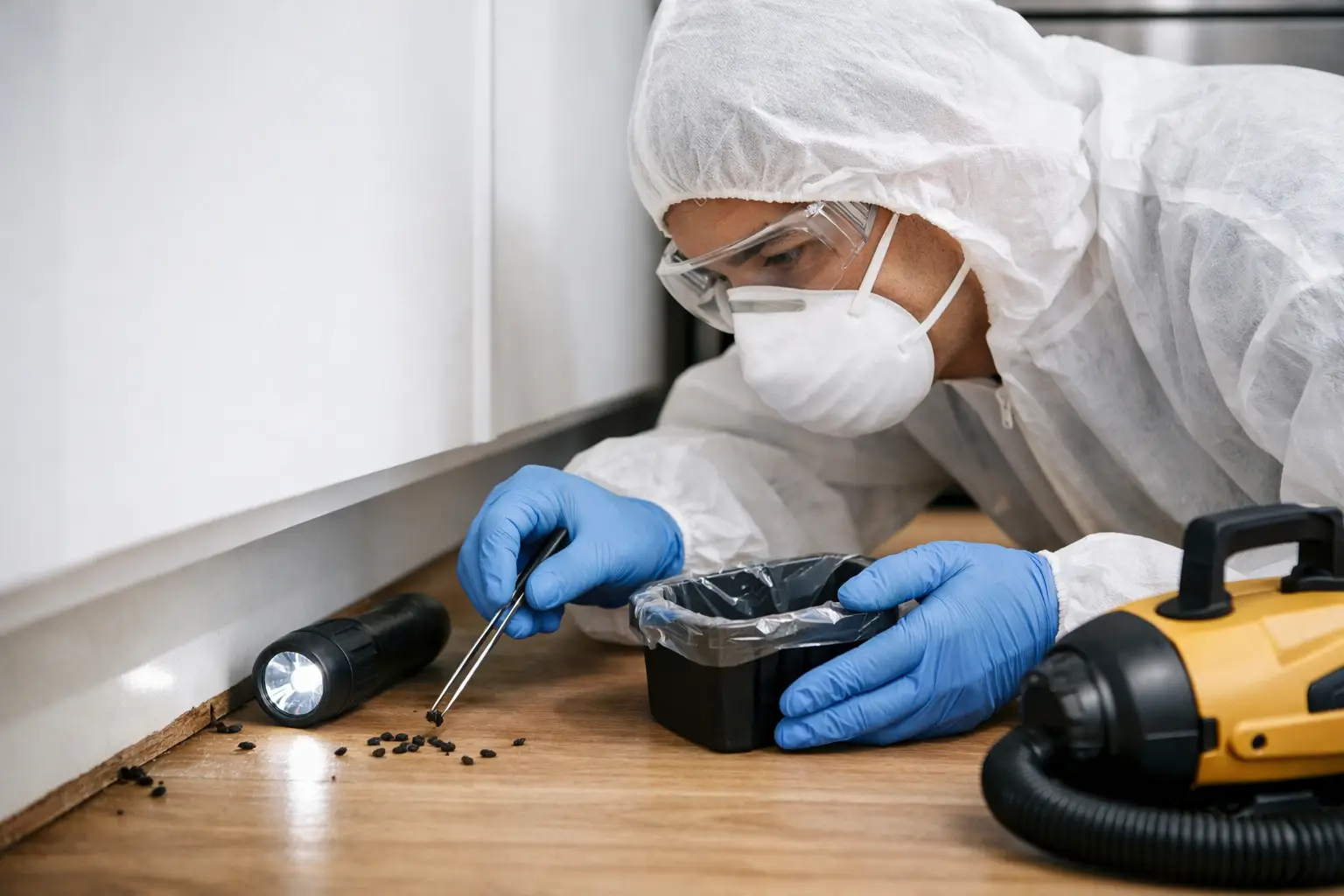
A few dark pellets behind a refrigerator, under a sink, or near stored cartons are not simply a cleaning issue. They can indicate active rodent movement, contaminated surfaces, and an access point that still needs to be closed. Knowing how to manage rodent droppings safely protects the people using the space while helping you address the infestation behind the mess.
Rodents can contaminate food, preparation areas, stockrooms, and shared spaces through droppings, urine, saliva, and nesting materials. For homes, the concern is family health and the possibility of a growing infestation. For businesses, especially food and beverage operators, the issue can also affect hygiene standards, operational continuity, and customer confidence.
How to manage rodent droppings without spreading contamination
The first rule is simple: do not sweep, brush, or vacuum dry rodent droppings. Dry cleanup can disturb contaminated dust and send particles into the air. This is particularly risky in enclosed, poorly ventilated spaces such as storerooms, false ceilings, cabinets, and utility rooms.
Before cleaning, keep children, pets, customers, and unnecessary staff away from the affected area. If the space has been closed, open windows and doors where possible and allow fresh air to circulate for at least 30 minutes. Wear disposable gloves. In areas with substantial droppings, nesting material, or signs of a larger infestation, use a properly fitted mask and consider professional assistance rather than attempting extensive cleanup yourself.
Wet the area before lifting the droppings
Prepare a household disinfectant according to its label instructions, or use a bleach solution made with one part bleach to nine parts water. Never mix bleach with other cleaning chemicals, particularly ammonia-based products, as dangerous fumes can result.
Spray the droppings, urine marks, and nearby surfaces until thoroughly wet. Leave the disinfectant in place for about five minutes so it has time to work. Use paper towels to lift the material carefully, rather than rubbing it across the surface. Place used towels and disposable gloves in a sealed bag before putting them into a covered trash bin.
Once the visible droppings are removed, disinfect the surrounding floor, shelf, wall edge, or appliance exterior again. Wash reusable cleaning equipment separately with hot water and detergent. Finish by washing your hands thoroughly with soap and water, even if you wore gloves.
Treat food and packaging with caution
Food exposed to rodent droppings or urine should be discarded. This includes unsealed food, open ingredients, and paper or plastic packaging that may have been gnawed, soiled, or stored directly beside droppings. Do not assume that wiping the outside of a contaminated package makes the contents safe.
Cans, glass jars, and other fully sealed containers may be retained only if they are undamaged and can be cleaned thoroughly before being returned to storage. In a commercial kitchen, pantry, or warehouse, separate affected stock immediately and inspect nearby goods as well. A single dropping near dry goods may reveal a route through the storage area, not just one isolated incident.
Identify what the droppings are telling you
Cleaning removes the immediate contamination, but it does not remove the rodents. Fresh droppings are often darker and may look slightly moist, while older droppings become duller, drier, and more brittle. However, appearance alone cannot confirm whether activity is current or identify the rodent species with certainty.
Look for supporting signs around the area. These may include gnaw marks on packaging or cables, shredded paper or fabric used for nesting, greasy rub marks along walls, an ammonia-like odor, and small gaps around pipes, doors, vents, or drains. In commercial properties, inspect loading bays, waste storage areas, ceiling voids, electrical rooms, and stockrooms. In homes, check kitchens, laundry areas, roof spaces, garages, and cabinets beneath sinks.
It also matters where the droppings are found. Scattered pellets behind an appliance may point to a travel route. Repeated accumulations in one corner can suggest nesting nearby. Droppings on shelves or countertops may indicate climbing activity and require a wider sanitation check, especially where food is handled.
Stop the conditions that keep rodents coming back
Rodents enter properties for three basic reasons: food, water, and shelter. Effective prevention means reducing all three while sealing access points. Traps alone may lower activity temporarily, but they will not provide lasting control if rodents can continue entering and feeding.
Start with food storage. Keep dry goods, pet food, and ingredients in sturdy containers with secure lids. Clean crumbs, grease, and spills promptly, including those beneath equipment and along wall edges. Do not leave dishes, food waste, or open pet bowls out overnight. For businesses, make sure waste bins have tight-fitting lids and are emptied on a reliable schedule.
Water control is equally practical. Repair dripping faucets, leaking pipes, and damaged drain connections. Avoid standing water in trays, floor drains, utility areas, and outdoor containers. Even a small, consistent water source can support rodent activity when food is available nearby.
Then focus on exclusion. Seal holes around plumbing, utility lines, conduits, doors, vents, and wall penetrations with durable materials that rodents cannot easily chew through. Door sweeps should sit close to the floor, and damaged screens should be repaired. In Singapore’s dense urban settings, shared service ducts, back-of-house areas, and neighboring units can create hidden travel routes, so a building-wide view is often needed for recurring problems.
When a rodent-dropping problem needs professional treatment
A small amount of old droppings in an obvious, limited area may be manageable with careful cleaning and prevention. The situation changes when droppings keep reappearing, are found across several rooms, or are accompanied by odors, gnawing, nests, or sightings. These signs usually mean the source has not been removed.
Professional rodent control is especially advisable for food businesses, childcare settings, healthcare facilities, warehouses, multi-unit properties, and sites with high volumes of droppings. These environments need a controlled response that protects occupants while addressing inspection, sanitation, proofing, trapping, and ongoing monitoring.
A qualified pest management team can identify likely entry routes and harborage areas that are easy to miss during routine cleaning. Treatment should be tailored to the property, its rodent pressure, and how the space is used. For example, a kitchen requires a different approach from a warehouse loading area, while a residence with pets requires careful placement and selection of control measures.
Servcare approaches rodent concerns with inspection-led treatment and long-term prevention, helping property owners address both visible contamination and the conditions that allow activity to continue. This is often the more reliable path when repeated cleaning has not stopped the problem.
Keep a simple record of recurring activity
For facility managers and business operators, record where droppings are found, when they are discovered, and what corrective action was taken. This does not need to be complicated. A clear record helps reveal patterns, such as activity after deliveries, near a particular waste area, or along one service corridor.
At home, a brief note or photo can also be useful before cleaning, particularly if you need a professional inspection later. Do not leave droppings in place for documentation. Capture the evidence quickly, clean it safely, and monitor the area for new signs.
A clean surface provides immediate reassurance. A sealed entry point, protected food source, and properly managed rodent population provide the confidence that the problem is less likely to return.