

A rodent sanitation guide businesses can use is most valuable before customers see droppings, hear scratching above a ceiling, or find damaged packaging in a storeroom. Rodents do not need an untidy property to establish activity. A small food spill behind equipment, a leaking pipe, or a poorly managed waste area can be enough to support a growing problem.
For business operators and facility managers, sanitation is not simply a cleaning task. It is a practical part of rodent prevention that protects hygiene standards, stock, staff confidence, and the reputation of the premises. It also makes professional treatment more effective by removing the resources rodents rely on.
Why sanitation is central to rodent prevention
Rats and mice need three things to remain active in a property: food, water, and shelter. Sanitation reduces access to all three. When those resources are limited, rodents are less likely to settle, breed, and travel through work areas.
This matters across many environments. In F&B premises, rodents can contaminate ingredients, equipment, and food-contact surfaces. In offices and retail spaces, they may damage cables, stored items, and interior finishes. In warehouses and industrial facilities, they can compromise inventory and create operational disruption.
Sanitation alone may not eliminate an established infestation. Rodents can persist in wall voids, ceiling spaces, drains, loading areas, and nearby external grounds. However, a clean, well-managed environment removes the conditions that allow activity to recur after treatment. The strongest results come from combining sanitation, proofing, monitoring, and targeted pest control.
Rodent sanitation guide businesses can put to work
An effective sanitation plan does not require staff to clean every surface repeatedly throughout the day. It requires clear routines that address the places rodents are most likely to feed, drink, hide, and travel.
Control food sources beyond the visible areas
Crumbs under a counter are an obvious concern, but rodents often find food in places staff do not routinely inspect. Grease beneath cooking equipment, residue in floor drains, open dry-goods bags, and waste left in service corridors can all become feeding points.
Store food, ingredients, and consumables in sealed, rodent-resistant containers wherever possible. Keep stock raised off the floor and slightly away from walls so staff can inspect behind and beneath it. This is particularly helpful in storerooms, pantries, kitchens, and receiving areas where cardboard packaging and forgotten spills can accumulate.
Cleaning should focus on removal rather than moving debris from one area to another. Sweep or vacuum crumbs from edges, wipe spills promptly, and clean grease buildup around equipment. If a piece of equipment is difficult to move, schedule periodic deep cleaning instead of allowing inaccessible areas to become permanent food sources.
Employee eating habits also matter. Eating at workstations, storing snacks in drawers, or leaving beverage cups overnight can create small but consistent food supplies. Designated eating areas and clear end-of-day cleaning expectations are usually more reliable than reminders alone.
Keep waste from becoming a nightly food supply
Waste management is one of the most common gaps in commercial rodent prevention. A bin may appear properly managed during business hours but become accessible after closing, when rodents are most active.
Use bins with close-fitting lids and avoid overfilling them. Waste bags should be tied securely, removed on schedule, and not left beside containers for collection. If waste must remain on-site, the storage area should be clean, organized, and free of loose debris or spilled liquids.
Outdoor waste zones deserve regular attention. Wash down bin surrounds when food residue or leaking bags are present, clear discarded cartons and clutter, and make sure dumpster lids can close fully. A tidy waste area will not solve every rodent issue, especially if there are entry points nearby, but it greatly reduces the reason for rodents to return.
Remove water sources that support rodent activity
Rodents can survive with surprisingly little water. Slow leaks beneath sinks, condensation around refrigeration units, standing water in drain areas, and poorly maintained mop sinks may be enough to support them.
Maintenance teams should treat recurring moisture as a pest prevention issue, not only a repair issue. Inspect plumbing beneath sinks and behind appliances, repair leaks promptly, and keep floor drains clear of food residue. Empty drip trays and avoid leaving wet mops, buckets, or cleaning cloths in enclosed service areas overnight.
Some facilities cannot eliminate all moisture because of their operations. Commercial kitchens, food production spaces, and certain industrial settings are obvious examples. In those cases, the goal is control: improve drainage, remove standing water quickly, and inspect moisture-prone zones more often.
Reduce shelter and nesting opportunities
Clutter gives rodents cover. Cardboard stacks, unused equipment, stored furniture, loose packaging, and materials pushed against walls can create quiet spaces where rodents nest or move without being noticed.
Maintain orderly storage rooms with clear access around the perimeter. Rotate stock regularly, remove unused items, and avoid keeping damaged cartons or empty packaging longer than necessary. Where cardboard is needed for operations, keep it dry, limited, and organized rather than allowing it to collect in corners.
Outdoor areas need the same discipline. Keep vegetation trimmed away from the building where practical, remove stored materials from walls, and clear accumulated debris around loading bays, utility areas, and air-conditioning equipment. These measures reduce hiding places and make signs of activity easier to spot.
Pair sanitation with building maintenance
Sanitation reduces rodent pressure, but it cannot compensate for gaps that allow rodents to enter. A mouse can fit through a very small opening, while rats can exploit damaged drains, gaps around service pipes, broken door seals, and poorly maintained shutters.
Conduct regular checks around doors, utility penetrations, vents, drains, false ceilings, and loading bays. Look for daylight beneath doors, gnaw marks, rub marks, droppings, grease trails, and damaged screens. Entry-point proofing should use durable, appropriate materials rather than temporary filler that can be chewed through or dislodged.
The right approach depends on the property. A retail unit may need greater attention at rear delivery doors, while a restaurant may need detailed inspection behind kitchen equipment and around grease or waste handling areas. An industrial site may require broader monitoring around exterior perimeters and storage zones.
Give staff a simple reporting process
Rodent prevention works best when employees know what to report and who will act on it. Staff do not need to identify species or diagnose an infestation. They should be encouraged to report fresh droppings, gnawed materials, unusual odors, scratching sounds, sightings, damaged stock, leaks, and unsecured waste areas.
A short site log can help managers identify patterns. Record the date, location, sign observed, corrective action, and whether a pest management provider was informed. Over time, repeated reports may reveal a specific access point, cleaning gap, or waste issue that needs a permanent fix.
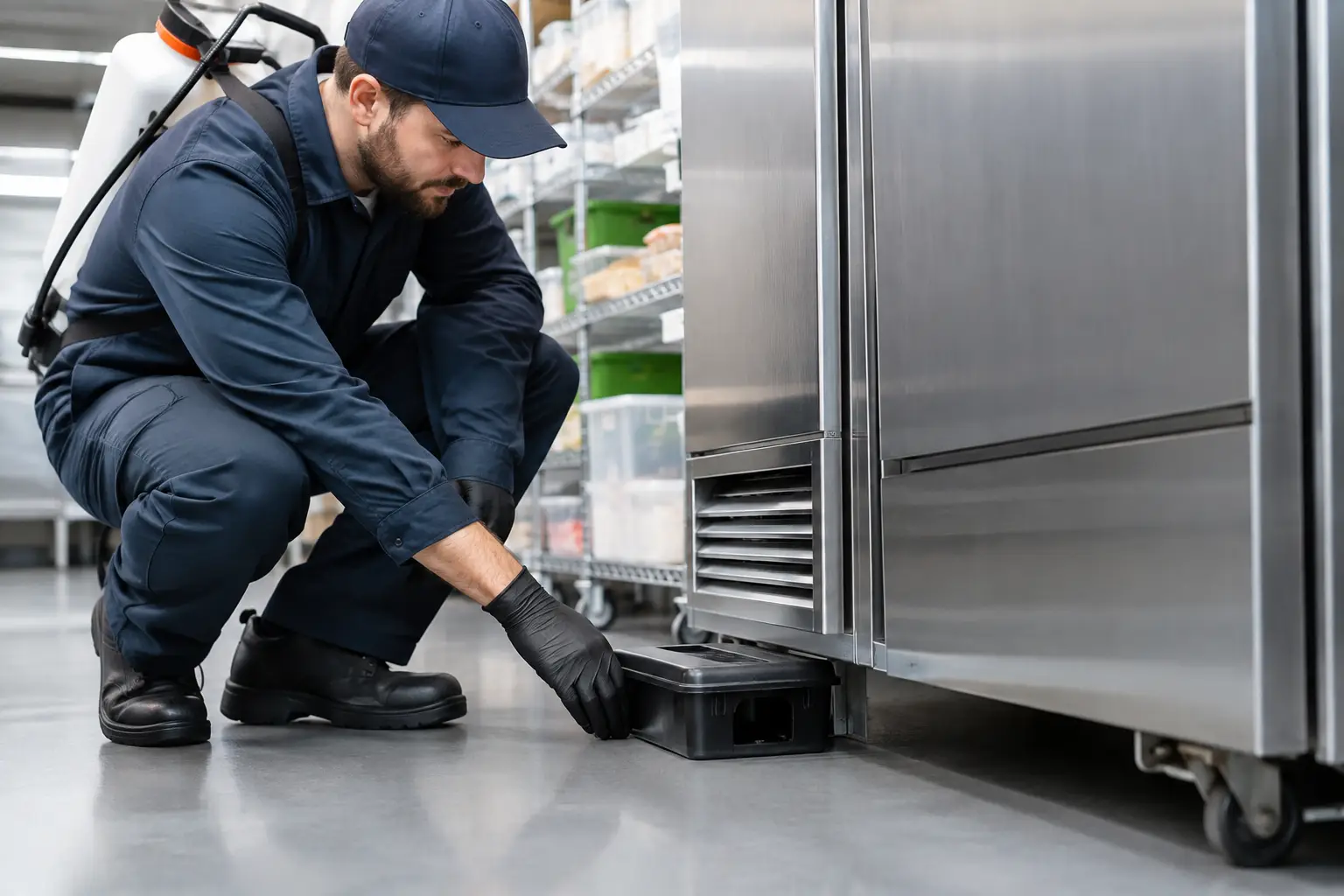
Avoid relying on untrained staff to place rodent bait or traps in sensitive commercial areas. Incorrect placement can create safety concerns, interfere with professional monitoring, and fail to address the actual source of activity. A qualified pest management team can assess the site, identify likely rodent behavior, and apply control measures with appropriate safety procedures.
Know when professional support is needed
A single sighting does not always mean a major infestation, but it should not be dismissed. Rodents are cautious and often remain hidden, so visible activity can indicate that conditions are already favorable.
Professional support is especially valuable when activity continues after cleaning efforts, signs appear in food handling or customer-facing areas, droppings are found repeatedly, or there is evidence of nesting and structural entry. A detailed inspection can distinguish between a one-off intrusion and a wider issue involving access points, harborage, or nearby rodent pressure.
Servcare approaches rodent control with inspection-led treatment and preventive recommendations designed around the way each site operates. This helps businesses address immediate activity while improving the conditions that protect the premises over time.
A clean property is not merely one that looks presentable at opening time. It is one where food, water, shelter, and access are actively managed every day. That discipline gives rodents fewer reasons to stay and gives your team greater confidence in the safety of the workplace.