

A rat seen near a trash area or a mouse found beneath a pantry shelf can create immediate concern. The question of rodent traps versus stations often follows quickly, but the right choice depends on more than what is easiest to buy. The species, level of activity, building layout, presence of children or pets, and risk of food contamination all affect what will provide reliable control.
A trap may remove a rodent quickly. A secured bait station may support wider control across a large or recurring infestation. Neither is a complete solution on its own if rodents can still enter the property, find food, or nest undisturbed. Effective rodent control combines the correct treatment method with inspection, sanitation, exclusion, and follow-up.
Rodent Traps Versus Stations: The Core Difference
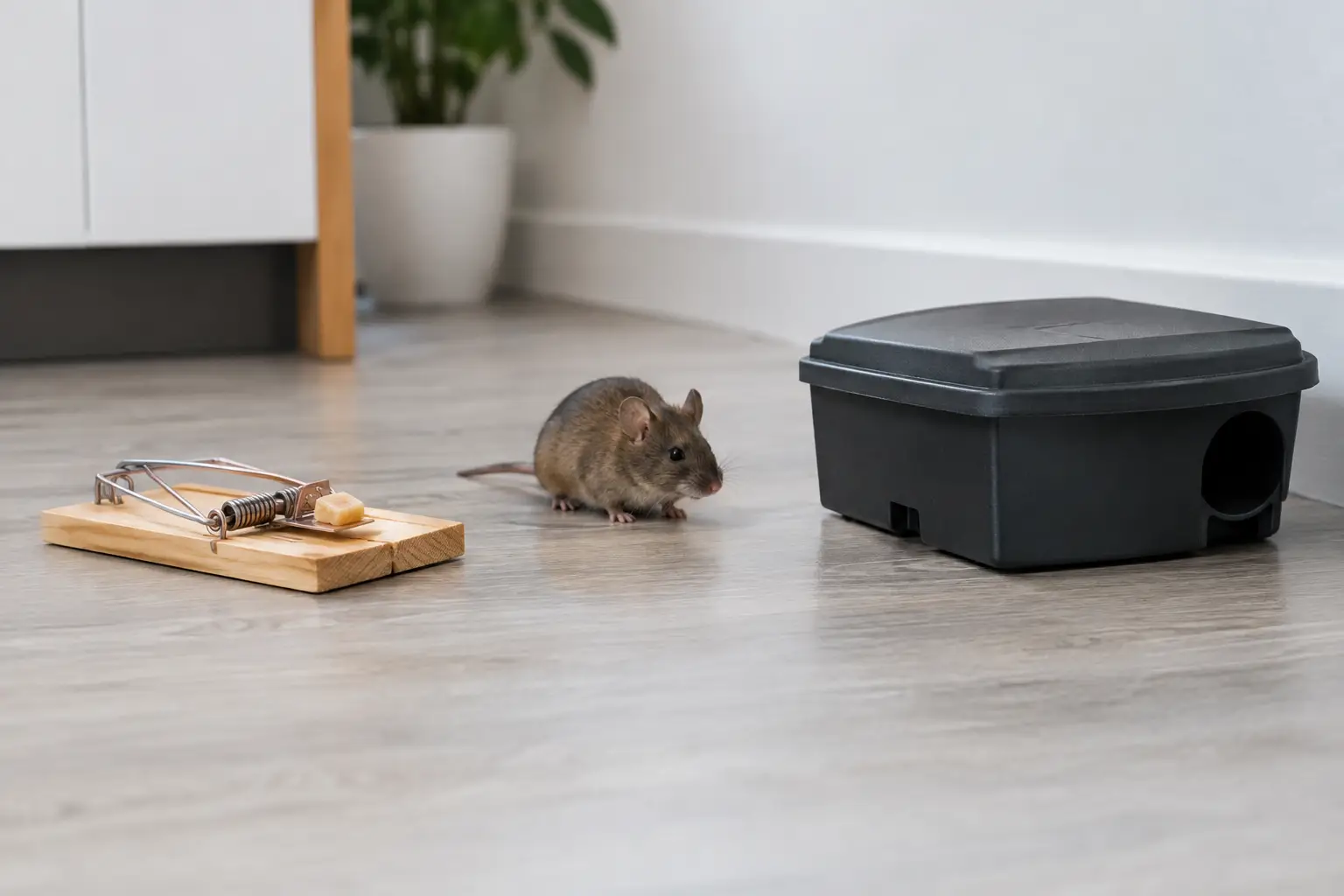
Rodent traps are designed to catch or kill an individual rodent when it interacts with the device. Snap traps, enclosed mechanical traps, and electronic traps are common examples. They are usually placed directly along rodent runways, near signs of activity, or in concealed areas where rodents travel close to walls.
Bait stations are tamper-resistant containers that hold rodenticide bait. Their purpose is not simply to attract rodents. A well-designed station protects the bait from accidental contact, weather, and contamination while allowing rodents to feed in a controlled location. Professional-grade stations are typically secured in place and serviced routinely to monitor consumption and activity.
The difference matters because traps offer immediate, visible results, while stations are generally part of a broader population-control strategy. Choosing between them should not be based only on convenience.
When Traps Are the Better Choice
Traps are often appropriate when activity appears limited and the affected area can be inspected regularly. For example, a homeowner may hear scratching in a kitchen cabinet area, see fresh droppings in a storeroom, or notice one mouse entering through a small gap. In these situations, traps can help confirm where rodents are traveling and reduce activity without introducing rodenticide into the environment.
They are also useful indoors where food preparation, stock storage, or sensitive operations make bait use less desirable. In restaurants, offices, retail spaces, and homes, carefully positioned traps can provide direct control while minimizing the risk of a rodent dying in an inaccessible wall void.
Traps do require attention. A poorly placed trap may be ignored, while an unchecked trap can create hygiene concerns. Rodents are cautious, especially rats. They may avoid unfamiliar objects or alter their routes after a disturbance. Placement, type of trap, and regular monitoring make a significant difference.
Traps are generally a strong option when the goal is to address a small, localized issue, verify rodent activity, or manage indoor areas where close monitoring is possible.
What traps cannot solve
A trap can catch the rodent that enters it, but it does not close the gap behind a pipe, remove cluttered nesting material, or correct overflowing waste storage. If droppings continue to appear after trapping, the property may have multiple entry points or an established infestation.
This is why repeated trap catches should be treated as useful evidence, not merely a short-term win. They indicate that rodents are present and moving through the area. The next step is to identify why they have access and what is sustaining them.
When Bait Stations Make More Sense
Bait stations are commonly used where rodent pressure is ongoing, the property has a larger perimeter, or rodent activity extends beyond one room. They are especially useful around external building boundaries, waste areas, loading zones, drains, landscaped edges, and other locations where rodents may enter before reaching occupied spaces.
For commercial premises, stations can support a structured prevention program. A facility manager may need documented inspection points, consistent servicing, and early warning of rodent pressure around the site. Properly maintained stations help pest professionals track trends, adjust treatment locations, and prevent a small exterior issue from becoming an indoor infestation.
However, bait stations are not a set-and-forget solution. Rodenticide use requires careful product selection, secure placement, and scheduled monitoring. Poorly managed bait can be ineffective, create unnecessary exposure risks, or fail to address the underlying access problem.
In homes with young children, pets, or wildlife exposure concerns, safety is particularly important. Only tamper-resistant stations should be used, and they should be positioned and maintained by trained personnel. Loose bait should never be placed in open areas, cabinets, ceilings, or locations accessible to people, pets, or non-target animals.
The trade-off with bait stations
Stations can reduce rodent populations across wider areas, but they may not provide the same immediate confirmation as a trap. Rodents may feed at night and remain unseen, so the treatment relies on monitoring bait consumption and activity signs over time.
There is also the possibility that a rodent dies in a concealed location, which can occasionally lead to odor issues. This is one reason a professional plan may use traps indoors while placing secured stations strategically outdoors or in controlled non-sensitive areas. The goal is to apply the right method in the right location, not to rely on one method everywhere.
How to Choose for Your Property
Start with the scale and location of the problem. A single mouse sighting inside a residence calls for a different response than recurring rat activity near a commercial dumpster. Fresh droppings, gnaw marks, grease rub marks along walls, burrows, damaged food packaging, and nighttime noises all help indicate the extent of activity.
Next, consider who uses the space. Homes with children and pets require extra safeguards. F&B businesses need strong hygiene controls and a treatment approach that protects food, ingredients, packaging, and customer confidence. Industrial sites may need perimeter protection across large, complex areas where rodent access points are difficult to see.
Then consider whether the issue is isolated or recurring. If rodents return after each round of trapping, the problem is likely not the trap itself. It may be a gap beneath a door, an unsealed utility opening, poor waste containment, vegetation touching the building, or readily available food and water.
A professional inspection can distinguish between a one-off intrusion and a broader infestation. This prevents wasted effort and helps ensure that treatment decisions are based on evidence rather than guesswork.
Prevention Makes Both Methods Work Better
Whether traps, stations, or both are used, prevention determines whether the result lasts. Rodents need access, food, water, and shelter. Removing even one of these conditions can make a property less attractive.
Keep food in sealed containers, clear crumbs and spills promptly, and avoid leaving pet food out overnight. Waste bins should have tight-fitting lids and be cleaned regularly. Cardboard, unused materials, and clutter should be reduced in storage areas, since they provide hiding places and nesting material.
Building maintenance is equally important. Seal gaps around pipes, vents, doors, and utility penetrations with suitable rodent-proof materials. Repair damaged screens and door sweeps. Check for drainage issues or leaks that provide water sources, particularly in service corridors, kitchens, and refuse areas.
For businesses, routine inspections are valuable because they detect small changes before they become disruptive. A newly damaged door seal or an overflowing bin may seem minor, yet both can quickly create favorable conditions for rodents.
Why Professional Control Is Often the Safer Route
Rodent activity carries more than an inconvenience. Rodents can contaminate food and surfaces, damage wiring and stored goods, and affect a property’s hygiene standards and reputation. In commercial settings, unresolved activity can disrupt operations and create serious compliance concerns.
Professional pest management provides a more controlled approach. Servcare assesses the signs of activity, identifies likely entry routes, selects appropriate treatment methods, and recommends practical preventive measures for the property. This may involve traps, secured stations, exclusion work, sanitation advice, and scheduled monitoring rather than a one-size-fits-all treatment.
The value is not simply placing more devices. It is understanding rodent behavior, placing control measures where they will be effective, and verifying whether activity is declining. For households and businesses alike, this creates a safer path toward lasting protection.
If you are unsure whether traps or stations are appropriate, begin by documenting where and when you see signs of rodents. That information can turn a stressful sighting into a clear, targeted plan for protecting your people, property, and peace of mind.