


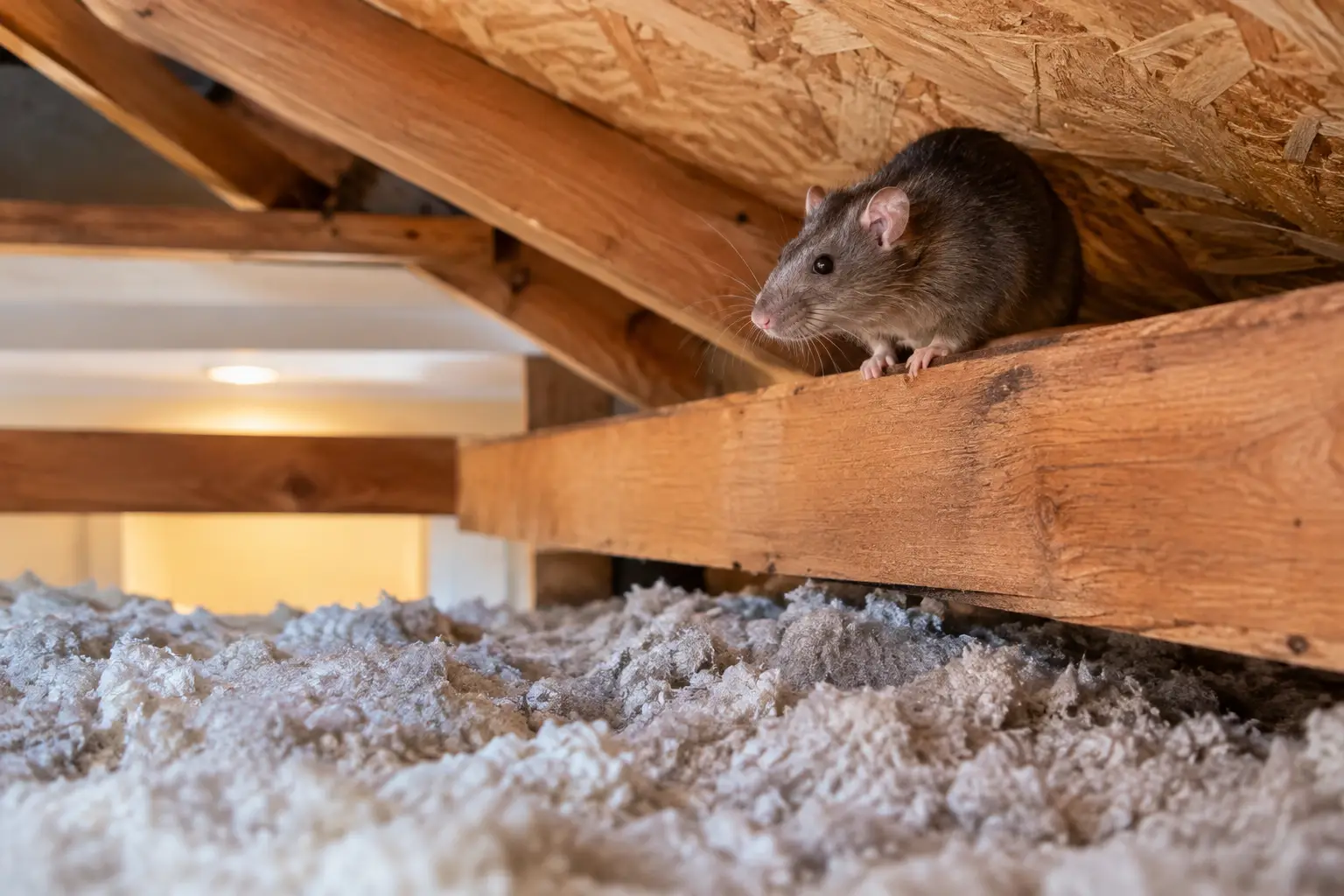
Scratching above a bedroom ceiling at night is rarely a problem that resolves on its own. To stop rats in ceilings, the issue must be handled at both ends: remove the rodents safely and close the access points that allowed them into the roof void. Treating only the noise, droppings, or one visible rat can leave the underlying infestation active.
Rats use ceiling spaces because they are sheltered, warm, and often close to food and water. In homes, they may travel from drains, exterior pipe openings, roof gaps, or overgrown vegetation. In commercial premises, they can gain access through loading areas, utility penetrations, ceiling voids, and poorly sealed service routes. Once inside, they can contaminate surfaces, damage wiring and insulation, and reproduce quickly.
Signs You Have Rats in the Ceiling
Ceiling activity is often most noticeable after dark. You may hear scratching, scurrying, gnawing, or heavier movement above gypsum board or false ceilings. These sounds may shift between rooms because rats use beams, cables, and service ducts as travel routes.
Other signs can be less obvious. A persistent musky odor, greasy rub marks around pipework, chewed cables, damaged stored goods, or small dark droppings near ceiling access panels all warrant attention. In food businesses, offices, and industrial facilities, damaged packaging or signs of rodent activity near back-of-house areas should be addressed promptly, even if no rat has been seen.
Do not assume that a quiet night means the problem is gone. Rats can alter their movement patterns when they detect people, changes in lighting, or disturbed nesting areas.
Why Ceiling Rats Need Prompt Control
Rats are more than an unpleasant source of noise. Their constant gnawing can damage electrical cables, which may create a safety risk. They can tear insulation for nesting material, soil ceiling spaces with urine and droppings, and leave odors that persist after the animals are gone.
The health and hygiene concerns are also significant. Rodents may carry contaminants from drains, refuse areas, and exterior environments into homes and business premises. For F&B operators and facilities responsible for hygiene compliance, a ceiling infestation can affect food safety procedures, staff confidence, and customer trust.
There is also a practical reason to act early: ceiling voids make rats difficult to monitor. A small entry route can support repeated activity, particularly if food, water, and nesting materials remain accessible. The longer the infestation continues, the more extensive the exclusion and cleanup work may become.
How to Stop Rats in Ceilings Safely
Effective rodent control follows a sequence. Inspection comes first, followed by targeted removal, proofing, sanitation, and monitoring. Skipping one of these stages often leads to a repeat problem.
Start with a careful inspection
The first task is to identify how rats are entering and where they are traveling. This may involve checking roof edges, eaves, vents, drain lines, utility openings, air-conditioning penetrations, false ceiling access points, and gaps around pipes. Rats can enter through surprisingly small openings, so a crack that seems minor can still be relevant.
Inside the property, look for droppings, gnaw marks, rub marks, and nesting debris. It is useful to note where sounds occur and when they are most frequent. This helps distinguish rodent activity from other ceiling issues, such as loose fixtures, birds, squirrels, or expanding building materials.
For businesses, inspection should extend beyond the affected room. Rodents may enter at one point and travel through interconnected ceiling voids to reach food storage, pantries, staff areas, or production spaces.
Remove food, water, and nesting opportunities
Sanitation will not remove an established infestation by itself, but it reduces the reasons rats remain on the property. Store food in sealed containers, keep waste bins closed, remove pet food overnight, and clean spills promptly. In commercial settings, review waste handling, stock rotation, grease management, and the cleanliness of loading and storage areas.
Water sources matter just as much. Repair dripping pipes, clear standing water, and address leaks around air-conditioning units or plumbing. Cardboard, clutter, and accumulated materials near service areas can also provide cover and nesting material.
Use the right control method for the setting
Traps and professional baiting programs can both play a role, but the right choice depends on the property, the extent of activity, and the presence of children, pets, customers, food, or sensitive work areas. A poorly placed trap may catch nothing. Improper use of rodenticides can create avoidable safety concerns and may result in an animal dying in an inaccessible ceiling void.
For this reason, avoid placing poison loosely in ceilings or attempting to seal every opening before confirming rodents are no longer active. Trapping an active rat inside can lead to more damage, odor, and contamination. A professional technician can assess active routes, place control measures strategically, and check progress before final proofing work is completed.
Seal entry points after activity is controlled
Exclusion is what turns short-term control into long-term prevention. Once the active population has been reduced, seal gaps around pipes, vents, roof junctions, utility cables, and external openings with durable, rodent-resistant materials. Damaged vent covers and loose roof components should be repaired rather than temporarily covered.
The best timing depends on the infestation. Where activity is heavy, proofing may need to be staged so rodents are not shut into the ceiling. Where a clear exterior entry point is identified and interior control measures are in place, it may be possible to secure the area sooner. This is why inspection-led advice is more reliable than a one-size-fits-all fix.
Common Mistakes That Keep Rats in Ceiling Voids
Homeowners and facility teams often focus on the sound rather than the access route. Spraying air freshener, cleaning visible droppings, or setting a single trap may make the issue feel managed, but none prevents new rats from entering.
Another common mistake is relying on DIY repellents. Strong scents, ultrasonic devices, and household mixtures may cause brief avoidance in some situations, but they do not reliably remove an established rodent population or close entry points. Rats are adaptable, especially when food and shelter are available.
It is also risky to enter a contaminated ceiling void without suitable precautions. Droppings and nesting materials should be handled carefully to avoid spreading dust and contamination into living or working spaces. If there are chewed electrical wires, water damage, or a strong odor, arrange for the relevant repair work after rodent control has been completed.
When Professional Rodent Control Is the Better Choice
Professional help is especially valuable when rats are heard repeatedly, droppings are appearing indoors, there are signs of cable damage, or the ceiling is difficult to access. It is also the safer option for shared buildings, food premises, childcare settings, warehouses, and properties with pets or young children.
A qualified pest management team should do more than place bait. The service should identify likely entry routes, assess the infestation level, recommend suitable treatment and proofing measures, and provide follow-up monitoring. This approach helps protect the property without unnecessary disruption.
For Singapore properties, Servcare applies inspection-led rodent control with tailored treatment and preventive recommendations. With professional assessment, property owners and managers can address both immediate ceiling activity and the conditions that allow it to return.
Keep the Ceiling Protected After Treatment
After control work, continue checking for new sounds, droppings, or fresh gnaw marks. Keep exterior vegetation trimmed away from rooflines where practical, maintain good waste practices, and include roof edges, drains, and service openings in regular property inspections. Facilities with recurring exposure, such as F&B and industrial sites, benefit from scheduled monitoring rather than waiting for visible activity.
A quiet ceiling is reassuring, but lasting peace of mind comes from knowing the entry routes, food sources, and hiding places have been addressed. Early action protects more than the ceiling itself – it protects the safety, hygiene, and comfort of everyone beneath it.