


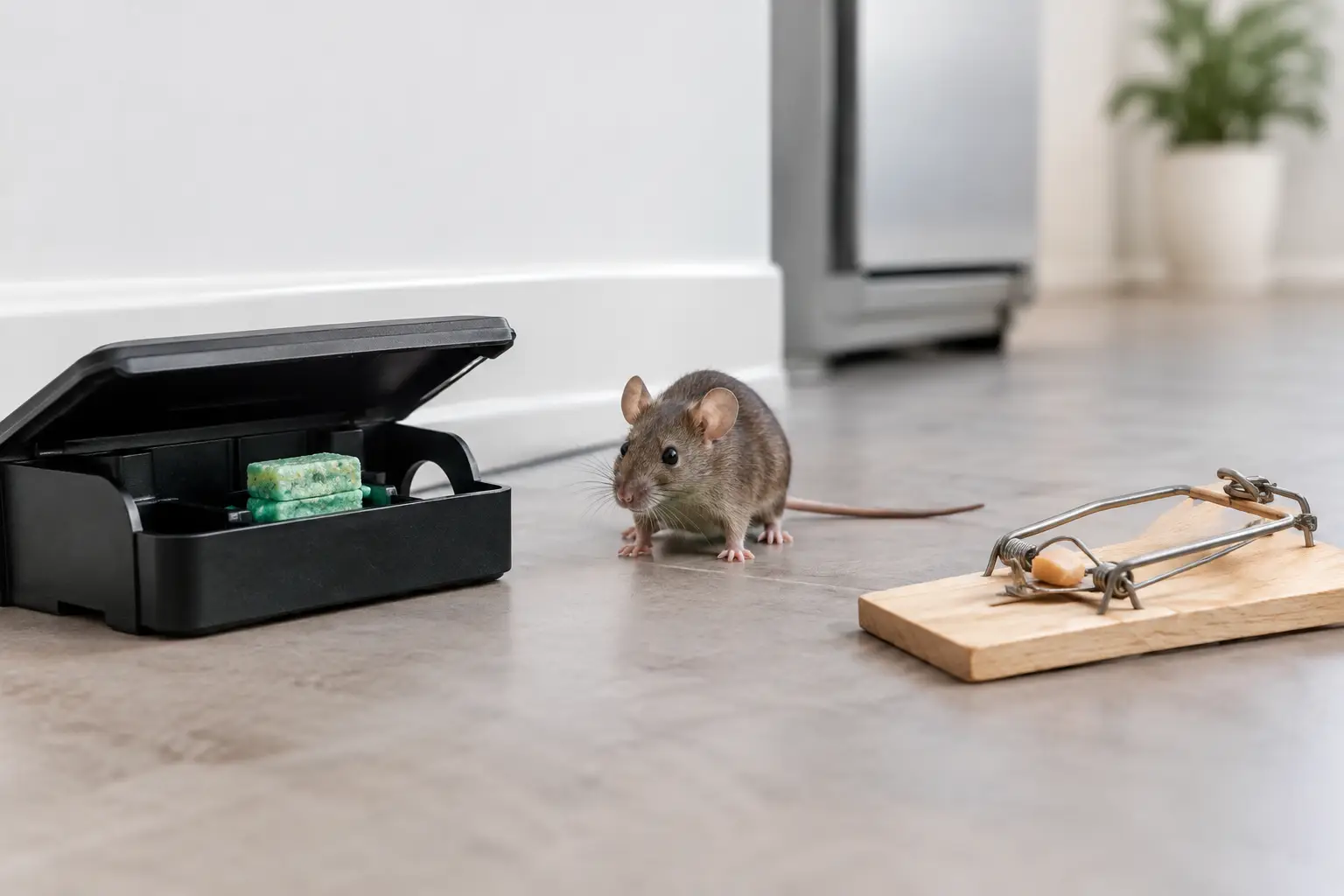
A rat seen near a pantry, loading bay, or false ceiling is rarely an isolated problem. The real question is how far the activity has spread and how quickly it can be stopped without creating new risks. When comparing rodent baiting vs trapping methods, the best choice depends on the rodent species, the level of activity, the property layout, and whether children, pets, food, or sensitive operations are nearby.
Baiting and trapping are both established rodent-control tools. Neither is a universal answer on its own. A professional program often uses one method as the primary control measure and the other for targeted removal, then addresses the access points and food sources that allowed rodents to settle in the first place.
Rodent Baiting vs Trapping Methods: The Core Difference
Rodent baiting uses a formulated rodenticide placed in secured, tamper-resistant bait stations or other controlled locations. Rodents feed on the bait and are controlled over time. This method is designed to reach rodents that travel through concealed spaces, such as ceiling voids, service ducts, storerooms, and exterior perimeter routes.
Trapping physically captures or kills rodents using devices such as snap traps, multi-catch traps, or electronic traps. It provides a more immediate, visible result when a rodent is caught. Traps are typically placed along active runways, close to walls, behind equipment, or near signs such as droppings, gnaw marks, grease trails, and damaged packaging.
The practical distinction is reach versus immediacy. Baiting can be effective for broader or difficult-to-access activity, while trapping is often useful for precise, localized control and situations where rodenticide use needs to be limited.
When Rodent Baiting Makes Sense
Baiting is often considered where rodent pressure extends beyond one room or where a property has many hidden harborages. A commercial facility with utility areas, rear access points, cluttered storage zones, or outdoor waste areas may have rodents moving through routes that are not suitable for multiple traps.
A well-managed baiting program can also support ongoing perimeter protection. Exterior bait stations, placed and maintained appropriately, can help intercept rodents before they gain access to a building. This is particularly valuable for properties beside food outlets, construction activity, drainage systems, vegetation, or waste collection areas.
However, baiting requires careful planning. Rodenticides must never be left exposed or placed casually around a property. They should be used in accordance with product instructions, site conditions, and applicable regulations, with particular attention to homes with young children or pets and businesses handling food.
Another consideration is that baiting does not provide instant confirmation of control. Rodents may continue moving for a period after feeding, and a rodent may die in an inaccessible location. Professional monitoring, sensible station placement, and follow-up inspections help reduce uncertainty and confirm whether activity is declining.
Baiting is not a substitute for exclusion
Bait can reduce an active population, but it does not close the gaps rodents use to enter. A rat can squeeze through an opening surprisingly small for its body size, while mice can enter through gaps around pipes, cable penetrations, doors, vents, and damaged screens.
Without proofing, cleaning, and waste management improvements, new rodents can replace the ones removed. That cycle is why a bait-only approach may appear to work briefly but fail to deliver long-term protection.
When Trapping Is the Better Choice
Trapping is a strong option when activity is concentrated in a known area. For example, a mouse repeatedly seen beneath a pantry cabinet or a rat active behind a particular row of shelving can often be targeted with correctly positioned traps.
For many homeowners, trapping offers reassurance because it allows for direct inspection. A catch confirms that a trap location is active and helps a technician adjust the treatment plan. In sensitive areas, such as certain food-preparation zones, traps may also be preferred as part of an integrated program that limits rodenticide use indoors.
Traps need more attention than many people expect. They must be placed in the correct travel path, selected for the species involved, checked regularly, and handled hygienically. A trap placed in the middle of an open floor is unlikely to perform well because rodents generally prefer to move along edges and sheltered routes.
Placement also matters for safety. Traps should be inaccessible to children, pets, and unauthorized staff. In commercial environments, they should be documented and located so they do not interrupt operations or introduce contamination concerns.
Why DIY trapping can fall short
One or two store-bought traps may catch an individual rodent, but a single catch does not always mean the infestation is over. Rodents reproduce quickly, and the activity you can see may represent only a small part of the population.
DIY attempts also commonly miss the cause of the infestation. If pet food is left overnight, trash bins are not properly sealed, a floor drain is damaged, or gaps under doors remain open, rodents still have the conditions they need to return.
Safety and Hygiene Considerations
Safety should guide every decision between baiting and trapping. Rodents can contaminate food, surfaces, inventory, and equipment with droppings, urine, fur, and parasites. They can also damage electrical cables, insulation, packaging, and stored goods through gnawing.
For households, priority areas include kitchens, pantries, false ceilings, and outdoor utility spaces. For businesses, the risks extend to product contamination, failed hygiene audits, customer complaints, stock losses, and operational disruption. F&B operators and facilities handling food require especially careful control methods, inspection records, and sanitation standards.
Dead rodents and droppings should be handled with care. Avoid sweeping or vacuuming dry droppings, which can disturb contaminated particles. Use appropriate protective equipment, disinfect the area according to safe cleaning procedures, and dispose of waste hygienically. If there is extensive contamination or an inaccessible carcass, professional assistance is the safer course.
The Most Effective Approach Is Usually Integrated
The choice is not always baiting or trapping. A site with widespread outdoor rat activity may benefit from controlled bait stations around the perimeter while traps are used indoors to monitor and target specific travel routes. A small home infestation may begin with trapping and exclusion, with baiting considered only if inspections show broader activity.
An integrated rodent-management plan starts with a detailed inspection. Technicians look for entry points, nesting areas, food and water sources, droppings, rub marks, gnawing, and rodent pathways. From there, treatment can be tailored to the property rather than based on a one-size-fits-all response.
Long-term results depend on three connected actions: reducing the existing rodent population, removing the conditions that support it, and monitoring for fresh signs of activity. This may involve sealing gaps, repairing door sweeps, improving waste storage, reducing clutter, correcting leaks, and storing food in durable sealed containers.
How to Choose for Your Property
If you are dealing with one clearly identified area of activity, trapping may provide a focused and quick way to assess the problem. If signs appear in multiple areas, activity is occurring in inaccessible spaces, or rodents are entering from outdoors, a professionally managed baiting program may be more practical.
The property type also changes the decision. A family home may prioritize child and pet safety above all else. A restaurant, warehouse, office, or industrial site may need a documented program that protects hygiene standards while maintaining normal operations. In both cases, the treatment should be adjusted as evidence changes, not left in place without inspection.
Servcare approaches rodent control with this wider view: control the active issue, identify the source, and put preventive measures in place so the property remains protected. The goal is not simply to remove the rodent seen today, but to restore confidence in the spaces where people live and work.
A rodent problem becomes easier to control when action starts early. Fresh droppings, chewed packaging, scratching sounds, or recurring sightings are reasons to inspect the property promptly, before a small access issue turns into a larger infestation.