


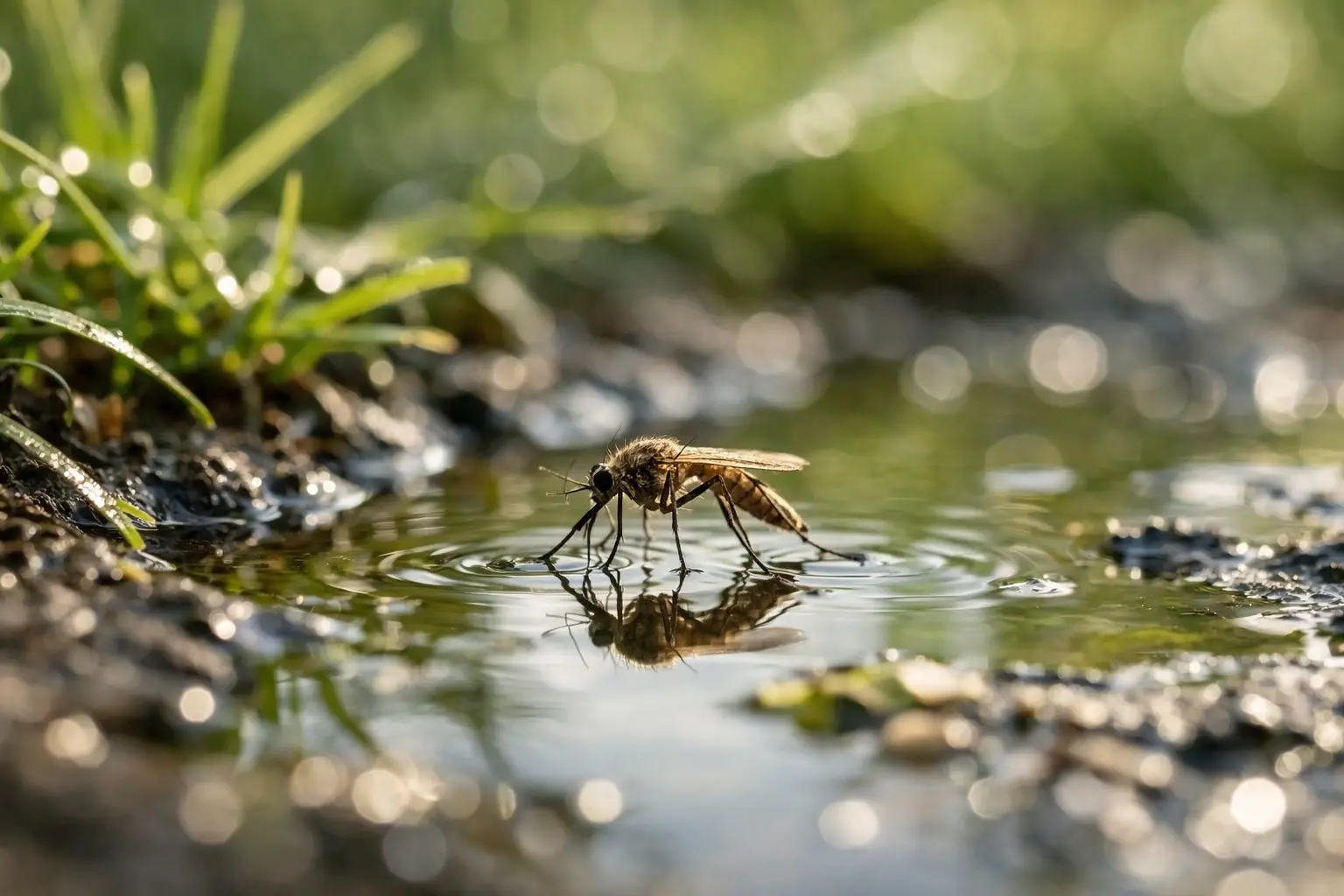
A single heavy shower can turn an overlooked flowerpot saucer, floor drain, or rooftop gutter into a mosquito nursery within days. That is why mosquitoes breed after rain so reliably: rain creates the shallow, still-water habitats they need, often in places property owners do not immediately notice. In warm, humid conditions such as Singapore’s, that short window can quickly lead to a noticeable increase in biting activity around homes and business premises.
The practical response is not to wait until mosquitoes are everywhere. Removing water sources early, checking areas that collect rainwater, and addressing recurring breeding conditions can interrupt the mosquito life cycle before adult mosquitoes emerge.
Why Mosquitoes Breed After Rain
Rain does not cause mosquitoes to appear from nowhere. It creates the right conditions for eggs already present in the environment to hatch and for adult female mosquitoes to lay more eggs. Most common nuisance and disease-vector mosquitoes need water for their early life stages. Their eggs develop into larvae and then pupae in water before emerging as flying adults.
After rainfall, containers, drains, construction materials, roof gutters, plant trays, discarded packaging, and uneven paved areas can hold small pockets of water. Many of these sites are protected from wind and direct disturbance, allowing mosquito larvae to develop undisturbed.
Some mosquito species are particularly well adapted to this pattern. Aedes mosquitoes, which are of concern because of dengue transmission, often lay eggs along the inner walls of containers just above the waterline. These eggs can remain viable when dry. Once rain raises the water level, the eggs are submerged and may hatch. This is one reason a short rain event can activate breeding in containers that appeared dry only days earlier.
It is not always the heaviest storm that creates the greatest issue. A light shower followed by several warm days may leave behind small, stable pools that are ideal for development. Heavy rain can sometimes flush water out of exposed drains and ditches, while gentler rain may simply refill every neglected container around a property.
The Mosquito Life Cycle Moves Faster Than Many People Expect
Mosquitoes develop through four stages: egg, larva, pupa, and adult. The first three stages depend on water. In favorable weather, the transition from egg to adult can take roughly a week, although the exact timing depends on temperature, species, food supply, and the quality of the water.
That speed changes how prevention should be managed. A weekly inspection is a useful baseline, but a property with recurring pooling water may need checks soon after rain. Facility managers should also consider how weather patterns affect operational areas such as loading bays, refuse zones, outdoor dining areas, utility rooms, roof decks, and landscape features.
Mosquito larvae are often visible if you look closely. They move with a quick wriggling motion near the water surface. Finding larvae means the site is already supporting active breeding, but removing the water and correcting the condition can still prevent those mosquitoes from becoming adults.
Common Rainwater Breeding Sites Around Properties
The most problematic breeding sites are usually not large ponds or obvious puddles. They are small containers and hidden areas that hold water long enough for mosquitoes to complete their development. A bottle cap can be enough for some species, which is why source reduction requires attention to detail.
Around homes, check plant saucers, pails, watering cans, unused toys, tarpaulins, outdoor furniture covers, decorative containers, air-conditioning drain trays, and clogged gutters. Water that collects in umbrellas, shoe racks, or recycling items can also be overlooked after a storm.
At commercial and industrial properties, risk areas are often more varied. Open storage, pallets covered by sheeting, discarded equipment, uneven pavement, drainage channels, roof gutters, grease-trap surroundings, and construction materials can all collect rainwater. F&B operators should pay particular attention to back-of-house areas, waste handling points, and outdoor seating zones, where mosquito activity can affect customer comfort as well as hygiene standards.
Natural features need attention too. Tree holes, bamboo stumps, dense vegetation that blocks drainage, and poorly maintained water features may retain water after rain. These sites may be less visible than a container beside a walkway, which makes routine inspection especially valuable.
What to Do After Rain to Reduce Mosquito Breeding
Start with a deliberate walk-through of the property once it is safe to do so. Focus on areas where water has collected rather than only the places where mosquitoes are being felt. Adult mosquitoes may rest in shaded vegetation or sheltered corners, but their breeding source can be several yards away.
Empty, overturn, cover, or store containers that can collect water. Scrub the inside surfaces of buckets, plant saucers, and similar items when emptying them, as eggs can remain attached above the waterline. Where water must be kept, use tightly fitted covers and make sure they do not sag and hold rainwater on top.
Clear leaves and debris from gutters, drains, and scupper outlets so water can move freely. A drain that appears functional during a downpour may still retain a shallow layer of water once the rain stops. Repairing poor drainage, leveling low spots, and replacing damaged covers are longer-term corrections that reduce repeated breeding pressure.
For businesses, assign clear responsibility for post-rain inspections. A checklist is useful when several teams share outdoor spaces, since breeding sites can fall between housekeeping, maintenance, landscaping, and operations. Record recurring trouble spots. If the same drain, gutter, or storage area repeatedly holds water, it needs a physical fix rather than another temporary cleanup.
Do not rely on fogging alone as a rain-season strategy. Adult mosquito treatments may reduce flying mosquito activity for a limited time, but they do not remove eggs, larvae, or the water sources that support the next generation. The strongest approach combines source reduction with targeted treatment where inspection identifies ongoing activity.
When Standing Water Cannot Be Removed
Some water sources are necessary or difficult to eliminate, including certain drains, water-storage systems, ornamental features, and site drainage structures. These situations require a more tailored plan. The right method depends on the site, the mosquito species involved, water movement, public access, and the presence of children, pets, food operations, or sensitive environmental areas.
Professional mosquito control can assess whether a water body is actually capable of supporting breeding, identify hidden sources, and recommend appropriate measures. This may include targeted larval control, habitat modification, monitoring, or adult mosquito treatment where justified. Products and application methods should be selected carefully to protect people, operations, and the surrounding environment.
For a recurring issue, professional inspection is particularly worthwhile when mosquitoes persist despite regular cleanup, when multiple occupants report bites, or when a property has complex drains, landscaping, rooftops, or utility areas. The goal is to find the source, not simply treat the symptom.
Why Rain-Season Prevention Protects More Than Comfort
Mosquito bites disrupt sleep, outdoor activities, and customer experiences. More seriously, mosquito breeding near occupied properties can increase public health concerns, especially in regions where mosquito-borne illnesses are a known risk. For businesses, visible mosquito activity can also affect staff comfort, customer confidence, and site hygiene perceptions.
Prevention works best when it is consistent. A clean-looking property can still have mosquito breeding if water is hidden in gutters, drains, plant containers, or storage areas. Regular inspections after rainfall make small issues easier to correct before they become a larger infestation problem.
Servcare approaches mosquito management with this prevention-first focus: identifying breeding conditions, reducing sources, and applying targeted solutions suited to the property. For homeowners and facility teams alike, early action after rain provides a more reliable path to lasting control than reacting only when mosquitoes have already multiplied.
The next time rain clears, treat the first dry hour as an opportunity. Empty the water, clear the blockage, and make a note of the spot that collected it. Those small actions can prevent a week of mosquito development and help keep your property more comfortable and protected.