

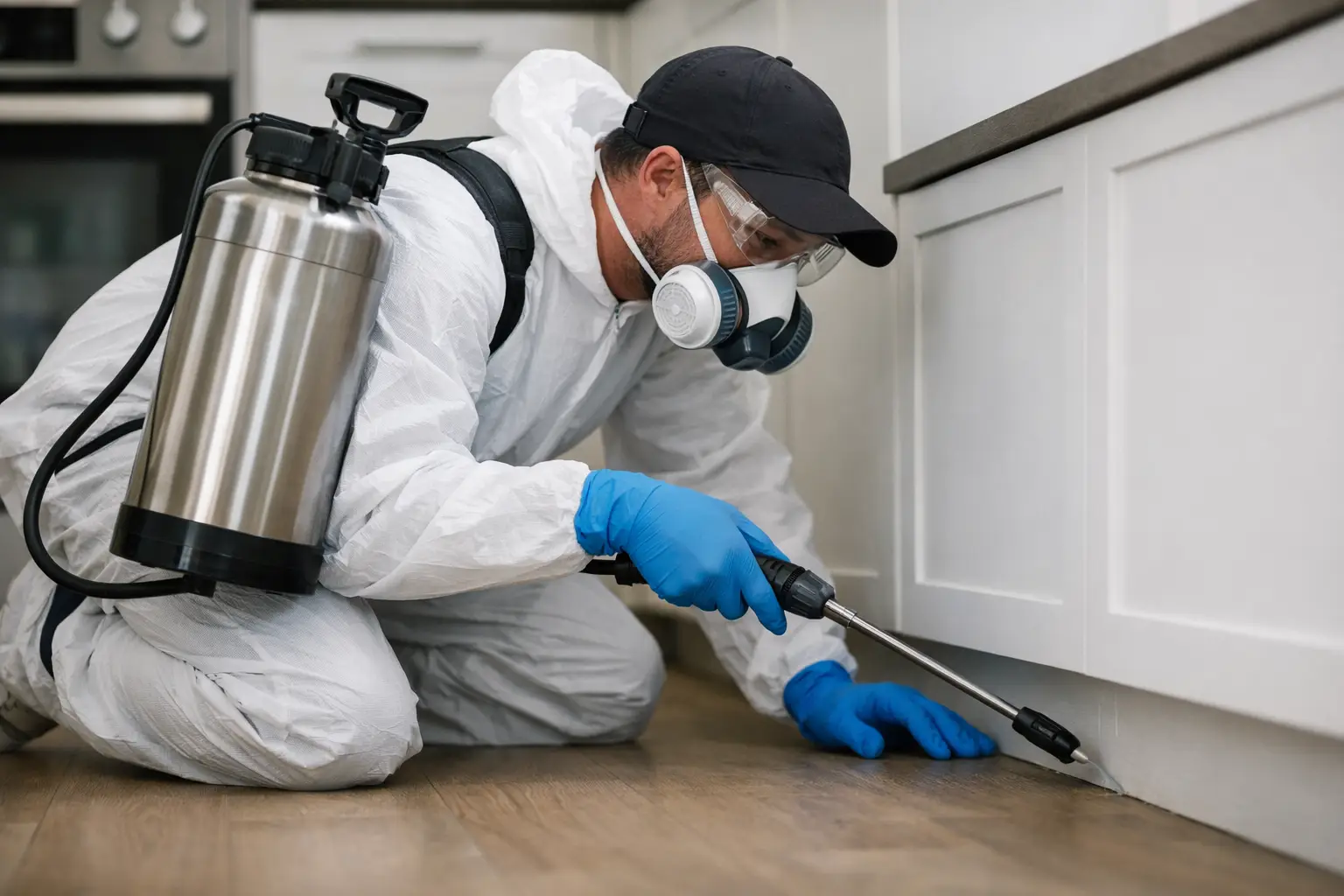
A cockroach crossing the kitchen floor or rodent droppings in a storeroom creates an immediate concern: are pest control treatments safe for the people, pets, and daily operations on the property? It is a sensible question. The right treatment should reduce the health, contamination, and property risks caused by pests without creating unnecessary exposure for occupants.
Professional pest management is designed around that balance. Safety is not simply about choosing a product labeled “eco-friendly” or using the smallest possible amount. It comes from correct pest identification, a careful site inspection, suitable treatment selection, controlled application, and clear instructions for what to do before and after service.
Are Pest Control Treatments Safe When Applied Professionally?
Yes, professionally applied pest control treatments can be safe when they are selected and used according to approved directions, in the right areas, and by trained technicians. But safety is never a blanket promise that every treatment is appropriate in every setting. A treatment plan for a home with a crawling infant, for example, may differ from one for a restaurant kitchen, office, warehouse, or vacant unit.
The main issue is exposure. Every pest control product has instructions that govern where it may be used, how much may be applied, and how people, pets, food, and sensitive equipment should be protected. A qualified technician works within those instructions while targeting the pest where it lives, feeds, breeds, or enters the premises.
This is why professional treatment is different from repeatedly spraying a visible pest. A cockroach seen near a sink may be coming from cracks behind cabinetry, floor traps, pipe openings, or shared service ducts. Treating only the insect in sight can leave the source untouched and encourage unnecessary chemical use. A targeted plan addresses the infestation with less disruption and better long-term control.
What Makes a Pest Treatment Safer?
Safety begins before any product is applied. A thorough inspection helps identify the pest species, infestation level, likely harborages, entry points, and conditions that support pest activity. Moisture, uncovered food, waste buildup, clutter, damaged seals, and gaps around pipes can all change the treatment approach.
The safest effective method may involve monitoring devices, bait placements in protected areas, sealing entry points, sanitation improvements, habitat reduction, or a limited residual treatment. In many cases, a combination of measures provides better results than relying on one broad application.
For homeowners, this means the technician should ask practical questions. Are there children, pets, elderly residents, fish tanks, asthma concerns, or food-preparation areas? For businesses, the discussion should include operating hours, customer areas, food handling, production lines, inventory, and compliance requirements. These details are not minor. They help determine where treatment can be placed, whether an area needs to be temporarily cleared, and what precautions are necessary.
At Servcare, treatment recommendations are built around the property, pest pressure, and operational needs rather than a one-size-fits-all spray approach. This supports effective control while keeping safety and minimal disruption at the center of the service.
How Different Treatments Affect Safety Decisions
Not all pest treatments work the same way, so preparation and precautions vary.
Cockroach control
Cockroach control often relies on targeted gel baits, monitored traps, crack-and-crevice treatments, and sanitation guidance. Baits are placed in inaccessible or protected locations where roaches travel and harbor, rather than across open living surfaces. This approach can be particularly useful in kitchens, apartments, and food-related premises because it focuses treatment close to the source of activity.
A serious cockroach infestation may require follow-up visits. Eggs can hatch after the first service, and untreated harborages can allow the population to return. Repeated sightings do not automatically mean a treatment is unsafe or ineffective. They may indicate that the infestation needs a structured control program and better exclusion measures.
Mosquito control
Mosquito treatment may focus on breeding sites, resting areas, drainage conditions, and outdoor vegetation. Removing stagnant water is one of the most valuable safety-conscious actions because it reduces mosquitoes without requiring treatment at every location. Where products are needed, a technician should apply them only to suitable areas and advise occupants about access restrictions or drying times.
For a property with regular outdoor activity, treatment timing matters. The goal is to manage mosquito pressure without exposing residents, guests, or staff to recently treated surfaces.
Rodent control
Rodent control should never be treated as simply putting poison anywhere rodents are seen. Safe rodent management involves inspection, proofing, tamper-resistant bait stations where appropriate, trapping, and removal of food and water sources. In homes and commercial facilities, bait placements must be secured and positioned to reduce access by children, pets, customers, and non-target animals.
Rodent droppings, urine, and gnaw damage can create significant hygiene and safety issues. Addressing the entry points is essential. Without proofing gaps around doors, utility lines, drains, and loading areas, a property may continue to experience rodent activity regardless of how many rodents are removed.
Subterranean termite control
Termite treatment requires a particularly careful plan because the colony may be active below ground, inside walls, or beneath flooring. Depending on the site, control may involve baiting systems, localized treatments, soil treatment, or a combination of methods. The safety considerations include treatment location, access to the area, nearby water features, and the need to protect occupants during application.
The trade-off is clear: delaying termite control to avoid all treatment can allow hidden structural damage to grow. A professional assessment helps property owners choose a method that protects the building while managing exposure responsibly.
Preparing Your Home or Business for Treatment
Following preparation instructions is one of the most effective ways to improve treatment safety. Instructions differ by pest and method, but they commonly involve clearing food, covering food-contact surfaces when required, storing utensils, moving pet bowls and toys, and allowing technicians access to affected areas.
Fish tanks deserve special attention. Fish and aquatic organisms can be more sensitive to certain airborne products than people or pets. Tell the technician about aquariums before service so the right protective steps can be planned. Similarly, inform the team about allergies, respiratory conditions, pregnancy, mobility concerns, or sensitive equipment that may affect access and timing.
For commercial spaces, a site representative should coordinate treatment around food handling, customer traffic, cleaning schedules, and operational workflows. F&B operators may need additional sanitation and documentation procedures. A good pest management provider will explain these requirements clearly rather than leaving staff to guess.
After treatment, respect the advised re-entry period and avoid cleaning treated cracks, crevices, bait placements, or monitoring points unless instructed. Over-cleaning the exact treatment zone too soon can reduce effectiveness and lead to repeated applications that could have been avoided.
Questions to Ask Before You Approve a Treatment
You do not need to become a pest control expert, but you should expect clear answers. Ask what pest has been identified, what method is recommended, where it will be applied, and what precautions are needed for children, pets, food, and staff. Also ask whether follow-up monitoring is needed and what changes to sanitation or proofing will help prevent a recurrence.
In Singapore, choosing an NEA-licensed provider adds an important layer of accountability. Professional credentials, trained technicians, and access to entomologist-supported guidance help ensure treatment decisions are based on pest behavior and site conditions, not assumptions.
Be cautious of providers who promise to solve every infestation with a single spray without inspecting the property. Fast action matters, especially where pests threaten hygiene or business operations, but speed should not replace assessment. The best treatment is the one that controls the specific pest problem with the least necessary intervention.
Safety Continues After the Technician Leaves
Pest control is safest and most effective when the property owner or facility team supports the prevention plan. Keep food sealed, dispose of waste promptly, repair leaks, reduce clutter, inspect deliveries, and report new pest activity early. These actions reduce the conditions pests depend on and can lower the need for future treatments.
If you notice an unexpected odor, residue in an unsuitable area, a pet behaving unusually, or any concern after service, contact the provider promptly and follow the product-specific advice given. Do not make assumptions or apply additional over-the-counter products on top of a professional treatment without checking first.
A safe pest control decision starts with a detailed conversation. When treatment is targeted, professionally managed, and supported by prevention, you can protect the people and property that matter while taking decisive action against the pests that do not belong there.