


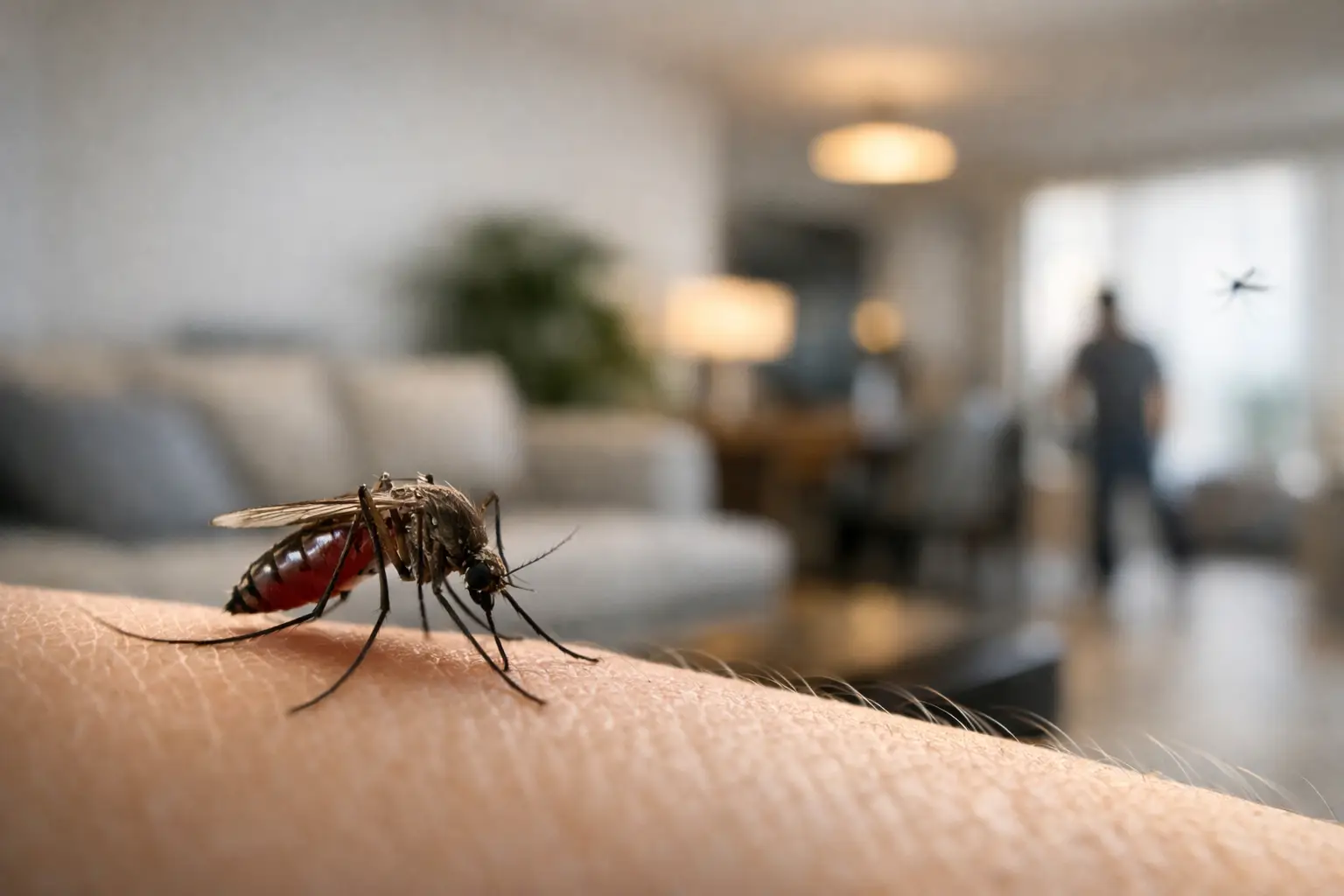
A mosquito bite on the sofa, beside the bed, or under an office desk can be more than an irritation. Can mosquitoes transmit diseases indoors? Yes. If an infected mosquito gets inside and bites a person, disease transmission can occur just as it can outdoors. The walls of a home or business do not stop a mosquito from feeding.
The reassuring part is that indoor mosquito activity is often preventable. Finding how mosquitoes enter, rest, and breed around a property is the practical first step toward reducing bites and protecting the people who use the space.
Can Mosquitoes Transmit Diseases Indoors?
Mosquitoes transmit disease through bites, not through the location of the bite. A female mosquito becomes capable of carrying certain pathogens after feeding on an infected person or animal, depending on the disease. When that mosquito later bites another person, it can pass on the pathogen.
This means an indoor bite may carry risk if the mosquito is an effective disease vector and is already infected. It does not mean every mosquito bite is dangerous, or that a mosquito in the room automatically carries disease. The level of risk depends on the mosquito species, local disease activity, travel history, and whether the insect has had access to an infected host.
In Singapore, dengue is a major concern because Aedes mosquitoes can spread the dengue virus. These mosquitoes are often active during the day, especially in the early morning and late afternoon, but they may bite at other times when indoor lighting and human activity create the opportunity. In other regions, mosquitoes may also transmit illnesses such as West Nile virus, Zika, chikungunya, or malaria.
Indoor transmission becomes possible when mosquitoes enter through open doors, unscreened windows, gaps around vents, damaged insect screens, or frequently used loading and service entrances. Some species also rest indoors after feeding, hiding in quiet, shaded spaces such as behind curtains, beneath furniture, in closets, and around storerooms.
Why Indoor Spaces Can Still Attract Mosquitoes
A clean indoor space is not necessarily mosquito-proof. Mosquitoes are drawn to people because we release carbon dioxide, body heat, and natural skin odors. Once inside, they can find a calm place to rest and wait for another opportunity to feed.
Air-conditioned rooms may reduce mosquito activity, but they are not a complete defense. A mosquito can enter before doors are closed, travel through a building, or remain sheltered in warmer service areas. In larger properties, an insect found indoors may have entered from a nearby corridor, basement, loading bay, landscape area, or drainage point rather than from the room itself.
Breeding usually happens in or near stagnant water, not necessarily inside the main living or working area. Even so, small water sources can be overlooked. Plant saucers, floor drains, pails, pet bowls, condensation trays, roof gutters, and unused containers can hold enough water for mosquito development. Aedes mosquitoes, in particular, can breed in surprisingly small amounts of clean water.
For businesses, the risk is not limited to customer-facing areas. Back-of-house zones, pantry areas, utility rooms, waste handling areas, and exterior storage spaces deserve the same attention. For F&B operators and facility managers, mosquito activity can affect hygiene perceptions, staff comfort, and confidence in site standards.
The Difference Between a Nuisance and a Health Risk
Most people notice mosquitoes only when bites become frequent. That is understandable, but it can delay action. A single mosquito may be an incidental visitor. Repeated bites, mosquitoes seen resting on walls, or insects appearing in multiple rooms point to a larger access or breeding issue that should be investigated.
The health concern is not simply the number of mosquitoes present. It is whether local conditions allow a disease-carrying mosquito population to develop and interact with people. Public health alerts, neighborhood dengue activity, and recent travel to areas with mosquito-borne illness can all affect the level of concern.
Symptoms after a mosquito bite should be assessed based on the broader situation. Mild itching and a small raised bump are common bite reactions. However, fever, rash, joint pain, severe headache, unusual fatigue, or worsening illness should be discussed promptly with a medical professional, particularly during an active outbreak. Pest control reduces mosquito exposure, but it is not a substitute for medical care.
How to Reduce Indoor Mosquito Bites
The strongest approach combines source reduction, exclusion, and targeted treatment when needed. Spraying a room may kill mosquitoes present at that moment, but it will not solve an outdoor breeding source or an opening that allows new mosquitoes to enter.
Start by checking the areas closest to where mosquitoes are seen. Empty and scrub water-holding containers at least weekly. Keep buckets and bins covered or stored upside down, refresh pet water regularly, and remove standing water from plant trays. Ensure floor drains, gutters, and external drainage areas are maintained and do not allow water to collect.
Next, reduce entry points. Repair torn window screens, fit door sweeps where practical, and keep doors closed when they are not actively in use. In commercial settings, review doors that are routinely propped open for deliveries, waste removal, or staff access. These habits can unintentionally create a reliable route for mosquitoes.
Indoor housekeeping also matters. Reduce clutter around curtains, shelves, and storage areas so resting mosquitoes are easier to spot. If mosquitoes are present, using fans can make it harder for them to fly and land. In bedrooms, properly maintained bed nets can provide an added layer of protection where bites are recurring.
Repellents may be useful for personal protection, especially during periods of elevated mosquito activity. Follow the product directions carefully and choose an option appropriate for the user, particularly for children, pregnant individuals, or people with sensitive skin. Repellent helps prevent bites, but it should support, not replace, property-level prevention.
When a Professional Mosquito Inspection Is Needed
Professional support is worthwhile when mosquito activity keeps returning despite regular cleaning, when bites are occurring in several parts of a property, or when the source cannot be identified. The same applies when a business needs to protect customer areas, staff workspaces, or compliance-sensitive operations.
A proper assessment looks beyond the insect in front of you. It considers species behavior, likely resting areas, access routes, drainage conditions, landscaping, nearby water sources, and the way people use the property. That information allows treatment to be focused where it will make a meaningful difference, rather than relying on a one-time spray.
For example, a home with mosquitoes in bedrooms may need a review of window gaps, balcony drains, and containers on the exterior. An office with mosquitoes near meeting rooms may have an issue around loading entrances, indoor plants, or hidden utility areas. In an industrial or F&B facility, the investigation may extend to external drains, waste areas, and site maintenance routines.
Servcare approaches mosquito management as a prevention program, using inspection-led recommendations and professional treatment methods designed around the property’s conditions. The objective is not only to reduce the mosquitoes seen today, but also to limit the breeding and entry conditions that allow the problem to return.
A Safer Habit for Homes and Workplaces
Mosquito disease prevention works best when it becomes part of routine property care rather than an emergency response after repeated bites. A brief weekly check for standing water, working screens, and mosquito activity can prevent many issues from gaining momentum.
If mosquitoes are appearing indoors, treat the sighting as useful information. It is a sign to check the surrounding environment, close off access points, and act before a minor nuisance becomes a larger health and comfort concern.