


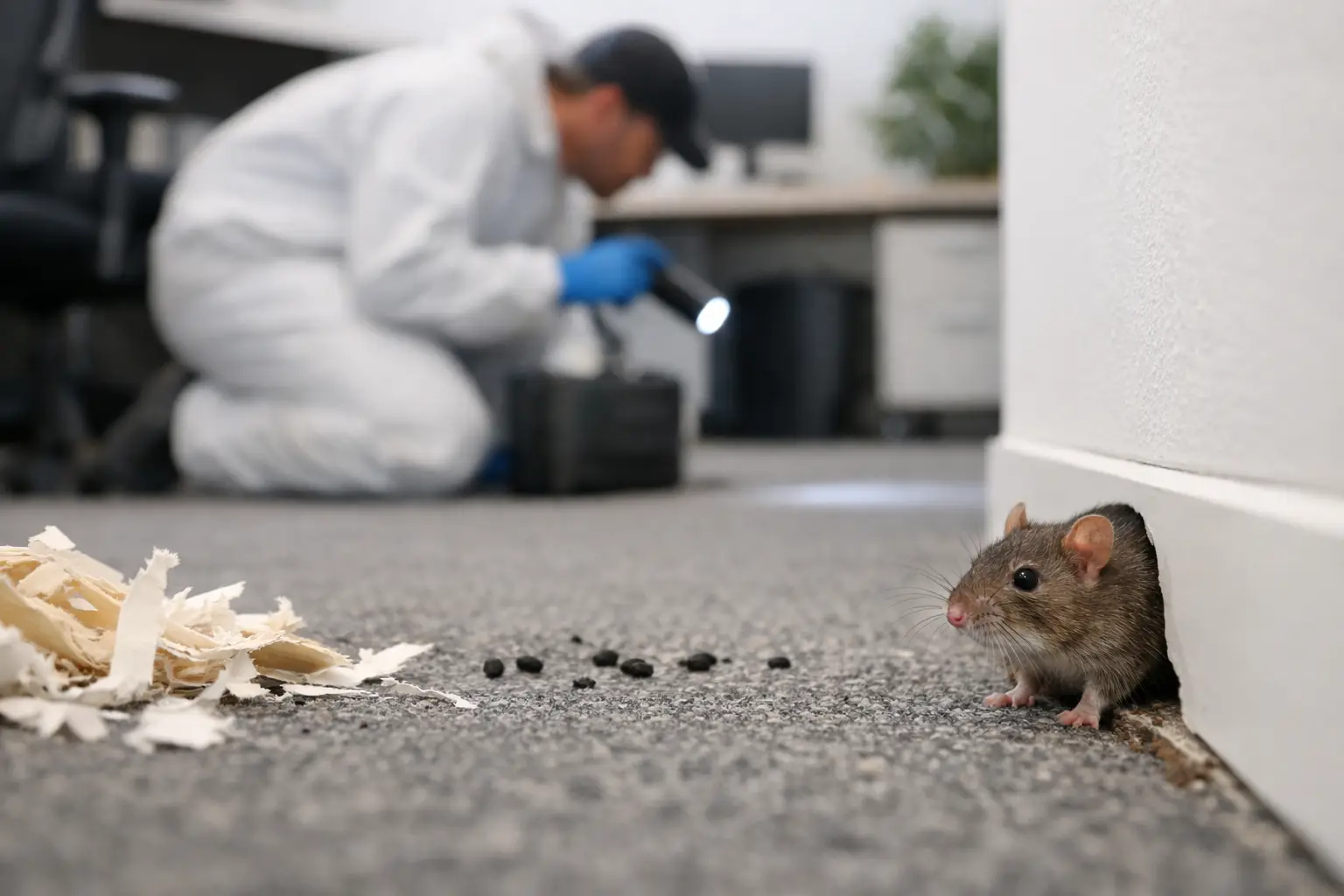
A single mouse sighting near the pantry can be easy to dismiss as an isolated incident. In a workplace, however, the signs of rodent infestation office managers notice first are often only a small part of the activity happening behind walls, above ceilings, and around food storage areas. Early action protects employee well-being, prevents contamination, and avoids the disruption that a larger infestation can create.
Rodents are resourceful. Offices provide warmth, shelter, water, and often a dependable food source through pantries, desks, waste bins, and delivery areas. Whether the property is a corporate office, retail backroom, warehouse, or shared workspace, recognizing the warning signs helps facility managers respond before the problem affects operations or reputation.
1. Droppings in Quiet or Hidden Areas
Fresh rodent droppings are among the clearest signs of rodent infestation in an office. They are commonly found along walls, under pantry cabinets, behind appliances, inside storerooms, near electrical equipment, and around false ceilings. Mice leave small, dark, rice-shaped droppings, while rat droppings are larger and more capsule-shaped.
The location matters as much as the quantity. Droppings near food preparation surfaces, coffee machines, snack cabinets, or employee lockers should be treated as a hygiene concern. Rodents can contaminate surfaces and stored food through urine, droppings, and contact.
Do not sweep or vacuum dry droppings immediately. This can disturb contaminated dust. Restrict access to the affected area, use suitable protective equipment for cleaning, and arrange a professional inspection to identify the source and extent of activity.
2. Gnaw Marks on Furniture, Packaging, or Cables
Rodents continually gnaw to keep their teeth worn down. In an office, this behavior may show up as chewed cardboard boxes, damaged food packaging, bite marks on wooden fixtures, or frayed wires beneath workstations and in utility rooms.
Damaged cables deserve prompt attention. Beyond the cost of repairs, exposed or weakened electrical wiring can create safety and fire risks. Chewed packaging in a pantry or supply closet is also a strong indicator that rodents have access to the building rather than simply passing through.
It is tempting to replace the damaged item and move on. That may restore the workspace quickly, but it does not address the rodent’s entry point or nesting area. Repeated damage is a clear signal that the activity is ongoing.
3. Scratching, Scurrying, or Movement After Hours
Rodents are usually most active when the office is quiet. Cleaning teams, security staff, and employees working late may hear scratching inside partitions, movement above ceiling panels, or scurrying behind cabinets after business hours.
These sounds can have other causes, such as building movement or mechanical systems. Still, sounds that occur repeatedly in the same area, particularly near pantries, storage rooms, or ceiling voids, warrant investigation. Rodents often travel along concealed routes where they can remain undisturbed during the day.
Keep a simple record of where and when noises are heard. This gives a pest management technician useful information during an inspection and can help pinpoint likely travel paths.
4. Grease Marks Along Walls and Entry Routes
Rats tend to follow established routes along walls, pipes, ledges, and service openings. As they travel, oil and dirt from their fur can leave dark smudges or rub marks, especially at corners and narrow gaps. These marks may appear around loading areas, utility closets, pantry kickboards, or gaps where pipes enter the building.
Grease marks are usually more visible where rodent traffic is regular. They may be accompanied by droppings, gnawing, or a stale odor. A professional inspection can distinguish rodent marks from ordinary dirt buildup and trace the route back to potential harborages or access points.
5. A Persistent Musty or Ammonia-Like Odor
A rodent infestation can produce a distinctive smell caused by urine, nesting materials, and droppings. In enclosed areas, the odor may become stronger over time and can be particularly noticeable when an office reopens after a weekend or holiday.
The smell alone does not confirm an infestation. Plumbing issues, damp materials, and poorly maintained drains can also cause unpleasant odors. But when a persistent musty or ammonia-like smell occurs alongside other warning signs, it should not be ignored.
This is especially relevant in workplaces with food storage, customer-facing spaces, or sensitive equipment. Identifying the cause early helps protect hygiene standards and prevents staff from having to work around an unresolved issue.
6. Shredded Paper, Fabric, or Insulation
Rodents build nests in protected, low-traffic spaces. They may pull apart paper, tissue, cardboard, insulation, fabric, and plastic to create nesting material. In an office, look for unusual piles of shredded material behind filing cabinets, in storerooms, beneath pantry equipment, or above suspended ceilings.
A nest may indicate that rodents are not merely entering to feed. It can mean they have found a stable place to shelter and potentially breed. That changes the response needed: trapping one visible rodent may not be enough if a nesting area remains undisturbed.
Avoid handling suspected nesting material without care. It may contain droppings, urine, parasites, or other contaminants. Professional removal and sanitation are safer, particularly in shared workplaces.
7. Sightings During the Day
Seeing a rat or mouse during daylight hours is a concern, although it does not automatically reveal how large the infestation is. Rodents may appear during the day when food is readily available, a nesting area has been disturbed, or competition is forcing them to search outside their usual schedule.
Staff should report sightings promptly and accurately. Note the time, location, approximate size, and direction the rodent traveled. A report such as “small rodent seen entering the gap behind the pantry refrigerator” is far more useful than a general observation that something ran across the floor.
Avoid asking employees to chase or handle rodents. This can drive them deeper into inaccessible areas and may create unnecessary exposure. The priority is to contain the immediate risk, protect food and work surfaces, and assess the property professionally.
Why Office Rodent Activity Needs a Fast Response
Rodents can affect far more than housekeeping. They can contaminate food and pantry surfaces, damage inventory and electrical systems, and create concern among employees, tenants, visitors, or customers. For businesses in regulated settings such as food and beverage, health care, retail, and logistics, visible pest activity may also affect compliance and audit readiness.
The right response depends on the site and evidence found. A single mouse near an external door may point to an exclusion issue. Repeated droppings in multiple rooms, damaged wiring, or nesting material suggests a broader problem requiring a structured treatment and prevention plan.
What Facility Managers Should Do Next
Start by securing food sources. Keep snacks in sealed containers, empty waste bins regularly, clean spills promptly, and avoid leaving pet food or uncovered leftovers in desks and pantries overnight. Check that doors close properly and report gaps around pipes, conduits, vents, and service entrances.
These measures reduce attraction, but they rarely solve an established infestation alone. Rodents can enter through surprisingly small openings and may be nesting in areas that are not visible during a routine walk-through. Over-the-counter poisons can also create avoidable risks in occupied workplaces, including odors from rodents dying in inaccessible spaces.
A professional rodent control program should begin with inspection, not guesswork. The goal is to identify rodent species, activity levels, likely entry points, food and water sources, and areas of harborage. Treatment can then be combined with monitoring, proofing recommendations, sanitation guidance, and follow-up visits based on the property’s risk.
Servcare approaches rodent control with this long-term focus: addressing active activity while helping businesses reduce the conditions that allow rodents to return. For office managers, that means a practical plan designed around safety, minimal disruption, and ongoing peace of mind.
The most useful next step is not to wait for a second sighting. Document what has been found, protect affected areas, and arrange a thorough assessment while the evidence can still lead directly to the source.