

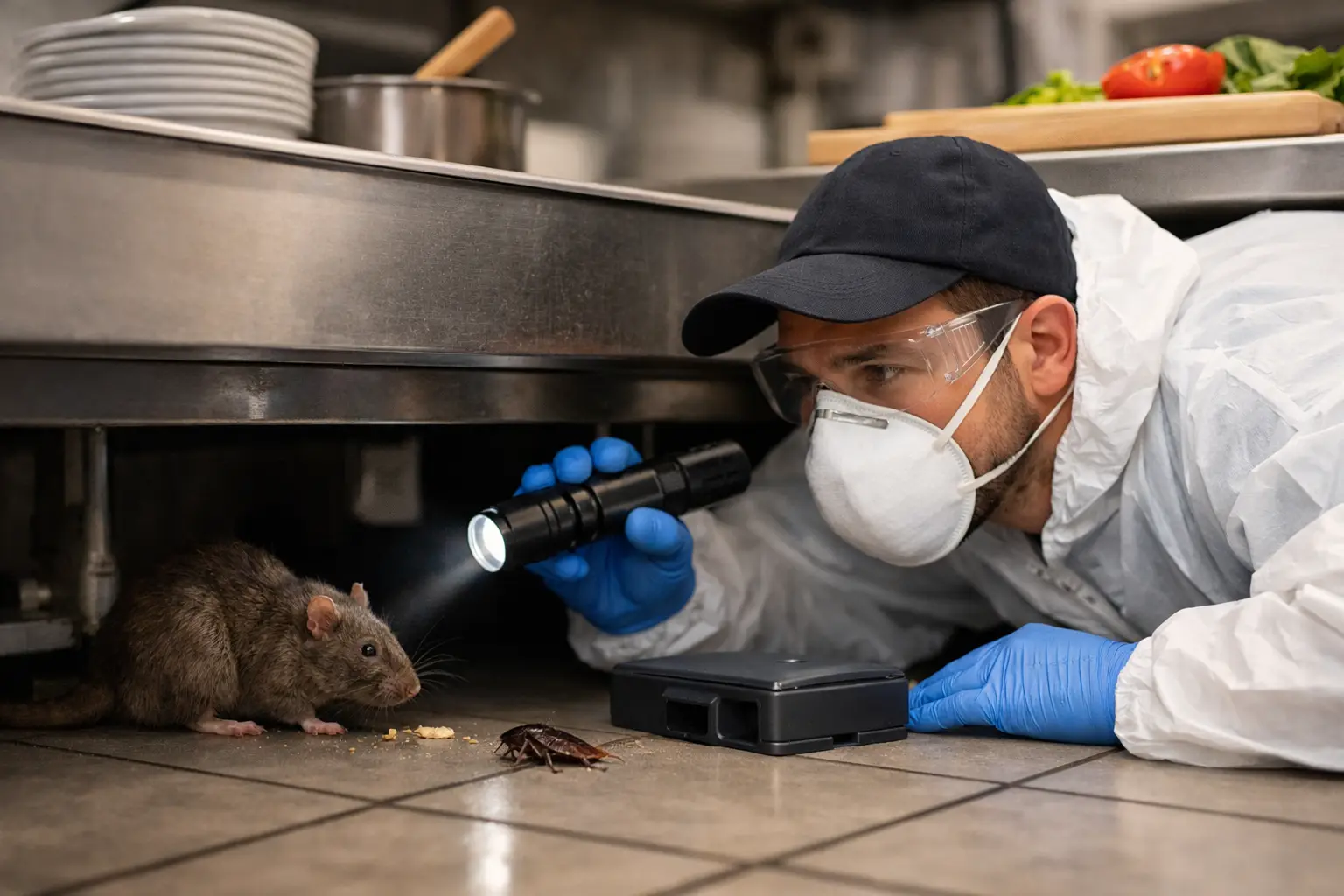
A single cockroach sighting near a service counter can travel farther than a food delivery. It can prompt a customer complaint, trigger an inspection concern, and undermine confidence in a restaurant that has spent years building its reputation. The top pest risks restaurants face are not simply a cleanliness issue. They are operational risks that can affect food safety, staff confidence, customer trust, and business continuity.
Restaurants create the conditions pests seek: warmth, moisture, food residue, storage areas, delivery traffic, and hidden voids behind equipment. The answer is not a one-time spray. Reliable protection begins with knowing where pests enter, what allows them to survive, and how to remove those conditions before activity becomes an infestation.
Why Pest Activity Is a Serious Restaurant Risk
Pests can contaminate ingredients, food-contact surfaces, packaging, utensils, and storage areas. Rodents and cockroaches may carry pathogens from drains, garbage areas, and other unsanitary locations into kitchens and dry stores. Flies can move quickly between waste and food preparation zones, while mosquitoes around outdoor dining areas can make guests uncomfortable and raise hygiene concerns.
The commercial impact is equally serious. A pest complaint can lead to negative reviews, lost repeat business, product disposal, disrupted operations, and added pressure on managers during audits or inspections. For restaurants, prevention is usually less disruptive and less costly than responding after widespread activity has taken hold.
The Top Pest Risks Restaurants Need to Control
Cockroaches in kitchens and hidden equipment gaps
Cockroaches are among the most concerning restaurant pests because they thrive where food, warmth, and moisture are available. They commonly shelter in motor compartments, floor drains, wall cracks, false ceilings, cabinet joints, and behind refrigerators or cooking equipment. Seeing one cockroach during service may indicate a larger population nearby, particularly if there are droppings, egg cases, shed skins, or a persistent musty odor.
Cockroach control requires more than treating visible insects. A professional program identifies harborages and addresses contributing conditions, such as grease buildup, leaking pipework, cluttered storage, and gaps around plumbing lines. Treatment selection should suit the site and activity level while protecting food-handling areas and minimizing disruption to operations.
Rodents entering through small openings
Rats and mice can enter through surprisingly small gaps around pipes, doors, drains, loading bays, and utility lines. Restaurants with rear access, shared refuse areas, or frequent deliveries may be especially exposed. Once inside, rodents can damage packaging and wiring, contaminate stock with droppings or urine, and establish nests in ceiling spaces, storerooms, or equipment voids.
The strongest rodent strategy combines exclusion with monitoring and targeted control. Sealing entry points matters, but it must be paired with proper door management, protected food storage, disciplined waste handling, and regular checks of high-risk routes. Simply placing bait without resolving entry conditions may reduce activity briefly while leaving the source of the problem untouched.
Flies around waste, drains, and food preparation zones
Flies are often linked to waste handling, overflowing bins, dirty drains, damaged screens, and food debris in difficult-to-clean areas. Fruit flies may breed around overripe produce, beverage residues, and recycling containers. Drain flies can indicate organic buildup inside drain lines. House flies can enter from outdoor areas and become a concern wherever food is uncovered.
Because fly species and breeding sources differ, the right response depends on what is being seen and where. Cleaning is central, especially around floor drains, bar stations, grease traps, and garbage holding areas. However, recurring fly activity should be investigated rather than treated as a routine nuisance. Identifying the breeding source is what stops the cycle.
Ants, stored-product pests, and other food invaders
Ant trails around prep counters, dry stores, or beverage stations can quickly become a customer-facing problem. Ants are attracted to sweet residues, grease, water, and accessible food. Their entry points may be tiny cracks in walls, windows, and service penetrations, which makes surface cleaning alone insufficient.
Dry goods also need attention. Beetles, weevils, moths, and other stored-product pests can enter through infested deliveries or develop in overlooked ingredients such as flour, grains, spices, nuts, and pet food kept on-site. Regular stock rotation, inspection of incoming goods, and cleaning beneath shelving help reduce this risk. If activity is found, affected stock should be isolated and the surrounding storage area assessed carefully.
Mosquitoes near outdoor dining and service areas
For restaurants with patios, outdoor waiting spaces, or back-of-house areas, mosquitoes can affect guest comfort and staff morale. They breed in standing water, including blocked drains, container lids, plant trays, discarded packaging, and poorly maintained outdoor areas. In Singapore’s warm, humid conditions, even small water-holding items can become a recurring source of mosquito activity.
Mosquito management is primarily about source reduction. Removing standing water and maintaining drainage are essential. Where activity persists, professional inspection can identify overlooked breeding conditions and recommend appropriate control measures for the property.
Conditions That Allow Infestations to Grow
Pest issues rarely have one cause. In many restaurants, several small gaps create the problem: a door left open during deliveries, cardboard stored near a damp wall, a floor drain with organic residue, or a leaking pipe beneath a sink. These conditions can be easy to miss during a busy shift, especially when teams are focused on service.
Waste management deserves particular attention. Trash should be contained, removed on schedule, and kept away from doors where possible. Dumpster and bin areas should be cleaned routinely, since spilled liquids and food residue attract rodents, cockroaches, and flies. Inside, food should be stored in sealed containers and raised off the floor to make cleaning and inspection easier.
A restaurant’s layout also affects risk. Older premises may have more cracks, service penetrations, and inaccessible voids. Shared buildings can introduce pests from adjacent units or common refuse areas. This does not mean an infestation is unavoidable, but it does mean the pest management plan should reflect the site rather than rely on a generic treatment schedule.
Building a Prevention Program That Works
An effective restaurant pest program starts with a detailed inspection. The goal is to map pest pressure, identify likely entry points and harborages, review sanitation and storage practices, and determine which controls are appropriate for the environment. This creates a practical baseline instead of guessing based on occasional sightings.
From there, restaurant managers should establish clear routines. Staff need to know how to report pest sightings promptly, what signs to look for, and why propping open back doors or leaving food debris overnight creates risk. Cleaning teams should focus not only on visible surfaces but also on drains, equipment edges, under-sink areas, and storage corners.
Professional monitoring provides another layer of assurance. Strategically placed monitors and regular inspections can reveal activity before it becomes visible to customers. Treatment should be targeted and responsibly applied, with attention to food safety procedures, operational timing, and the specific pest involved. A reputable pest management provider will also explain the conditions that must be corrected between visits, because long-term control is a shared effort.
When a Restaurant Should Call a Professional
A prompt assessment is sensible when there are repeated sightings, droppings, gnaw marks, cockroach egg cases, unexplained odors, damaged food packaging, or recurring flies despite cleaning. Restaurants should also seek professional guidance after a nearby renovation, flooding event, waste-area issue, or change in neighboring tenants, as these events can shift pest pressure quickly.
Servcare approaches restaurant pest management through inspection, targeted treatment, and preventive recommendations tailored to the site. With experienced technicians, science-backed methods, and a focus on safe, long-term protection, the aim is to help operators address the cause of pest activity rather than repeatedly react to its symptoms.
A clean dining room is only part of the picture. When teams consistently protect storage, drainage, waste areas, entry points, and hidden equipment spaces, they give pests far fewer opportunities to turn a small weakness into a costly disruption.