

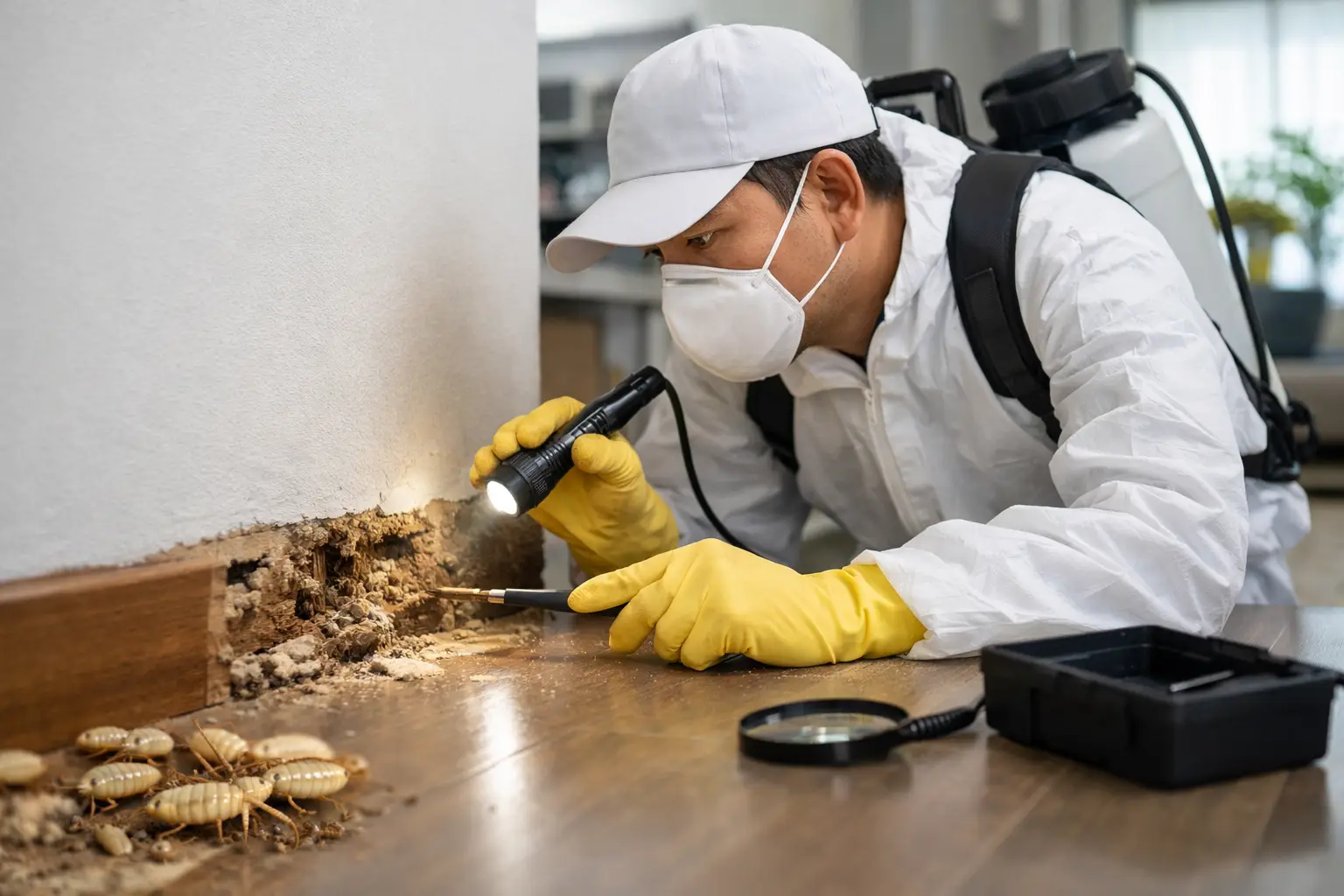
A termite problem rarely begins with dramatic damage. It often starts behind a skirting board, beneath flooring, or inside a concealed timber fixture where activity can continue unnoticed. This Singapore termite inspection guide explains what a professional inspection involves, when to arrange one, and how early findings can protect a home or business from costly structural repairs.
Subterranean termites are a particular concern in Singapore’s warm, humid conditions. They live in the soil, travel through sheltered pathways, and feed on cellulose-based materials such as timber, paper, cardboard, and some building components. By the time visible signs appear, a colony may already have been active for some time. A proper inspection is therefore not simply about confirming an infestation. It is about identifying risk, locating possible entry points, and deciding on the right long-term protection plan.
When Should You Schedule a Termite Inspection?
Property owners should not wait until wood begins to crumble. An inspection is sensible when purchasing a property, renovating areas with built-in carpentry, or after discovering moisture issues near bathrooms, kitchens, balconies, or exterior walls. Businesses should also consider inspections as part of planned facility maintenance, especially in older premises, ground-floor units, warehouses, food operations, and sites with timber fittings or stored cartons.
You should arrange an inspection promptly if you notice mud tubes along walls, foundations, pipes, or door frames. These narrow, earth-colored tunnels help subterranean termites travel between their underground colony and a food source while retaining moisture. Other warning signs include blistered paint, hollow-sounding timber, doors or windows that suddenly stick, fine piles of discarded wings, or soft spots in wooden fixtures.
None of these signs confirms termites on its own. Water damage, wood rot, and other insects can cause similar symptoms. That is why professional assessment matters. Guesswork can lead to the wrong treatment, while a delayed response can allow hidden activity to spread.
What a Professional Termite Inspection Covers
A thorough inspection begins with questions. The technician should ask where you have seen possible signs, whether the issue is recurring, when renovations were carried out, and whether there have been leaks, flooding, or prior pest treatments. This context helps direct the inspection toward likely activity zones rather than treating every concern as identical.
The on-site assessment typically includes accessible interior and exterior areas. In a home, this may cover skirting boards, door frames, cabinets, built-in wardrobes, timber flooring, false ceilings, service ducts, bathrooms, kitchens, balconies, and perimeter walls. In commercial sites, the scope may also include storage spaces, loading areas, utility rooms, pantries, partitions, and areas where cartons or timber materials are kept close to walls.
A technician looks for evidence of active termites, previous damage, favorable conditions, and potential routes of entry. Moisture is a major factor because subterranean termites need a humid environment to survive. Leaking pipes, poor drainage, standing water, and damp timber can make a property more attractive or provide concealed pathways.
The inspection should also distinguish between active infestation and old damage. A previous termite issue may leave visible marks even after the colony is no longer present. Conversely, timber that looks intact on the surface can contain hidden galleries beneath it. Professional tools and trained judgment help determine whether further investigation or treatment is needed.
Areas That Need Extra Attention
Certain parts of a property deserve closer checking because they combine timber, moisture, and limited visibility. These include bathroom vanity cabinets, kitchen sink areas, planter boxes against walls, timber decking, ground-contact wood, and spaces around plumbing penetrations.
Renovated interiors can also create blind spots. New cabinetry or wall panels may cover old termite pathways, while false ceilings and built-in features can make routine visual checks difficult. This does not mean renovation causes termites. It means access and moisture management should be considered before, during, and after the work.
How to Prepare for a Termite Inspection
You do not need to empty your property before an inspection, but access makes the assessment more reliable. Move stored items away from walls where practical, clear cabinets under sinks, and ensure the technician can inspect areas where you have noticed changes. If a particular door frame, cabinet, or flooring section concerns you, point it out at the start of the visit.
For businesses, facility managers should arrange access to locked rooms, service areas, storage spaces, and relevant maintenance records where available. Informing the inspector about past leaks, renovations, pest reports, or construction work can save time and help reveal patterns.
Avoid spraying household insecticide over suspected termite activity before the inspection. Disturbing visible termites may cause them to retreat to another location, making the colony harder to track. It may also provide temporary reassurance without addressing the source of the problem.
Understanding Inspection Findings and Treatment Decisions
After the inspection, the most useful report is clear about what was found, where it was found, and what should happen next. If active subterranean termites are confirmed, the treatment recommendation should be based on the property layout, infestation location, level of activity, and accessibility of affected areas.
In some cases, localized treatment may be appropriate when activity is confined and the source can be addressed directly. In other cases, a broader soil or perimeter-based strategy may be needed to reduce the risk of termite entry from the surrounding ground. The right approach depends on the building design and termite behavior, not on a one-size-fits-all package.
There can be trade-offs. A less invasive treatment may be suitable for a small, accessible area, but it may require closer monitoring. More extensive protection may offer wider coverage, yet planning is needed to minimize disruption to occupants, operations, and finished surfaces. A professional provider should explain these choices in plain language, including preparation requirements, safety measures, expected follow-up, and any conditions that could affect results.
For property owners seeking dependable guidance, Servcare applies inspection-led termite management designed around the site, the evidence found, and long-term prevention rather than a quick surface fix.
Prevention After Your Singapore Termite Inspection
Treatment is only one part of termite control. Long-term prevention focuses on making a property less favorable to termite activity and ensuring emerging signs are noticed early. Repair plumbing leaks promptly, keep timber and cardboard off the floor where possible, and avoid allowing soil or landscaping materials to bridge directly against vulnerable building surfaces.
Outdoor areas matter as well. Timber planters, decking, fencing, and stored wood should be checked regularly for moisture damage and termite evidence. Good drainage around a property can reduce persistent dampness, although it cannot guarantee that termites will stay away.
Inside, pay attention to changes that seem minor: a new hollow sound when tapping a door frame, paint that appears unusually bubbled, a cabinet panel that feels soft, or unexplained winged insects near windows. Early reporting gives a technician a better opportunity to investigate before damage becomes extensive.
Questions to Ask Before Booking a Service
Choose a pest management provider that can explain the inspection process and treatment recommendation without pressure or vague promises. Ask whether the technician is licensed, how active activity will be confirmed, what areas are included in the inspection, and whether follow-up monitoring is recommended.
It is also reasonable to ask how the proposed method is selected for your building, what preparation is required, and how the service will protect occupants, pets, products, and operations. For commercial properties, ask how work can be coordinated around hygiene requirements, customer access, and business continuity.
A useful termite inspection leaves you with more than a diagnosis. It gives you a practical understanding of your property’s risk areas, the evidence behind any recommendation, and a clear next step. If you have noticed a possible sign, arranging an assessment now can be far easier than repairing hidden damage later.