


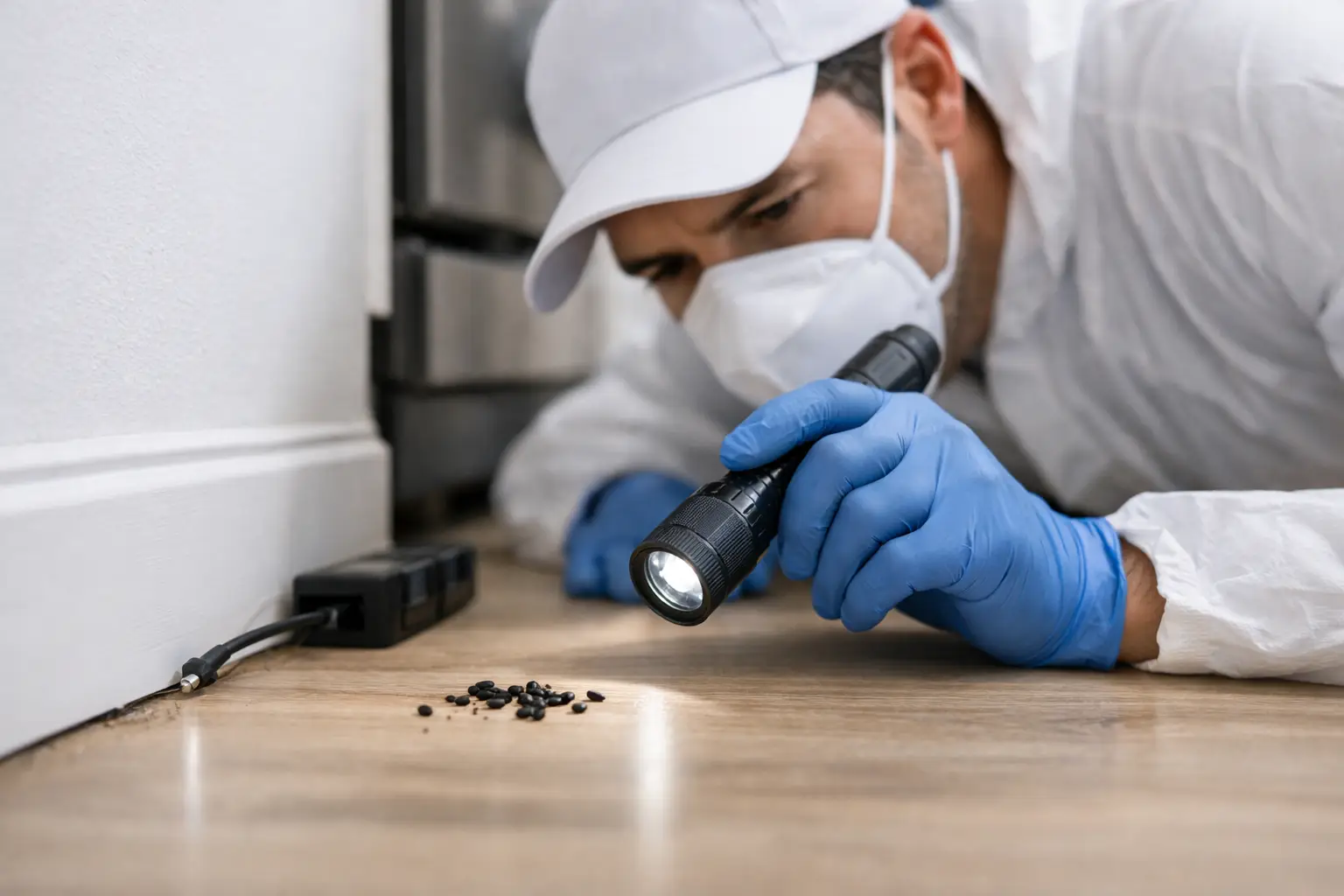
A few dark pellets behind a refrigerator or beneath a storage rack can be the first visible sign of a rodent problem. Knowing how to detect rat droppings helps you act before rats contaminate food areas, damage wiring, or establish a nesting site within your property.
Droppings are not proof of how large an infestation is on their own, but they are a useful warning signal. Their size, shape, condition, and location can help homeowners, facility managers, and business operators decide whether they are dealing with rats, mice, or another pest altogether.
What Rat Droppings Look Like
Rat droppings are usually dark brown or black, with a firm, pellet-like appearance. Fresh droppings may look moist, shiny, and darker than older ones. As they age, they become dry, dull, and grayish, and may crumble when disturbed.
The two rat species most commonly encountered around buildings leave slightly different evidence. Norway rat droppings are typically larger, around three-quarters of an inch long, with blunt or rounded ends. Roof rat droppings are generally smaller and more curved, often with pointed ends. Both are noticeably larger than typical mouse droppings.
Mouse droppings are usually no more than a quarter of an inch long and resemble small grains of rice with pointed ends. This distinction matters because rats often require a more thorough inspection of drains, exterior access points, ceiling voids, and service areas, while mice can enter through much smaller gaps.
Do not rely on shape alone. Droppings can vary with diet, moisture, and age. The location and presence of other rodent signs provide a more reliable picture.
Where to Look for Rat Droppings
Rats prefer protected routes close to food, water, and shelter. They often travel along walls instead of crossing open spaces, so inspect edges, corners, and concealed areas first. In homes, common locations include under sinks, behind appliances, inside cabinets, around pet-food storage, in garages, and near ceiling access panels.
In commercial premises, droppings may be found behind stock racks, near loading bays, within utility rooms, around grease traps, beneath pantry equipment, or along perimeter walls. F&B operators should pay particular attention to dry-storage rooms, false ceilings, waste areas, and the spaces behind refrigerators or cooking equipment.
Outdoor evidence is just as significant. Check around trash storage, drain covers, landscape edges, utility boxes, air-conditioning ledges, and gaps around pipes. In Singapore’s warm, humid conditions, readily available food waste and sheltered building voids can support ongoing rodent activity if entry points and sanitation issues are not addressed together.
A small number of droppings in one place may indicate a passing rodent. Repeated droppings along the same route, however, suggest an active travel path. Larger accumulations near nesting material, food sources, or sheltered voids should be treated as a priority.
How to Detect Rat Droppings and Confirm Activity
The most useful inspection combines droppings with the signs rats leave as they move through a property. Look for greasy rub marks along walls, pipes, and ledges. Rats repeatedly follow established routes, and the oils and dirt on their fur can leave dark smudges at contact points.
You may also notice gnaw marks on packaging, wood, plastic containers, cable insulation, or pipe coverings. Rats need to gnaw continually, so fresh tooth marks can indicate recent activity. Shredded paper, fabric, insulation, or dry plant material may point to a nearby nest.
Odor can offer another clue. A persistent musky smell, particularly in enclosed spaces, may result from urine and accumulated droppings. Sounds of scratching, scurrying, or movement in ceilings, walls, or behind fixtures are often more noticeable at night, when rats are most active.
If you find droppings, take note of the exact location and whether they appear fresh. Clean the area safely, then monitor it for several days. New droppings after cleaning indicate that the route is still active. For a business, documenting sightings by date and location helps identify patterns and supports a targeted pest management plan.
Do Not Confuse Rat Droppings With Other Pest Evidence
Cockroach droppings can be mistaken for rodent droppings, especially in kitchens and storage areas. Small cockroach droppings often look like black pepper, coffee grounds, or dark specks. Larger cockroach species may leave cylindrical marks with ridges, but these are still far smaller than rat pellets.
Lizard droppings are also commonly misidentified. They usually have a dark section with a distinct white or cream-colored tip, which is uric acid. Rat droppings do not have this white cap.
Bat droppings may resemble mouse droppings, but they are often brittle and may contain shiny insect fragments when broken apart. Avoid handling any unknown droppings directly. When evidence is unclear, a professional inspection can prevent treatment from being directed at the wrong pest.
Clean Rat Droppings Safely
Rat droppings can contaminate surfaces and food-handling areas. Avoid sweeping or vacuuming dry droppings, as this can disturb contaminated dust. Keep children, pets, and unprotected staff away from the affected area until it has been cleaned.
Wear disposable gloves and ventilate an enclosed space before starting. Spray the droppings and surrounding surface with an appropriate disinfectant until thoroughly wet. Allow the product to sit according to its instructions, then use paper towels to lift the material. Place the waste in a sealed bag before disposing of it in a covered trash receptacle.
Disinfect the surrounding surface afterward, then remove gloves carefully and wash hands thoroughly with soap and water. Any food, disposable packaging, or paper products that have been directly contaminated should be discarded. For extensive contamination, ceiling voids, or sensitive commercial environments, professional cleanup guidance is the safer choice.
Why Droppings Often Mean More Than One Rat
Finding one dropping does not automatically mean there is a large infestation. Still, rats rarely remain in an area without a reason. Food access, water leaks, unsecured waste, clutter, and entry gaps can allow a single sighting to develop into recurring activity.
Rats reproduce quickly and are wary of unfamiliar objects. This is why a bait-only response may not solve the underlying problem. Effective rodent control begins with inspection, then addresses the conditions allowing rats to enter, feed, travel, and nest.
For example, a storeroom may be clean but still experience activity because of an unsealed pipe opening behind shelving. A residential kitchen may have no visible food left out, yet a leaking cabinet pipe or accessible pet-food container may be enough to sustain rodents. Long-term prevention depends on identifying these contributing conditions.
When to Call a Professional
Professional help is recommended when droppings reappear after cleaning, are found in food preparation areas, or are present in ceilings, drains, electrical spaces, or inaccessible voids. You should also arrange an inspection if you see gnaw damage, hear repeated movement, notice a strong rodent odor, or find signs across multiple parts of the property.
For commercial sites, prompt action protects hygiene standards, operational continuity, and customer confidence. A qualified pest management provider can assess the type and extent of activity, locate likely entry points, implement appropriate control measures, and recommend practical exclusion and sanitation improvements.
Servcare approaches rodent control as a prevention-focused process, combining careful inspection with tailored treatment and follow-up measures designed to reduce recurring activity. This is particularly valuable where pests can affect health, food safety, equipment, or a property’s reputation.
Prevent New Droppings From Appearing
After evidence has been removed, make the environment less attractive to rats. Store food and pet food in hard, sealed containers, clear waste regularly, and keep dumpster or trash areas clean. Repair leaks, remove standing water where possible, and reduce clutter that creates hidden harborages.
Inspect doors, vents, pipe penetrations, drain areas, and service openings for gaps. Rats can exploit surprisingly small weaknesses around building services, and exclusion work should use durable materials suited to the location. Keep vegetation from pressing directly against structures and avoid leaving bulky items tightly stacked against exterior walls.
Droppings are an early warning, not something to ignore or simply clean away. A careful response now can protect your family, staff, customers, and property from a much more disruptive rodent issue later.