

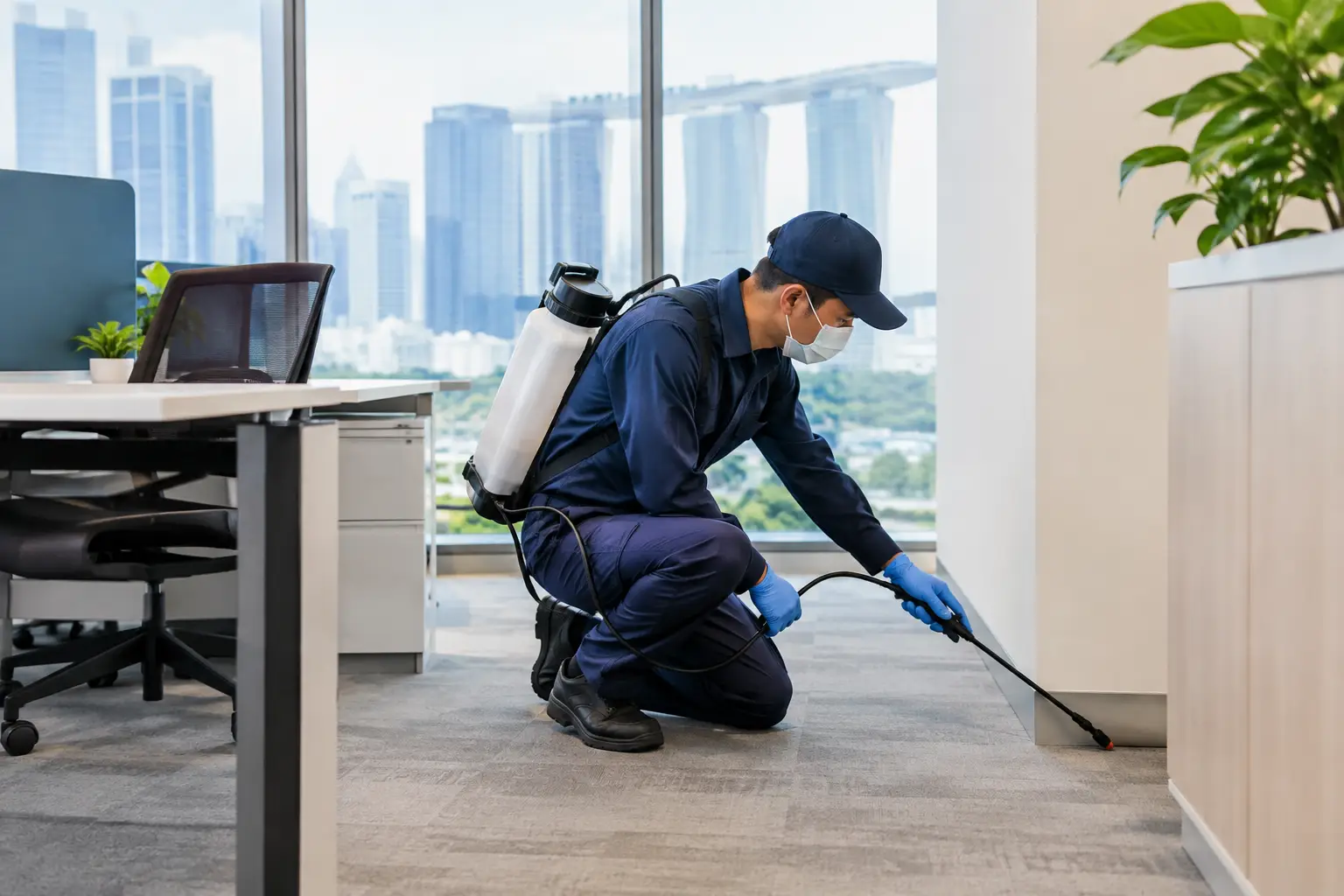
A cockroach sighting in the pantry, droppings behind a filing cabinet, or mosquito activity near a drain can quickly become more than an unpleasant office complaint. Effective Singapore office pest control protects staff confidence, workplace hygiene, and the smooth running of your business by addressing the source of pest activity, not simply what is visible that day.
For facility managers and business owners, the challenge is rarely just removing one pest. Offices have shared pantries, concealed plumbing, delivery points, false ceilings, storage rooms, and waste areas that can give pests food, water, shelter, or a route indoors. A dependable pest management plan identifies those conditions early and reduces the chance of recurring problems.
Why office pest activity deserves a prompt response
Pests can undermine a workplace in ways that are easy to underestimate. Cockroaches may contaminate food-contact surfaces and pantry areas. Rodents can damage cables, stored materials, and insulation while leaving droppings in hidden spaces. Mosquitoes can breed in small areas of standing water around drains, plant trays, and outdoor service zones. Termites may remain undetected for long periods while affecting timber fixtures, doors, built-in carpentry, or other vulnerable materials.
There is also a people factor. Employees should not have to worry about seeing pests in a meeting room, break area, or restroom. Visitors and clients form an impression quickly, particularly in offices that receive customers, partners, or candidates. In multi-tenant buildings, a localized issue can spread through shared service shafts, loading areas, and common refuse points if it is not managed carefully.
A fast response matters, but speed alone is not the standard. The right treatment should be safe, targeted, and based on a clear understanding of the pest, the affected area, and the conditions that allowed the problem to develop.
What Singapore office pest control should include
A professional program begins with inspection. This is where the difference between a temporary response and long-term prevention becomes clear. Technicians should look beyond the reported sighting to assess likely harborages, access points, moisture sources, food residues, waste practices, and surrounding conditions.
For example, cockroach activity in an office pantry may be linked to gaps around plumbing, grease residue beneath appliances, or cardboard stored near food supplies. Rodent activity may point to an unsealed service opening, a cluttered storeroom, or food left accessible overnight. Mosquito concerns may require checks of floor traps, drain lines, outdoor containers, and other water-holding areas.
After the assessment, treatment should match the specific risk. This may involve professional-grade baiting, targeted residual treatment, trapping, monitoring devices, source reduction, or exclusion work. The best approach depends on the pest species, the level of activity, office layout, and whether the premises include sensitive areas such as pantries, childcare spaces, food preparation areas, or server rooms.
Just as important, a provider should explain what will happen, which areas need access, and any practical steps your team should take before or after service. Clear communication reduces disruption and helps employees cooperate with prevention measures.
Treatment is only one part of control
One-off spraying can reduce visible activity, but it may not resolve the conditions behind an infestation. If food remains accessible, drains remain poorly maintained, or entry points stay open, pests can return.
Long-term office protection usually combines treatment with monitoring and practical recommendations. Depending on the site, these may include improving waste handling, sealing cable penetrations, correcting drainage issues, reducing clutter near service areas, and adjusting pantry cleaning routines. Small operational improvements often make a meaningful difference when they are consistently maintained.
Common office pests and the risks they bring
Cockroaches are among the most common office pests because pantries, coffee stations, and compact storage areas provide warmth, moisture, and food. They are most active when the office is quiet, so daytime sightings can indicate a more established problem. Bait-led treatment and sanitation improvements are often more effective than relying on broad surface spraying alone.
Rodents are drawn to food waste, sheltered storage, and gaps around utilities. Besides hygiene concerns, they can gnaw through materials and may cause costly damage to electrical cables. Rodent control should focus on trapping and monitoring, but also on proofing. Removing a rodent without closing its entry route is rarely a lasting solution.
Mosquitoes are often associated with outdoor spaces, yet breeding can occur surprisingly close to work areas. Water collecting in drains, trays, containers, or poorly maintained service zones can support mosquito development. Regular inspections and source reduction are essential, especially during periods of heavier rainfall.
Subterranean termites require a different level of attention because their activity is often concealed. Mud tubes, hollow-sounding timber, bubbling paint, or damaged wooden fixtures may signal a problem, but visible signs can appear late. A professional assessment can determine whether termite activity is present and what treatment strategy is appropriate for the building and affected materials.
How to choose a reliable pest control provider
Office managers need more than a vendor who arrives, applies a product, and leaves. Look for a pest management partner with the technical capability to inspect thoroughly, recommend proportionate treatment, and document service clearly. In Singapore, NEA licensing is a useful baseline, while experienced technicians and entomologist support can provide added confidence for complex or recurring issues.
Ask how the provider identifies the source of activity and how they will measure progress after treatment. A credible recommendation should be specific to your site. It should not treat every office as though it has the same layout, pest pressure, or operational constraints.
Safety should also be part of the discussion. Professional pest management should use suitable products and application methods with care around staff, office equipment, food areas, and occupied spaces. Eco-conscious practices are not about making empty promises. They involve using targeted methods, reducing unnecessary chemical use, and prioritizing prevention wherever possible.
Servcare applies this practical, prevention-led approach through tailored pest management supported by more than two decades of experience, licensed professionals, and science-backed treatment methods.
Building prevention into daily office operations
A pest-free office is supported by everyday habits, not just scheduled treatments. Pantry surfaces should be cleaned promptly, food should be stored in sealed containers, and trash should not be left overnight where possible. Cardboard, unused furniture, and stacked materials should be kept to a minimum in storerooms, especially along walls and near utility areas.
Facility teams should also report maintenance issues early. A leaking pipe, damaged door sweep, loose drain cover, or gap around a conduit can become a pest entry point or breeding condition. When cleaning, maintenance, and pest control teams share observations, issues are more likely to be resolved before they grow.
For larger offices, multi-tenant sites, and workplaces with frequent deliveries, scheduled inspections and monitoring provide an added layer of assurance. The ideal frequency depends on pest history, building design, nearby food operations, waste arrangements, and seasonal conditions. A low-risk corporate office may need a different schedule than a site with a busy pantry, warehouse storage, or shared loading bay.
When recurring sightings mean it is time to reassess
Repeated sightings after treatment do not always mean the treatment failed. Pest activity may be coming from an adjoining unit, a shared building service area, or an overlooked source within the office. It can also reflect incomplete sanitation or a new entry point created by renovation, maintenance work, or changing weather conditions.
The answer is not automatically more product. It is a reassessment of the site, the pest species, the treatment placement, and the building conditions. A capable provider will investigate those factors and adjust the plan rather than repeat the same method without evidence.
A clean, calm workplace gives employees and visitors one less thing to worry about. With timely inspection, carefully selected treatment, and consistent prevention, pest control becomes a quiet part of protecting the office environment and the people who rely on it.