

When a door frame starts sounding hollow or paint begins to bubble for no clear reason, the problem may be far more serious than surface wear. Subterranean termite treatment is designed for exactly this kind of hidden threat – one that can quietly spread through timber, wall voids, and structural areas long before obvious damage appears.
For property owners and facility managers, that hidden nature is what makes subterranean termites so costly. By the time activity is noticed, the colony may already be established below ground and feeding through sheltered mud tubes into the building. A proper response is not just about killing visible termites. It is about identifying where they are coming from, stopping active infestation, and putting a long-term barrier in place to protect the property.
Why subterranean termites are harder to control
Subterranean termites live in the soil and rely on moisture to survive. Unlike drywood termites, which can live inside the wood they infest, subterranean species typically travel back and forth between their underground nest and the structure they are feeding on. That means what looks like a small affected area may actually be connected to a much larger colony.
This is why one-off surface sprays rarely solve the problem. If treatment only reaches the timber you can see, the main colony may remain active below ground. Workers can simply re-enter through a different point and continue feeding. Effective control depends on reaching the source of infestation or intercepting termite movement where they travel.
In residential settings, this can affect door frames, built-in carpentry, skirting, and concealed timber elements. In commercial and industrial properties, the risk extends to storage zones, wooden fixtures, archive areas, false flooring, and structural components where unnoticed damage can create both safety and operational concerns.
What a professional subterranean termite treatment should include
The first step is always inspection. A professional assessment helps confirm whether the issue is truly subterranean termites, how far the activity has spread, and which treatment method best fits the site conditions. This matters because no two infestations are exactly alike. Soil access, building layout, moisture conditions, renovation history, and the extent of termite movement all influence the treatment plan.
A reliable subterranean termite treatment usually involves a combination of direct control and preventive protection. If active termites are found in specific areas, targeted treatment may be applied to affected points to stop ongoing feeding. Just as important, the surrounding structure and soil interface need attention so termites cannot simply return through another route.
In many cases, this means creating a treated zone around the property or at key entry points. The goal is to form a continuous barrier that termites cannot cross without being exposed to the termiticide. Where direct trenching or drilling is not practical, treatment methods may be adapted to suit the construction type. This is where technical experience matters. The right method is the one that achieves coverage without causing unnecessary disruption.
Signs that treatment should not be delayed
Subterranean termite activity often stays hidden until damage is already underway, but there are warning signs worth taking seriously. Mud tubes along walls or foundations are one of the clearest indicators. These shelter tubes help termites move between soil and timber while retaining moisture.
Other signs include blistered paint, hollow-sounding wood, sagging door frames, unexplained cracks near timber sections, or swarms of winged termites near light sources. In some properties, especially commercial sites with less day-to-day visibility into service areas, signs may first show up during maintenance work or fit-out changes.
Waiting to “see if it gets worse” is rarely a good strategy. Termite damage tends to expand quietly, and repair costs often exceed the cost of timely treatment. Early intervention gives more options and usually limits the extent of structural or decorative damage.
How subterranean termite treatment works in practice
A sound treatment plan balances immediate control with long-term prevention. After inspection, technicians identify active zones, possible entry points, and the areas most exposed to termite movement. These may include external perimeters, expansion joints, service penetrations, landscaped edges, and damp sections near bathrooms or kitchens.
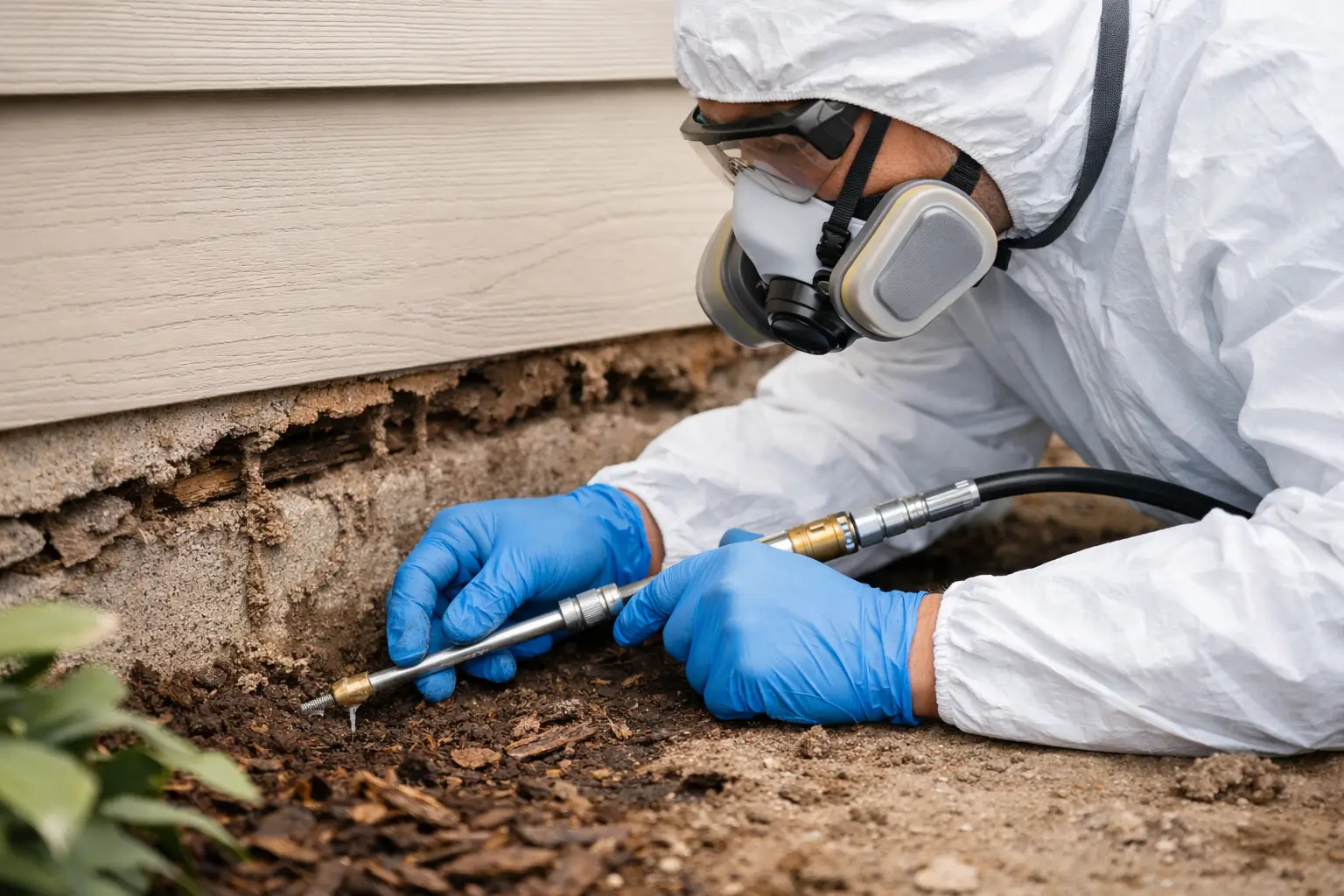
Where soil treatment is suitable, termiticide is applied into the ground around the structure to establish a protective treated zone. In some cases, drilling may be needed along concrete edges or slab joints to reach soil beneath. This is not done arbitrarily. It is carried out strategically to improve continuity and treatment reach.
If termites are actively attacking internal timber, localized treatment may also be used to knock down live activity in those specific areas. That said, localized treatment on its own is rarely enough for subterranean species. The broader protective system is what reduces the chance of reinfestation.
For some sites, especially those with complex layouts or sensitivity around operations, treatment planning needs to be especially careful. F&B premises, offices, retail environments, and industrial facilities all have practical considerations around access, safety, and disruption. A professional provider should be able to explain the treatment scope clearly, prepare the site properly, and carry out the work in a controlled manner.
Why prevention matters after active treatment
Subterranean termites are not a pest you deal with once and forget. Even after an active infestation is controlled, the conditions that attracted them may still be present. Moisture issues, timber contact with soil, concealed cracks, and untreated entry points can all increase future risk.
That is why long-term protection matters just as much as immediate elimination. Follow-up inspections help confirm whether activity has stopped and whether the treated zone remains intact. In higher-risk environments, periodic monitoring is a sensible part of property protection, particularly for ground-floor premises, older buildings, and sites with landscaping or drainage conditions that support termite activity.
Preventive advice also plays a role. Reducing wood-to-soil contact, managing leaks promptly, improving ventilation in damp areas, and avoiding storage of timber or cardboard against walls can all help lower risk. These steps do not replace treatment, but they do support better long-term results.
Choosing the right provider for subterranean termite treatment
Not all pest control approaches are built for termite work. Subterranean infestations require technical assessment, proper product selection, and treatment methods that account for how termites actually behave. A provider should be able to explain what was found, what method is being recommended, what limitations may exist, and what level of follow-up is advisable.
This is especially important for customers who need more than a quick fix. Homeowners want confidence that the treatment is safe and dependable. Business operators and facility managers need assurance that pest control is being handled with professional standards, clear documentation, and minimal impact on day-to-day operations.
In Singapore, where the climate supports year-round termite activity, experience with local building conditions adds practical value. Servcare approaches subterranean termite treatment with that long-view mindset – not just stopping visible infestation, but protecting the property through inspection-led planning, professional application, and prevention-focused follow-up.
When immediate action makes the biggest difference
The best time to act is when signs are still limited, not when damage becomes obvious across multiple areas. If there is mud tubing, soft timber, or suspicious changes around wooden fixtures, it is worth arranging a professional inspection before the colony expands further.
Subterranean termites are persistent, but they are manageable with the right treatment strategy. What matters most is choosing a response that addresses both the hidden colony and the pathways that allow termites back in. That is how treatment moves from short-term relief to real protection.
If you suspect termite activity, treat it as a property protection issue, not a cosmetic one. A careful inspection and well-planned treatment can prevent a much bigger repair problem later.