

A cockroach spotted near the pantry, droppings behind a printer station, or a trail of ants along a meeting-room wall can change how employees and visitors view an office. Pest control for office buildings is not simply a response to an unpleasant sighting. It is a practical part of protecting hygiene, employee confidence, business continuity, and the condition of the property.
An office can appear spotless while still providing pests with food, water, shelter, and hidden entry points. Pantry waste, shared snacks, damp air-conditioning areas, delivery cartons, false ceilings, and utility shafts can all support pest activity. A dependable program looks beyond the visible pest and addresses the conditions allowing it to return.
Why office pests require a prompt response
Pests affect more than comfort. Cockroaches and rodents can contaminate surfaces and food-storage areas, while mosquitoes can breed in overlooked water-holding spots around the premises. Ants may point to food sources or moisture issues, and termites can damage timber fixtures, doors, built-in cabinetry, and other structural elements without obvious early warning signs.
For facility managers and business operators, the risk is also reputational. A pest sighting in a reception area, conference room, pantry, or restroom can leave a lasting impression on clients. In offices that share a building with food outlets, retail units, or warehouses, pest movement between units can make isolated, one-time treatments less effective.
The right response depends on the pest, the extent of activity, and the layout of the premises. A few ants near a spill may call for a different approach than recurring cockroach sightings from multiple floors. That is why professional inspection comes before selecting a treatment.
Pest control for office buildings starts with inspection
Effective control begins by identifying what is present, where it is active, and why it has access to the office. A technician should inspect both high-traffic areas and the less visible spaces where pests nest, travel, or feed. This often includes pantry cabinets, under-sink areas, electrical risers, ceiling voids, floor drains, loading areas, storerooms, refuse points, and the perimeter of the building.
Inspection also helps distinguish an isolated incident from an established infestation. For example, seeing one cockroach does not automatically reveal the source. Evidence such as droppings, egg cases, grease marks, gnawing damage, nesting material, or recurring sightings can indicate where activity is concentrated.
A detailed assessment should consider the office’s daily operations. The timing of cleaning, food handling practices, storage methods, renovation work, and movement of deliveries all influence pest pressure. This allows the treatment plan to be tailored to the workplace rather than relying on a standard spray routine.
Common office pests and what they signal
Cockroaches are frequently associated with pantries, drains, equipment voids, and warm areas with food residue or moisture. They can remain hidden during business hours, which means employees may only notice them after an infestation has grown.
Rodents often enter through gaps around pipes, doors, conduits, or service areas. Their droppings, gnaw marks, unusual odors, and damaged packaging need attention quickly. Beyond contamination concerns, rodents can damage cables and insulation.
Mosquito issues are often linked to water that collects in exterior drains, plant trays, roof areas, or maintenance zones. Office occupants may experience bites without seeing the breeding source, especially when it is outside the main work area.
Subterranean termites are less visible but can be especially costly if left untreated. Mud tubes, hollow-sounding timber, damaged skirting, or bubbling paint may warrant a professional assessment, particularly in ground-floor or older premises.
Treatment should minimize disruption without cutting corners
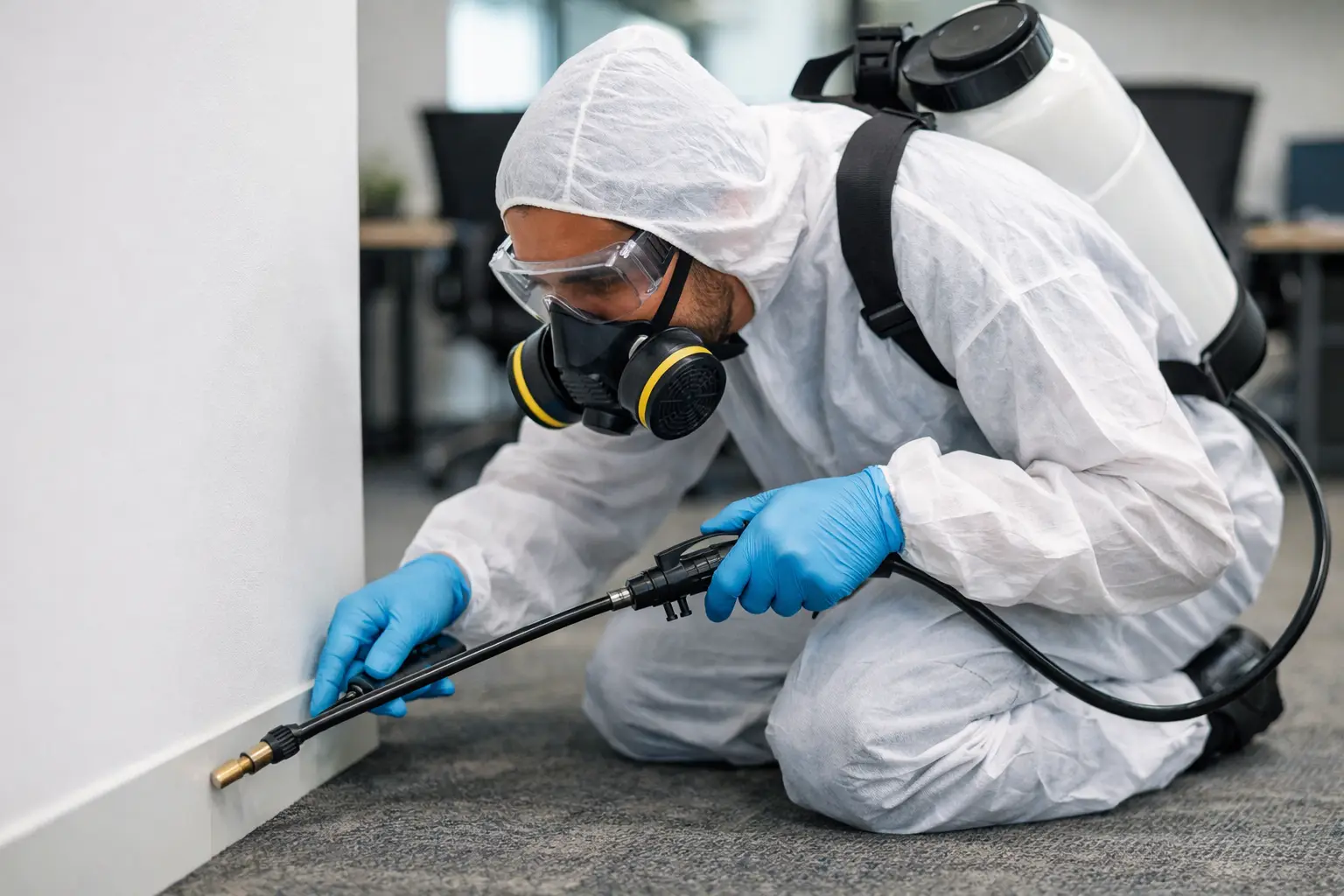
Office pest control must balance treatment effectiveness with the need to maintain a safe, productive workplace. The most appropriate method may include targeted gel baiting, monitoring devices, crack-and-crevice treatment, rodent bait stations, exclusion work, or a focused mosquito-control measure. The method should match the pest behavior and the site conditions.
A broad treatment may occasionally be necessary for widespread activity, but it is not always the best first answer. Targeted applications can reduce unnecessary exposure and disruption when the infestation is limited to defined areas. They also allow staff to continue using most of the office with minimal interruption, subject to the treatment plan and safety instructions.
Communication matters just as much as the treatment itself. Building representatives should understand which areas were treated, any precautions staff need to follow, the likely timeline for results, and whether follow-up visits are required. Clear guidance prevents confusion and helps everyone support the control effort.
For commercial premises in Singapore, working with a licensed, experienced pest management provider gives businesses added confidence that treatment methods and documentation are handled professionally. This is particularly valuable for offices with strict internal safety procedures, shared facilities, or landlord reporting requirements.
Prevention is what keeps pest activity from becoming recurring work
Treatment removes or reduces active pests. Prevention reduces the chance that the next infestation gets established. The most successful office programs combine professional service with practical housekeeping and maintenance habits.
Food should be kept in sealed containers, and pantry bins should be emptied on a reliable schedule. Spills, crumbs, and drink residues should be cleaned promptly, including beneath appliances and inside cabinet corners. Cardboard cartons should not be stored for long periods, as they can provide harborage for cockroaches and other pests.
Moisture control deserves equal attention. Repair leaking pipes, clear slow drains, and investigate condensation around air-conditioning units. Small gaps around utility lines, doors, vents, and wall penetrations should be sealed where feasible. These repairs may seem minor, but they can remove the access routes pests use repeatedly.
Facility managers should also coordinate with cleaners, tenants, contractors, and building management. If pests are moving through shared risers, refuse rooms, exterior drains, or neighboring units, one office cannot solve the issue alone. A coordinated approach often produces better and longer-lasting results.
Build monitoring into the maintenance routine
Monitoring turns pest control from a reactive task into a managed process. Scheduled inspections, strategically placed monitoring tools, and documented sighting reports can reveal changes before they become disruptive. Trends matter: repeated activity near the same pantry cabinet or loading entrance usually points to a condition that still needs correction.
Employees can help without being expected to diagnose pest issues. Encourage them to report sightings promptly, including the location, time, and type of pest if known. A simple, consistent reporting channel gives the facilities team useful information and avoids the delay that allows pests to spread.
Service frequency should reflect the property’s risk level. An office with minimal food preparation and low foot traffic may need a different schedule from a large workplace with multiple pantries, frequent deliveries, or an attached food court. Seasonal weather, nearby construction, and previous infestation history can also affect the right level of protection.
Choosing a commercial pest management partner
The lowest-cost treatment is not necessarily the lowest-cost outcome. Repeated emergency callouts, staff complaints, damaged property, and poor visitor impressions can cost far more than a planned preventive program. Look for a provider that begins with inspection, explains its recommendations clearly, uses appropriate professional-grade products, and focuses on the causes of activity rather than only the pests that are visible.
Technical knowledge is particularly valuable when pest activity is persistent or involves multiple species. An experienced provider should be able to explain why a treatment is recommended, what results to expect, and what actions the office team can take between visits. Documentation and follow-up are also essential for accountability, especially in multi-tenant buildings.
Servcare approaches commercial pest management with this long-term focus, combining tailored treatment with practical prevention guidance so businesses can protect their people and premises with greater confidence.
A clean, well-run office should not have to wait for a major infestation before taking action. When small signs are investigated early and prevention becomes part of routine facilities care, pest control becomes one less operational concern competing for your team’s attention.