

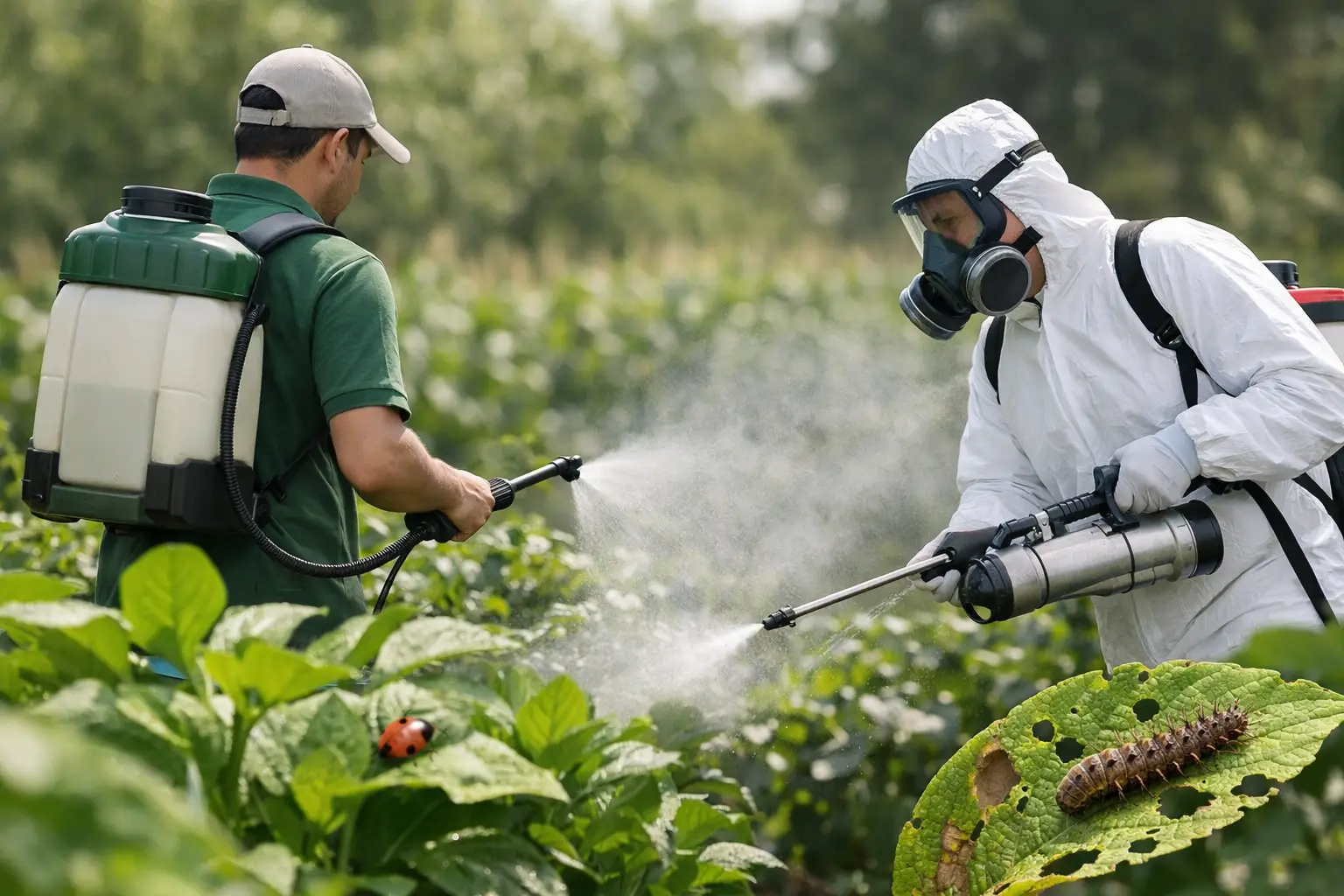
A cockroach sighting in a kitchen, mosquito activity around a property, or termite damage near a wall creates one immediate question: what treatment will solve the problem without creating a new concern? The choice between eco friendly pesticides vs conventional products is not as simple as “natural is safe” and “chemical is strong.” Effective pest management depends on the pest, the level of activity, the treatment area, and the safeguards used before, during, and after service.
For homes and businesses, the most reliable answer is usually a targeted program that reduces pest pressure at its source. That may include lower-impact products, conventional treatments where justified, exclusion work, sanitation guidance, monitoring, and follow-up inspections. The goal is not to use the most product. It is to use the right method, responsibly, for lasting protection.
Eco Friendly Pesticides vs Conventional Treatments
Eco-friendly pesticides generally refer to products and treatment approaches designed to reduce impact on people, pets, beneficial organisms, and the surrounding environment when used correctly. They may use plant-derived active ingredients, microbial agents, insect growth regulators, soaps, oils, baits, pheromones, or physical control methods. In professional pest management, “eco-friendly” should also mean that the treatment is targeted and applied only where it is needed.
Conventional pesticides are formulated with synthetic active ingredients that have been evaluated and registered for specific pest-control uses. Many provide rapid knockdown or longer residual control, making them useful when an infestation is widespread, a pest carries health risks, or business operations require prompt control. They are not automatically unsafe. Their safety depends on the product selected, the label directions, the application method, and the technician’s training.
The important distinction is not whether a product sounds natural or synthetic. It is whether the treatment plan controls the pest effectively while managing exposure and protecting the site.
What Eco-Friendly Options Can Do Well
Lower-impact options can be highly effective when the pest behavior and site conditions support their use. Gel baits, for example, can be a precise solution for cockroaches because they are placed in discreet harborages rather than broadly sprayed across a room. Insect growth regulators can interrupt the development of certain pests, helping reduce future populations. Mechanical traps, proofing, and removal of food and water sources can also make a significant difference without relying heavily on pesticide applications.
These methods are especially valuable in sensitive environments such as homes with young children, food preparation areas, healthcare settings, and workplaces with frequent public access. They can reduce unnecessary treatment exposure and disruption while supporting a more controlled pest management plan.
However, eco-friendly does not mean instant. A bait-based approach may take time for pests to feed, return to harborages, and affect the wider population. Botanical products may break down faster than some conventional options, which can limit how long they remain effective. If sanitation issues, moisture, entry gaps, or clutter remain unchanged, any pesticide program can struggle to deliver lasting results.
Where Conventional Treatments May Be Necessary
Conventional products can play an appropriate role when a pest issue is severe, persistent, or tied to a high-risk environment. A large cockroach infestation in a commercial kitchen, active mosquito breeding around a facility, or a rodent problem affecting stored goods may require a faster and more durable response than a single lower-impact method can provide.
Subterranean termites are another clear example. These pests can cause hidden structural damage long before visible signs appear. Treatment often requires specialized systems and professional-grade termiticides designed to create protection in soil or targeted areas of a building. Delaying proven treatment because a product is perceived as gentler can allow the damage to continue.
That said, conventional treatment should not mean routine blanket spraying. A professional plan considers where pests are active, how they move through the property, and which treatment placements will have the greatest effect. Targeted application helps protect occupants, staff, customers, and non-target areas while improving control results.
Why Integrated Pest Management Matters More Than the Label
The strongest pest control programs are built around integrated pest management, often called IPM. This approach starts with inspection rather than product selection. A technician identifies the pest, locates breeding or nesting areas, checks likely entry points, and assesses the conditions allowing the problem to continue.
For a cockroach issue, that may mean finding leaks beneath a sink, grease buildup behind equipment, or gaps around pipe penetrations. For mosquitoes, it may involve locating water-holding containers, drainage concerns, or overlooked breeding sites. For rodents, the priorities often include sealing access points, improving waste handling, and placing monitoring devices where activity is confirmed.
Pesticides are one part of this process, not the entire process. A well-managed IPM program combines inspection, sanitation, exclusion, precise treatment, monitoring, and follow-up. This is often more eco-conscious than repeatedly applying a low-impact product without correcting the cause of the infestation.
Safety Questions Property Owners Should Ask
Whether a treatment is described as eco-friendly or conventional, property owners and facility managers should expect clear answers. Ask what pest has been identified, where the treatment will be applied, why that method is recommended, and what preparation or re-entry instructions apply.
It is also reasonable to ask whether non-chemical measures can reduce the need for treatment, especially in areas used by children, pets, food handlers, or customers. A qualified provider should explain the trade-offs honestly. Some situations can be handled primarily with baiting, trapping, and exclusion. Others need a more direct intervention to reduce health, contamination, or property risks.
For commercial sites, documentation matters as much as treatment. F&B operators, retail spaces, offices, and industrial facilities benefit from service records, inspection findings, pest activity trends, and practical recommendations for staff. This creates accountability and helps management respond before a minor issue becomes an operational problem.
Choosing the Right Approach for Common Pests
Different pests require different decisions. For cockroaches, targeted gel baits, insect growth regulators, crack-and-crevice treatments, and sanitation improvements often work together well. The right combination depends on the species, the size of the population, and access to food and moisture.
Mosquito control is most effective when breeding prevention comes first. Removing standing water and managing likely breeding points can reduce the need for adult mosquito treatments. Where adult activity is significant, targeted control may be needed to protect residents, employees, and visitors.
Rodent management relies heavily on exclusion and monitoring. Traps and secured bait stations may be appropriate, but leaving access gaps or food sources untouched will invite reinfestation. For termites, early inspection and a professionally designed treatment plan are critical because visible evidence can represent a much larger hidden problem.
A Better Standard for Long-Term Pest Control
The best question is not, “Which pesticide is safer?” It is, “What will solve this pest problem with the least necessary impact?” That standard leads to more thoughtful decisions. It avoids unnecessary treatment while recognizing that serious infestations sometimes require stronger, carefully controlled measures.
Servcare approaches pest management with this balance in mind: inspection-led recommendations, science-backed methods, and practical prevention that supports long-term control. With more than two decades of experience, the focus remains on protecting people, property, and business operations without treating every pest issue as a one-size-fits-all spray job.
If pest activity is recurring, escalating, or affecting hygiene and comfort, do not choose a treatment based on a label alone. Choose a plan that identifies the cause, addresses the immediate risk, and gives your property a realistic path to staying pest-free.