


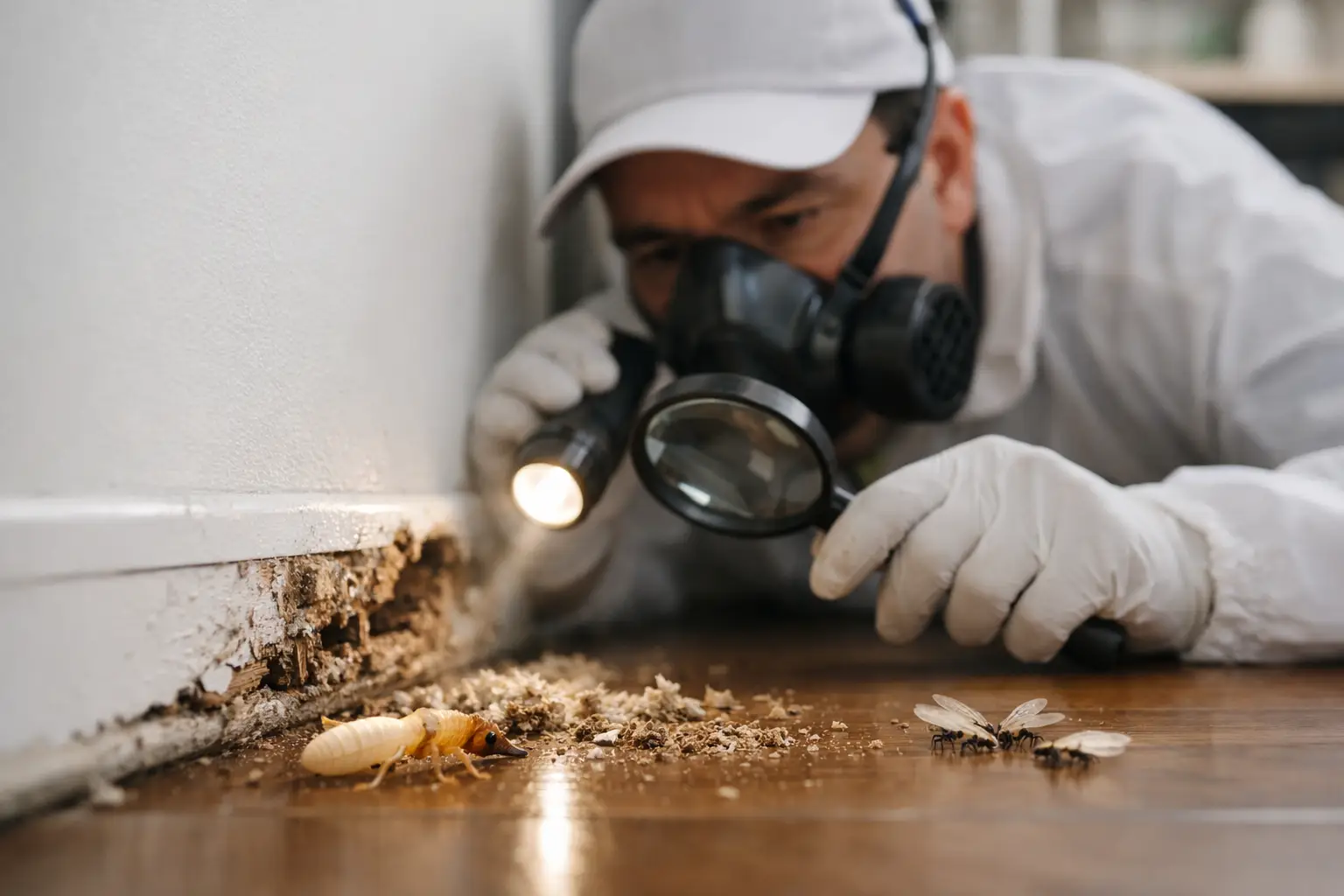
A termite problem rarely begins with a dramatic collapse or an obvious hole in a wall. More often, it starts with a door that suddenly sticks, a faint clicking sound behind a baseboard, or a small pile of what looks like sawdust near a window. Knowing the best termite warning signs indoors gives you a chance to act before hidden damage becomes a major repair issue.
Subterranean termites are especially difficult to spot because they usually travel through soil, foundations, wall voids, and concealed timber. By the time activity is visible inside, the colony may have already been feeding for some time. That does not mean every damaged-looking surface is caused by termites, but it does mean unusual signs deserve a careful assessment.
Best Termite Warning Signs Indoors
Hollow-sounding or weakened wood
Termites consume wood from the inside out, often leaving a thin outer layer of paint, veneer, or timber intact. A door frame, baseboard, cabinet panel, or wooden floor can therefore look normal at first glance while being weakened beneath the surface.
Gently tapping exposed wood may produce a hollow sound in affected areas. You may also notice wood that feels soft, flakes away easily, or breaks with surprisingly little pressure. Do not probe aggressively or pull apart damaged fittings. This can disturb evidence and may worsen a weakened section. Instead, note the location and arrange an inspection.
Mud tubes on walls, foundations, or pipes
Pencil-width tunnels made from soil and wood particles are one of the clearest signs of subterranean termite activity. These mud tubes protect termites from dry air and light as they move between their underground nest and a food source inside the property.
Check lower walls, utility areas, crawl spaces, storage rooms, floor edges, and wherever pipes enter the building. Tubes may run along concrete, brick, metal, or timber. They can be hidden behind stored items or appliances, so areas that are rarely moved deserve particular attention.
A broken or empty tube does not necessarily mean the problem has ended. Termites may have changed their route, or activity may continue elsewhere. Professional inspection is the reliable way to determine whether a colony is active and how far it has traveled.
Blistering paint, bubbling surfaces, or warped trim
Moisture and termites can produce similar visual changes. Paint may bubble, peel, or appear raised where termites have tunneled close to the surface. Wooden trim can warp, buckle, or show unexplained cracks. Floors may feel uneven or begin to lift at the edges.
These signs are not proof on their own. A plumbing leak, condensation, or general humidity can also damage paint and wood. The concern rises when these changes appear alongside mud tubes, hollow timber, or small openings in woodwork. Treating the moisture issue matters, but it should not replace checking for termite activity.
Small piles of termite droppings
Drywood termites push their droppings, called frass, out of tiny holes near where they feed. The result can be a small mound of pellet-like material beneath a wall, beam, cabinet, or wooden furniture piece. It may resemble coarse sand, pepper, or fine wood shavings, but the individual pellets are usually more uniform than ordinary sawdust.
Subterranean termites do not typically leave visible frass piles because they use their droppings to build and maintain mud tubes. If you find pellets indoors, the species and treatment approach may differ from a subterranean termite case. That distinction is one reason a qualified pest professional should identify the evidence before treatment begins.
Discarded wings near windows and lights
Termite swarmers are reproductive termites that leave an established colony to form new ones. After a swarm, they shed their wings. You may find matching pairs of delicate, translucent wings near windowsills, doors, light fixtures, or indoor plants.
Flying ants also swarm, and their wings can be mistaken for termite wings. Termites have a broad waist, straight antennae, and front and rear wings that are roughly the same size. Ants have a pinched waist, bent antennae, and front wings that are noticeably longer. Even if the insects are gone, collecting a few wings in a small container or taking a clear photo can help with identification.
Tight doors and windows without an obvious cause
A door that rubs against its frame or a window that no longer opens smoothly is often blamed on seasonal movement or humidity. Sometimes that is the explanation. However, termite damage can distort wooden frames as termites feed and moisture builds in affected timber.
Pay attention when the change is sudden, localized, or paired with paint cracks, soft wood, or faint damage around the frame. A single sticking door may not be urgent, but several changes in nearby wood features are worth investigating promptly.
Faint clicking or tapping within walls
In a quiet room, some homeowners report a faint clicking, rustling, or tapping sound from a wall or ceiling. Worker termites can make subtle sounds while feeding, while soldier termites may tap their heads against wood to signal danger to the colony.
Sound alone is not a dependable diagnosis. Pipes, expanding building materials, and other insects can make similar noises. Still, when repeated sounds occur in the same location and other warning signs are present, include that detail when requesting an inspection.
Areas Indoors That Deserve a Closer Look
Termites need access to cellulose materials and, for subterranean species, moisture. Their activity is commonly found where these conditions meet: bathrooms, kitchens, laundry areas, utility rooms, ground-floor storage spaces, built-in cabinetry, and timber beside external walls.
Do not overlook less visible items. Cardboard boxes, paper-backed materials, wooden shelving, and stored documents can provide food sources or conceal mud tubes. Keeping storage raised off the floor and leaving a small gap between stored items and walls makes future checks easier. It also helps reveal moisture issues before they become favorable conditions for pests.
For commercial properties, routine checks should include service corridors, pantry areas, maintenance rooms, stockrooms, and areas around plumbing penetrations. Damage hidden behind a finished wall can eventually affect operations, fixtures, inventory, and the condition of the premises.
What to Do When You Spot a Possible Sign
Avoid spraying visible termites with a household insecticide or tearing away mud tubes. This may kill a small number of exposed insects while leaving the main colony undisturbed. It can also cause termites to shift to a less visible location, making the problem harder to assess.
Instead, take a photo, record the room and exact location, and avoid moving the affected material unless necessary for safety. If there is visible wood weakening around a structural feature, avoid placing weight on it or using it until it has been evaluated.
A professional termite inspection should look beyond the visible sign. The goal is to identify the termite type, locate likely entry points and moisture contributors, assess the extent of activity, and recommend a treatment plan suited to the property. Effective long-term protection may include targeted treatment, monitoring, exclusion work, and advice on reducing conditions that support termite activity.
Why Early Inspection Protects More Than Wood
Termite damage is often concealed, which is why waiting for certainty can be costly. The earlier a potential issue is assessed, the more options are usually available to control activity before repairs become extensive. This is especially valuable for property owners and facility managers responsible for maintaining safe, presentable spaces.
A trusted pest management provider should explain what was found, what remains uncertain, and why a specific treatment approach is recommended. At Servcare, that means focusing on a tailored plan that addresses active termite risks while helping reduce the chance of recurrence.
If you notice even one of these indoor signs, treat it as useful information rather than a reason to panic. A timely, professional assessment can replace uncertainty with a clear next step and help protect the property you rely on every day.