

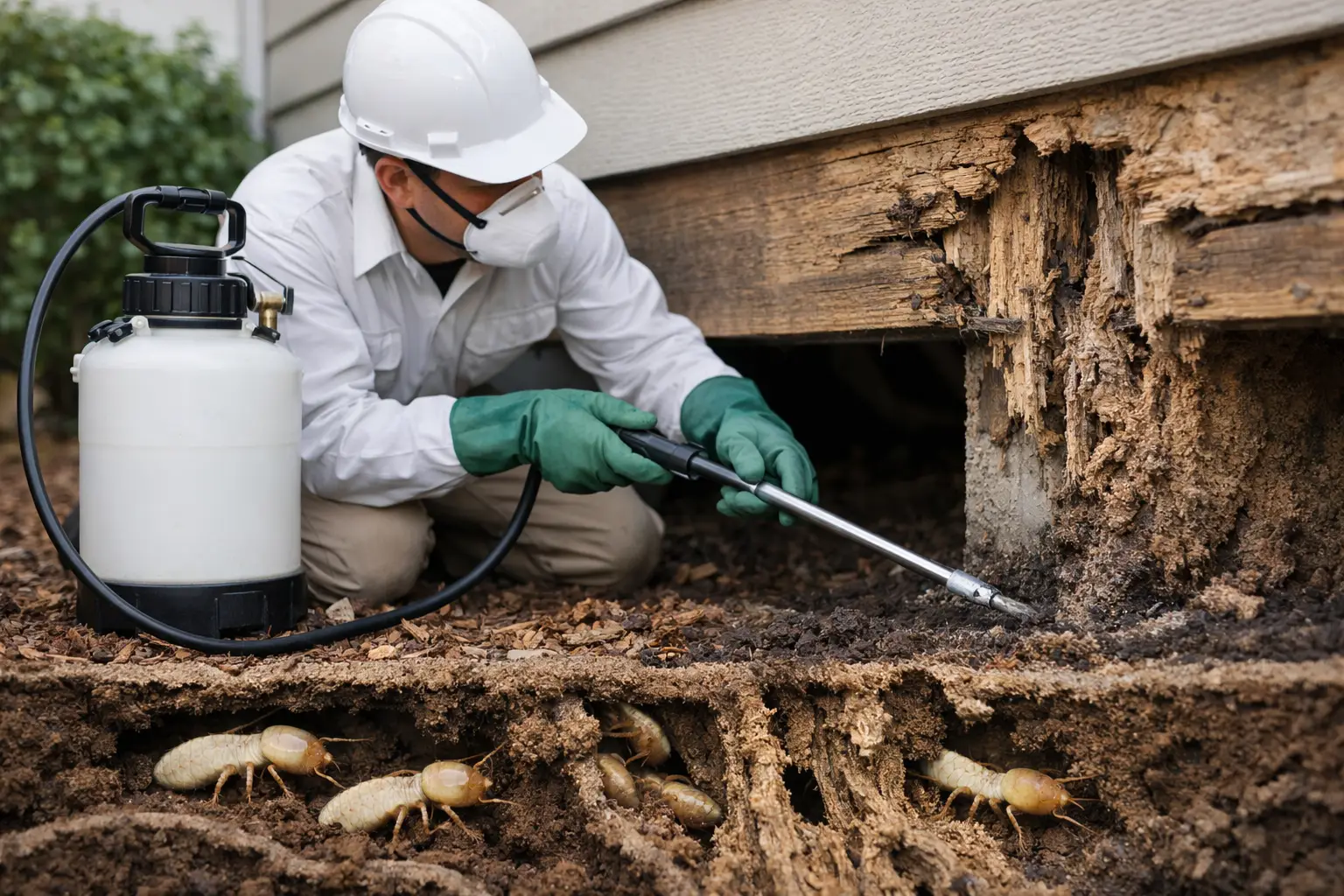
A hollow-sounding baseboard, a thin mud tube along a wall, or a door frame that suddenly feels tight can signal a problem developing out of sight. This subterranean termite treatment guide explains how professional treatment works, what affects the right approach, and how property owners can reduce the risk of expensive structural damage before it spreads.
Subterranean termites live in the soil and travel into buildings through hidden routes. Unlike pests that remain visible on surfaces, they can feed within timber, flooring, wall voids, and built-in fixtures while showing very few early warning signs. That is why prompt inspection and a treatment plan based on the property’s construction are more dependable than relying on store-bought sprays.
Why Subterranean Termites Need a Different Approach
Subterranean termites need moisture, shelter, and a path to cellulose materials such as wood, paper, and some building products. Colonies usually enter from the ground, using mud tubes to protect themselves from dry air and predators as they move between the soil and their food source.
A visible mud tube is not simply a surface issue. Removing it may make the area look cleaner, but it does not eliminate the colony or stop termites from creating another route. Similarly, treating only the timber where damage is seen can leave the termites’ underground access intact.
For homes, the risk is gradual but serious. Termites may weaken skirting, door frames, cabinets, flooring, and concealed structural timber. In commercial premises, termite activity can also disrupt maintenance schedules, affect fit-outs and inventory areas, and create avoidable concerns for tenants, customers, or site managers.
The objective is not merely to kill termites seen at one location. Effective control interrupts their access to the building, targets active feeding, and establishes a plan for monitoring and prevention.
Signs That Call for a Professional Inspection
Not every sign confirms an active infestation, but each deserves attention. Termites can remain hidden for months or years, so waiting for obvious damage often gives the colony more time to spread.
Look for pencil-width mud tubes on exterior walls, foundation areas, pipes, or internal surfaces near the floor. Timber may sound hollow when tapped, appear blistered, or break easily under light pressure. You may also notice paint that bubbles without an obvious water leak, sagging woodwork, or narrow tunnels exposed in damaged timber.
During swarming periods, winged termites may emerge indoors or around the property. Shed wings near windows, doors, or light fixtures can indicate that reproductive termites have been present. Swarmers are sometimes confused with flying ants, but termites have straight antennae, similarly sized wings, and a broad waist.
A trained inspection is valuable because the source is not always where the symptoms appear. The assessment should consider accessible indoor areas, external walls, soil contact points, utility penetrations, landscaping, moisture conditions, and the building’s construction details. For larger premises, inspection should also account for service corridors, storage rooms, false ceilings, and locations where timber or cardboard is kept close to walls.
Subterranean Termite Treatment Guide: What Professionals Do
A dependable termite program starts with accurate identification and a clear picture of the activity. Different termite species, construction types, and infestation levels can require different methods. A responsible provider should explain what was found, where the risks are, and what treatment is recommended before work begins.
Inspection and Treatment Planning
The technician first identifies active termite evidence and likely entry points. This may include checking voids, damp areas, expansion joints, cracks, and concealed timber where accessible. The goal is to distinguish old damage from current activity and to determine whether the infestation is localized or has wider access through the soil.
Treatment planning should also consider practical site needs. A family home may require careful scheduling around children, pets, and daily routines. An F&B, retail, office, or industrial site may need work coordinated to protect hygiene standards and minimize operational disruption.
Soil Barrier Treatment
A soil treatment creates a protective treated zone around or beneath vulnerable parts of a structure. Proper application targets the termites’ hidden travel routes in the ground rather than simply treating visible mud tubes.
Depending on the building design, treatment may involve applying a professional-grade termiticide to accessible soil, perimeter areas, or specified points through the slab. In established properties, technicians may need to drill discreet access points in selected areas to reach soil beneath concrete. Those points are sealed after treatment.
A barrier can be highly effective when installed correctly, but it is not a permanent excuse to ignore property conditions. Landscaping changes, renovations, pipe work, soil movement, and new cracks can alter termite access over time. Follow-up inspections remain a sensible part of long-term protection.
Baiting Systems
Termite baiting is another professional method, particularly useful when direct soil treatment is unsuitable for certain areas or when colony elimination is the preferred strategy. Stations are positioned in the ground or at identified activity points and are checked at scheduled intervals.
Once termites begin feeding on the bait, they carry the active ingredient back through the colony. This process can take time. It is not designed for an instant visual result, but it can suppress or eliminate the colony when managed consistently by trained technicians.
Baiting requires monitoring, patience, and accurate servicing. A neglected station is not a termite solution. Property owners should understand the proposed inspection schedule and the role they play in keeping treatment zones accessible.
Localized Treatment and Timber Protection
When activity is confined to a specific area, localized treatment may be used alongside a broader prevention strategy. This can involve targeted application to affected voids, woodwork, or active galleries. It helps stop feeding where it is discovered, but localized work alone may not be sufficient if termites still have an underground route into the property.
The right solution often combines methods. A professional recommendation should reflect the evidence on site, not a one-size-fits-all package.
What to Expect During and After Treatment
Before treatment, clear stored items away from the work area where requested and provide access to relevant walls, service spaces, or external perimeters. Let the technician know about recent renovations, water leaks, prior termite treatments, and areas where termites have been seen. These details can help identify concealed routes.
After treatment, avoid disturbing treated soil or drilling into treated zones unless you first check how that work could affect the barrier. If mud tubes were found, do not assume activity has stopped simply because they are no longer visible. Your provider may recommend a follow-up inspection to confirm that termites are no longer active.
Treatment should be handled with safety controls appropriate to the site. Professional teams use approved products, apply them according to label directions, and provide practical instructions for occupants. For businesses, documentation can also support internal maintenance records and pest management requirements.
Reducing the Conditions That Attract Termites
No treatment can change every environmental risk, but simple maintenance can make a property less inviting. Keep soil and mulch from covering weep holes or sitting directly against timber features. Repair plumbing leaks and poor drainage promptly, since persistent moisture supports termite activity.
Store cardboard, timber offcuts, and paper-based materials away from external walls and damp storage areas. Keep vegetation trimmed back where it obstructs inspection access, and avoid allowing wooden structures to have direct contact with soil when possible.
Renovation projects deserve particular attention. New utility penetrations, altered flooring, added planters, and changes to drainage can create fresh access points. If your property has a history of termites, arrange an inspection before and after significant building work rather than waiting for damage to appear.
Choosing a Termite Control Provider
The lowest quote is rarely the full picture. Ask whether the provider will inspect the property before recommending treatment, explain the chosen method, and provide clear guidance on follow-up care. Experience with the specific property type matters, especially for complex commercial spaces or buildings with concealed service areas.
In Singapore, homeowners and facility managers should also look for properly licensed pest management professionals and a company that follows recognized safety practices. Servcare combines experienced field teams with science-backed methods and entomologist support to help clients address active termite risks while planning for long-term protection.
A termite problem can feel overwhelming because much of the damage happens out of view. Early inspection, carefully targeted treatment, and sensible maintenance give you a far stronger chance of protecting the property you rely on every day.