


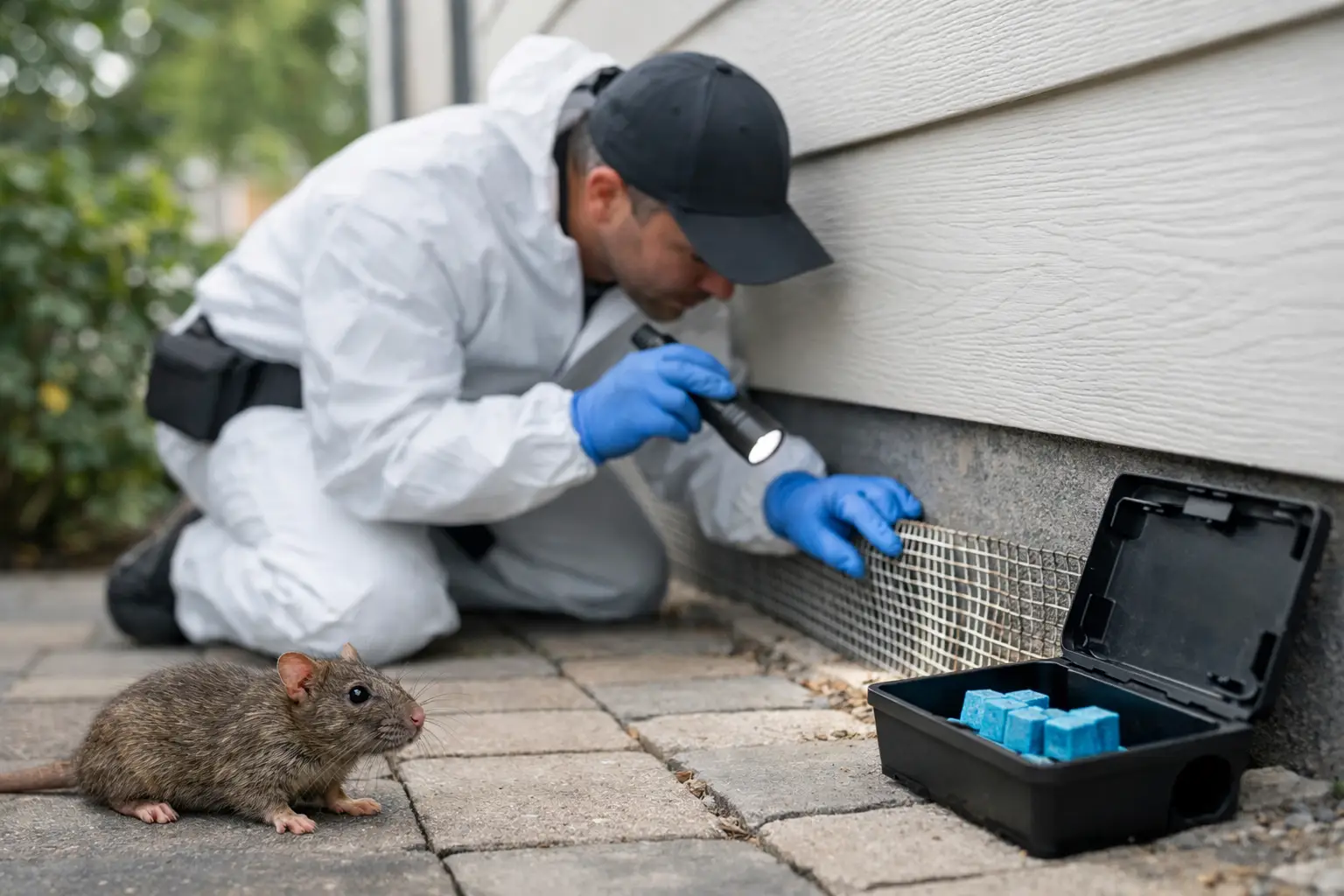
A rodent seen crossing a pantry floor or warehouse loading area is rarely an isolated problem. It usually means the property offers food, shelter, or an accessible route inside. When weighing rodent exclusion versus poisoning, the real question is not which method is strongest. It is which approach stops the current activity while reducing the chance of another infestation.
Poison bait can reduce a rodent population, sometimes quickly. Exclusion closes the gaps, openings, and service penetrations that allow rodents to enter in the first place. Both can have a place in professional rodent control, but they solve different parts of the problem. The most dependable result often comes from using them in the right order and with the right safeguards.
What Rodent Exclusion Actually Does
Rodent exclusion is the process of identifying and sealing entry points that rats and mice use to access a building. These openings may be obvious, such as a damaged door sweep or broken vent cover. Others are hidden around plumbing pipes, electrical conduits, ceiling voids, drains, cable runs, utility rooms, or gaps beneath roller shutters.
This work matters because rodents are highly adaptable. A mouse can enter through a very small gap, while rats can exploit weak joints, damaged screens, and spaces around building services. If food waste is available and access remains open, removing a few rodents does not remove the conditions that attracted them.
A proper exclusion plan starts with inspection rather than guesswork. A trained technician looks for droppings, rub marks, gnaw damage, tracks, nesting material, and likely travel paths. The goal is to determine where rodents are entering, where they are feeding, and whether the issue is limited to one area or moving through the property.
For homes, common corrective work may include sealing utility gaps, repairing screens, fitting door sweeps, and improving storage around kitchens or outdoor areas. In commercial properties, the plan may also involve loading bays, refuse areas, false ceilings, storerooms, floor drains, and shared service corridors. For F&B operators, exclusion is especially valuable because it supports better hygiene control and reduces the risk of contamination near food-handling areas.
What Poisoning Does Well – and Where It Falls Short
Rodent baiting uses carefully selected rodenticides placed in secure, tamper-resistant bait stations or controlled locations. It can be effective when rodent activity is established, especially in large sites where immediate population reduction is necessary.
Poisoning is often useful when rodents are already nesting in inaccessible voids, moving through extensive grounds, or appearing across multiple areas. It can lower active pressure while a longer-term prevention plan is put in place. In some cases, it is the practical first response to a serious infestation.
However, bait alone has limits. If entry points remain accessible, new rodents can continue to enter after the existing population has been reduced. This creates the frustrating cycle many property owners recognize: bait is consumed, activity drops, and then droppings or gnaw marks return weeks later.
There are also safety and operational considerations. Bait must be chosen, positioned, monitored, and replaced by trained professionals. Improper placement can create risks for children, pets, non-target animals, and sensitive environments. A rodent that consumes bait may also die in an inaccessible area, potentially causing odor concerns before the carcass can be located and removed.
For this reason, poisoning should not be treated as a casual do-it-yourself solution. It requires clear documentation, site-specific placement, regular inspection, and responsible handling. In settings with food, customers, staff, or vulnerable occupants, the standard for control must be particularly high.
Rodent Exclusion Versus Poisoning: The Key Differences
Exclusion and poisoning differ most in their purpose. Exclusion prevents entry. Poisoning reduces an existing population. One addresses the route; the other addresses the rodents currently using it.
Exclusion is usually the stronger long-term investment because it removes the opportunity for repeat access. Once vulnerable areas are properly repaired and sanitation issues are addressed, a property becomes far less attractive and accessible to rodents. The result is reduced reliance on ongoing baiting and greater peace of mind for occupants and managers.
Poisoning may produce faster visible results when activity is high. A facility manager dealing with fresh signs across a storeroom, waste area, and ceiling void cannot always wait for exclusion work alone to resolve the issue. Targeted baiting can help bring the population under control while repairs and preventive measures are scheduled.
Cost also depends on the situation. Sealing entry points may involve an upfront expense, particularly in older or complex buildings. Yet repeated baiting without correcting structural gaps can become more costly over time. It may also leave a business exposed to repeated hygiene complaints, product damage, or operational disruption.
The best choice depends on the severity of the infestation, the property layout, the presence of children or pets, and the type of business being protected. A small, early issue in a home may be resolved largely through exclusion, cleanup, and monitoring. A major infestation in a commercial site may require an integrated response that includes baiting, trapping, proofing, and ongoing inspections.
Why an Integrated Plan Is Often More Reliable
Rodent control is most effective when it follows a clear sequence: inspect, reduce active activity, remove food and harborages, block access, and monitor for recurrence. This approach recognizes that rodents are not a single-treatment problem.
Sanitation is a critical part of that sequence. Unsealed food, overflowing waste bins, cluttered storage, standing water, and poorly maintained refuse areas can support rodent activity even after baiting or exclusion work. Property users do not need a perfectly sterile space, but they do need consistent practices that deny rodents easy food and shelter.
Monitoring then confirms whether the plan is working. Technicians may review bait station activity, inspect for new droppings or gnaw marks, check repaired areas, and assess whether rodent movement has shifted elsewhere. This is particularly important in multi-tenant buildings, industrial facilities, and properties near construction activity or dense food-service areas.
At Servcare, rodent management is built around tailored inspection and practical prevention, not a one-off treatment approach. Professional assessment helps ensure that any control method is proportionate to the problem and appropriate for the people, operations, and environment that need protection.
When Exclusion Should Be the Priority
Exclusion should lead the plan when rodent sightings are occasional, signs are limited, or there is a clear entry point that can be corrected. It is also a preferred focus for households with children and pets, as well as businesses that want to reduce chemical reliance without compromising prevention.
It becomes especially valuable after renovation work, utility upgrades, storm damage, or changes to waste-handling routines. These events can create new access points that are easy to overlook. A quick inspection of doors, vents, service openings, and exterior cracks can prevent a small weakness from becoming a persistent infestation.
For commercial properties, proofing measures also communicate good operational control. Staff and customers may never see the repaired gap behind a storeroom rack or beneath a loading door, but they will notice the absence of rodent sightings, damaged goods, and hygiene concerns.
When Poisoning May Be Necessary
Poisoning may be necessary when there is evidence of a substantial rodent population, repeated activity in inaccessible locations, or widespread movement across a large site. It can also support control where trapping alone is not practical or where rodents are highly established.
The key is to use bait as part of a managed program, not as the whole program. Secure stations, careful placement, timely servicing, and follow-up inspections make a meaningful difference. If baits are being used repeatedly with no decline in activity, that is a signal to reassess entry points, food sources, and harborage rather than simply add more bait.
A professional technician can also determine whether signs point to rats, mice, or another pest. Each has different behaviors, feeding patterns, and movement habits, which affects where control measures should be placed and what preventive work will have the greatest impact.
Choose Prevention That Holds Up Over Time
The most reliable rodent control plan does not force a choice between exclusion and poisoning as if they are competing solutions. It uses targeted population reduction when needed, then makes the property harder to enter, feed in, and nest within.
If rodents have become a recurring concern, look beyond the immediate sighting. Ask where they are getting in, what is sustaining them, and whether the current treatment is preventing the next infestation. Addressing those questions early protects hygiene, property, and the confidence of everyone who uses the space.