


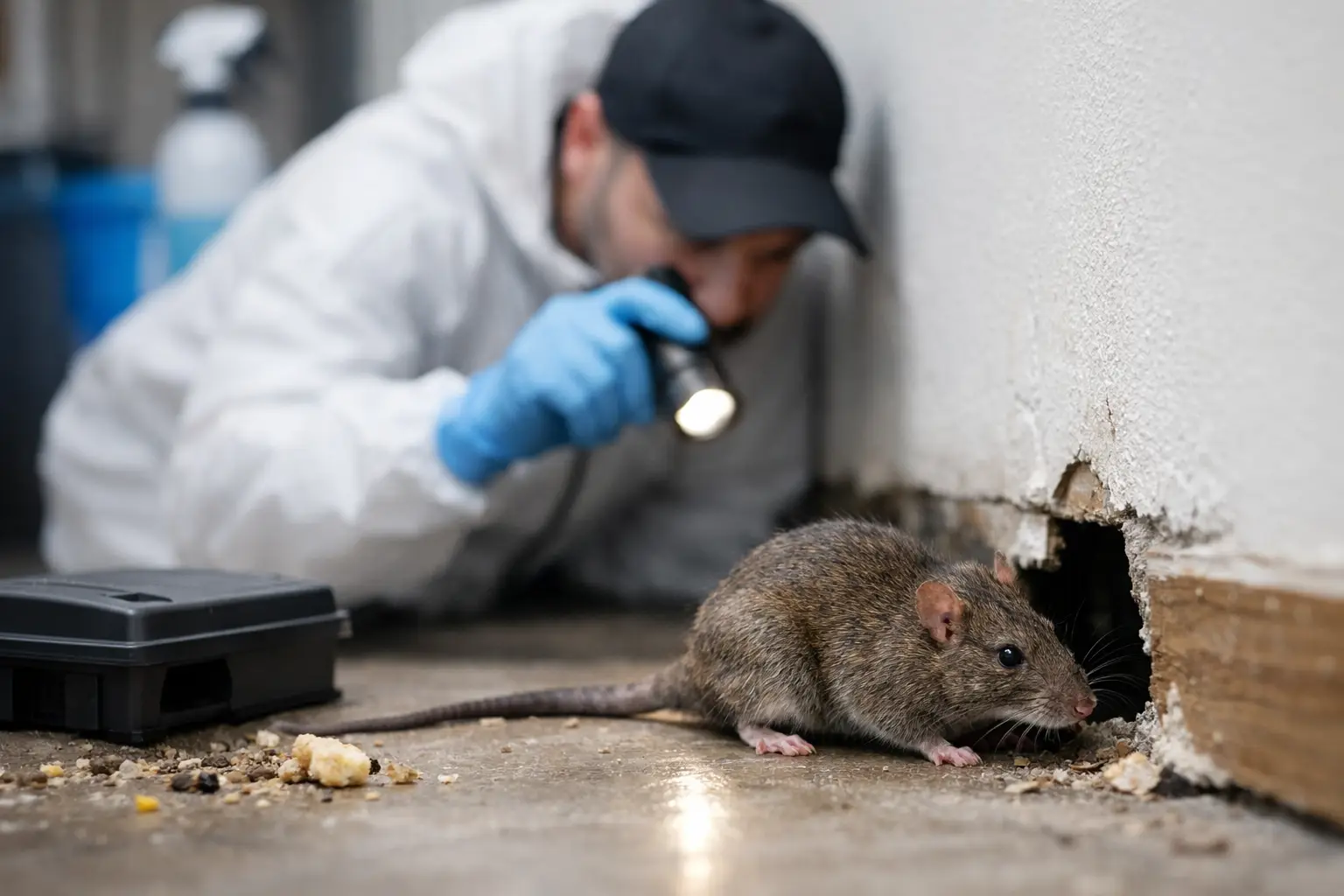
A rat sighting is rarely a random event. Understanding what attracts rats into buildings helps property owners and facility teams address the conditions that made the site appealing in the first place. Rats are resourceful, cautious, and highly adaptable. When a building offers easy food, water, shelter, and access, they may settle in quickly.
For homes, the risk includes food contamination, unpleasant odors, damaged wiring, and stress for the household. For businesses, especially food, retail, office, and industrial sites, rodent activity can affect hygiene standards, staff confidence, stock, and reputation. The most reliable response is not simply removing the rat that was seen. It is finding and correcting the conditions that support ongoing activity.
What Attracts Rats Into Buildings?
Rats enter buildings to meet a few basic needs: reliable food, available water, warmth or cover, and safe routes in and out. Dense urban areas can make these needs easier to meet, particularly where waste handling, drainage, deliveries, landscaping, and neighboring premises create connected pathways.
A clean-looking property can still have a rodent problem. Rats often feed and move after dark, using concealed spaces such as ceiling voids, service ducts, storerooms, false walls, and drainage lines. By the time droppings, gnaw marks, or scratching sounds become obvious, they may already have established regular routes.
1. Accessible Food Sources
Food is one of the strongest reasons rats remain near a building. Overflowing garbage bins, loose bin lids, food scraps around disposal areas, and uncleaned spills provide an easy meal. Pet food left overnight, bird feed, fruit that has fallen from trees, and open compost can also support rodent activity around homes.
In commercial settings, small oversights can add up. Grease beneath kitchen equipment, crumbs in break rooms, unsealed dry goods, and waste stored too long before collection can all attract rodents. Rats do not need a large amount of food to persist. A repeated supply of small scraps is enough to keep them returning.
Store food in durable, tightly closed containers and keep waste areas clean, covered, and regularly serviced. In F&B operations, cleaning should include overlooked areas behind equipment, under shelving, and along wall edges where food residue can accumulate.
2. Water From Leaks, Drains, and Condensation
Rats need water, so moisture issues can be just as attractive as food. Dripping pipes, leaking air-conditioning units, blocked floor drains, standing water, and poorly maintained grease traps can create dependable drinking points.
Water sources are especially significant in utility rooms, kitchens, loading areas, basements, and service corridors. In a residence, check beneath sinks, around water heaters, near washing machines, and in seldom-used bathrooms. Condensation around pipes or cooling equipment may seem minor, but persistent moisture supports both rodents and the insects they may feed on.
Repairing leaks promptly and maintaining proper drainage removes an important reason for rats to stay. It also protects the building from mold, material deterioration, and other hygiene concerns.
3. Gaps Around Doors, Pipes, and Service Lines
A building does not need a visibly open door to have a rodent entry problem. Rats can use surprisingly small openings, then enlarge weak points by gnawing. Gaps below doors, broken vents, damaged screens, openings around utility pipes, and cracks near drains are common access points.
Older buildings and frequently renovated sites may be more vulnerable because pipework, cabling, and service penetrations create gaps over time. Delivery doors and loading bays can also become entry routes when they are left open or lack effective door sweeps.
Inspect the exterior as well as internal service areas. Look for daylight under doors, damaged seals, gnaw marks, grease rub marks along walls, and holes near ground level. Exclusion work should use durable materials suited to the location. Foam alone is often not enough because rodents can chew through it.
4. Clutter and Undisturbed Shelter
Rats prefer areas where they can hide without being disturbed. Stacks of cardboard, unused furniture, packed storerooms, dense vegetation, and poorly organized stockrooms create ideal cover. Cardboard is particularly problematic because it provides nesting material and hides early evidence of activity.
Clutter does not cause a rodent problem by itself, but it makes an existing problem harder to spot and control. It also gives rats protected routes between food, water, and nesting locations. In warehouses and back-of-house areas, keep stored materials raised where practical and leave enough clearance for cleaning and inspection.
Outside, avoid allowing shrubs, climbing plants, or stored items to press directly against the building. A clear perimeter makes rodent movement more visible and reduces sheltered access to walls, pipes, and rooflines.
5. Unsecured Waste and Recycling Areas
Waste areas deserve attention because they combine food residue, shelter, and low human activity at certain times of day. Even if a dumpster is closed, spilled waste around it can attract rats. Recycling bins can also be a source when containers are not rinsed or when food packaging remains inside.
The goal is not merely to place waste in a bin. It is to keep the whole area sanitary and difficult for rodents to use. Bin lids should close properly, bags should not be left on the ground, and collections should be frequent enough to match the volume generated. For multi-tenant buildings, this often requires clear shared procedures rather than relying on one occupant to manage the area.
6. Landscaping That Creates a Rodent Highway
Vegetation can conceal rodent movement and, in some cases, provide food. Overgrown ground cover, thick shrubs, fallen fruit, and branches touching roofs or walls allow rats to travel with less exposure. Outdoor feeding stations for birds or pets may have the same effect if spilled feed is not removed.
Landscaping should be managed with prevention in mind. Trim back plants from building walls, remove fallen fruit regularly, and keep outdoor storage elevated and orderly. This does not mean every garden must be sparse. It means reducing the dense, hidden routes that allow rodents to approach unnoticed.
7. Warmth and Protection During Bad Weather
Buildings offer stable temperatures and dry shelter, which become particularly appealing during heavy rain, construction nearby, or changes in outdoor conditions. Rats displaced from disturbed ground, drainage systems, vacant lots, or neighboring properties may seek the nearest accessible refuge.
This is why rodent activity can increase even when a property has maintained good housekeeping. Prevention still matters, but the immediate issue may be pressure from the surrounding environment. A professional inspection can help distinguish an isolated intrusion from a broader site or neighborhood concern.
8. Hidden Routes Through Drains and Shared Structures
Rats can travel through drainage networks, utility channels, false ceilings, and linked structures. In attached homes, retail rows, malls, and multi-unit commercial properties, an issue in one area can affect another. A sealed pantry or office may still experience activity if rodents are moving through concealed voids from elsewhere.
Signs such as recurring droppings near floor drains, noises above ceilings, or activity appearing in several units call for a wider assessment. Treating one room without investigating the connected pathways may reduce sightings temporarily but leave the source untouched.
Signs That the Building Is Already Attracting Rats
The first clues are often subtle. Fresh droppings, shredded paper or insulation, gnawed packaging, grease-like rub marks along walls, and unexplained pet agitation all deserve attention. A musky odor in an enclosed area can also indicate established rodent activity.
Do not assume one dropping or one sighting means the problem will resolve on its own. Rats reproduce quickly when food and shelter remain available. Early action generally requires less disruption and gives property teams a better chance of preventing wider contamination or damage.
Prevention Works Best as a System
Effective rodent prevention combines sanitation, exclusion, maintenance, and monitoring. Focusing only on traps may catch individual rodents but will not correct an open drain, a gap under a door, or recurring food waste. On the other hand, sealing entry points without addressing an active infestation can trap rodents inside or push them toward another part of the building.
For this reason, the right approach depends on the property and the evidence found. A single-family home with activity near a pet-food area needs a different plan from a restaurant with a shared waste corridor or an industrial site with multiple loading bays. A qualified pest management professional can inspect likely entry points, identify conditions that support activity, and recommend treatment and prevention measures that fit the site.
Servcare approaches rodent control with this long-term view: reduce the current infestation, identify why rats were drawn to the property, and help prevent the next one. When food, water, shelter, and access are no longer easy to find, a building becomes far less inviting to rodents – and far easier to protect with confidence.