


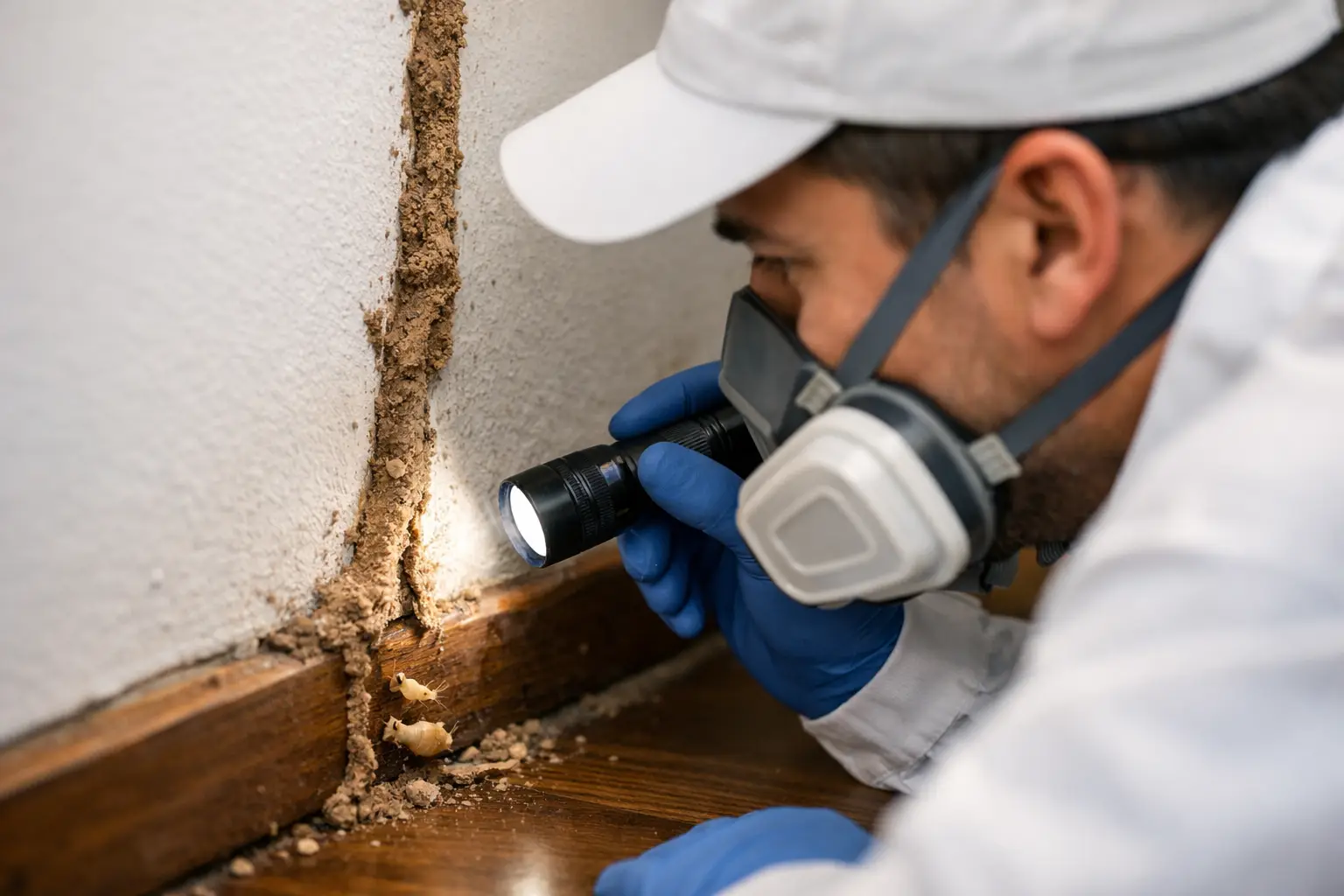
A narrow brown line running up a wall may look like dried mud, but it can be a direct sign that termites are moving between the ground and your property. Knowing how to spot termite mud tubes early gives you time to investigate before hidden feeding causes costly damage to timber, fixtures, or built-in furnishings.
Subterranean termites are often difficult to notice because they work out of sight. They avoid open air, light, and dry conditions, so they build covered passageways that protect them while they travel. A mud tube does not always mean severe damage has already occurred, but it should always be treated as a warning that deserves a professional assessment.
What termite mud tubes look like
Termite mud tubes are narrow tunnels made from soil, wood particles, saliva, and moisture. They are usually brown, grayish-brown, or the color of the surrounding soil. Their surface can look rough, uneven, and slightly crumbly rather than smooth like caulk or cement.
Most tubes are about the width of a pencil, though established termite activity can produce wider or branching tunnels. They may run vertically from the soil up a wall, horizontally along a concrete edge, or disappear behind skirting boards, cabinets, utility pipes, and wall finishes.
The key feature is their purpose. These are not random deposits of dirt. They form a continuous, sheltered route from a termite colony to a food source, typically wood or materials containing cellulose.
Where to look for termite mud tubes
Start with areas where soil, moisture, concrete, and wood meet. In homes, this often includes exterior walls, foundation edges, porches, garages, storage rooms, utility areas, and locations where pipes enter the building. Check the lower portions of walls carefully, including surfaces behind plants, outdoor equipment, or stored items.
Inside, inspect skirting boards, door frames, window frames, cabinets under sinks, and areas around bathrooms or kitchens. Termites are attracted to moisture, so leaking pipes, poor drainage, condensation, and water-damaged building materials can create favorable conditions.
For commercial properties, facility teams should pay close attention to loading areas, service corridors, pantries, storerooms, washrooms, false ceilings, and utility risers. These spaces can conceal early signs of activity until the infestation has spread further.
Do not overlook less obvious routes. Termites can build tubes across concrete, brick, metal, and other non-wood surfaces when these materials stand between the colony and the timber they want to reach. A tube on a concrete wall is therefore not harmless simply because the wall itself is not wood.
How to tell a mud tube from ordinary dirt
Dirt splashed onto a wall after rain is usually scattered and has no clear direction. A termite tube is more deliberate. It often follows a straight or gently winding route, tightly attached to the surface, and connects one concealed point to another.
Old spider webs, dried roots, grout lines, and hardened construction residue can also be mistaken for termite tubes. Look for a textured, soil-like material that appears built up into a raised tunnel. If you see multiple parallel lines, small branches, or a route leading from the ground toward timber, the likelihood of termite activity increases.
Mud dauber wasp nests are different as well. They are usually isolated clumps or larger cells attached to walls or ceilings, rather than a narrow covered pathway that travels across a surface.
A trained technician can confirm the finding without relying on guesswork. This matters because the treatment approach depends on whether termites are active, where they are entering, and how far they may have moved through the property.
Signs that activity may be current
An intact tube can indicate active termite movement, but it cannot confirm it on its own. Some tubes remain after a colony has been disturbed or has moved elsewhere. Conversely, termites may be active behind walls or beneath floors without visible tubes in accessible areas.
A professional may carefully open a small section of a tube during an inspection to look for live termites. Homeowners and staff should avoid pulling down the entire tube or spraying it with household insecticide. Destroying visible evidence can make the activity harder to trace and may cause termites to relocate to less visible areas.
Other warning signs can support what you have found. These include timber that sounds hollow when tapped, blistered or bubbling paint, unexplained cracks along wood trim, doors or windows that suddenly stick, and fine soil-like material appearing near woodwork. Winged termites, also called swarmers, or discarded wings near windows and lights may signal that a colony is nearby.
None of these signs should be viewed in isolation. Moisture damage can cause paint to blister, and humidity can affect doors and windows. The concern rises when these symptoms appear alongside mud tubes, dampness, or visible damage to wood.
Why mud tubes should not be ignored
Subterranean termites feed continuously and can remain hidden for a long time. Their damage often starts inside wood, leaving a thin outer surface that may appear normal until it is pressed, tapped, or opened. By that stage, internal galleries may already have weakened the material.
The potential impact depends on the size and location of the infestation. A small tube on an exterior surface may be an early indication that can be addressed before major harm occurs. Tubes around structural timber, cabinets, door frames, or multiple interior areas may point to a more established problem.
For businesses, termite damage can also disrupt operations, affect tenant or customer confidence, and create avoidable repair work. F&B, retail, office, and industrial sites need a planned response that considers safety, access, hygiene requirements, and business continuity rather than a quick surface-level fix.
What to do when you find a suspected tube
Take a clear photo and note its exact location. Avoid disturbing the area, especially if the tube disappears behind a wall, cabinet, or fixture. If there is an obvious water leak or drainage issue nearby, arrange for it to be corrected, but do not assume eliminating moisture alone will remove an existing termite colony.
Next, arrange a detailed termite inspection. A proper inspection should assess accessible internal and external areas, identify conditions that may support termite activity, and determine whether there are signs of damage beyond the visible tube. Depending on the construction and findings, the recommended solution may involve targeted treatment, a soil barrier approach, baiting, monitoring, or a combination of methods.
The right approach depends on the property, termite species, extent of activity, and access to likely entry points. One-off spraying at a visible tube rarely provides dependable protection because it may not reach the colony or prevent re-entry.
Preventing conditions that attract termites
No prevention method can guarantee that termites will never approach a building, especially in warm, humid environments. However, reducing favorable conditions can lower the risk and make early warning signs easier to find.
Keep soil and mulch from building up against exterior walls, and avoid storing cardboard, timber, or wooden items directly on the ground. Repair leaks promptly, keep drains flowing well, and ensure air-conditioning or plumbing condensation does not repeatedly wet concealed spaces. Where possible, maintain clear access around wall edges and utility areas so inspections are not blocked by clutter.
Regular professional inspections are particularly valuable for properties with previous termite activity, timber features, moisture issues, or landscaping close to the building. They provide a baseline and help catch subtle changes before they become a larger repair concern.
A mud tube is small, but the decision to investigate it promptly can protect far more than the surface where it appears. If you notice one, preserve the evidence, keep the area accessible, and have a qualified termite professional determine what is happening behind it.