


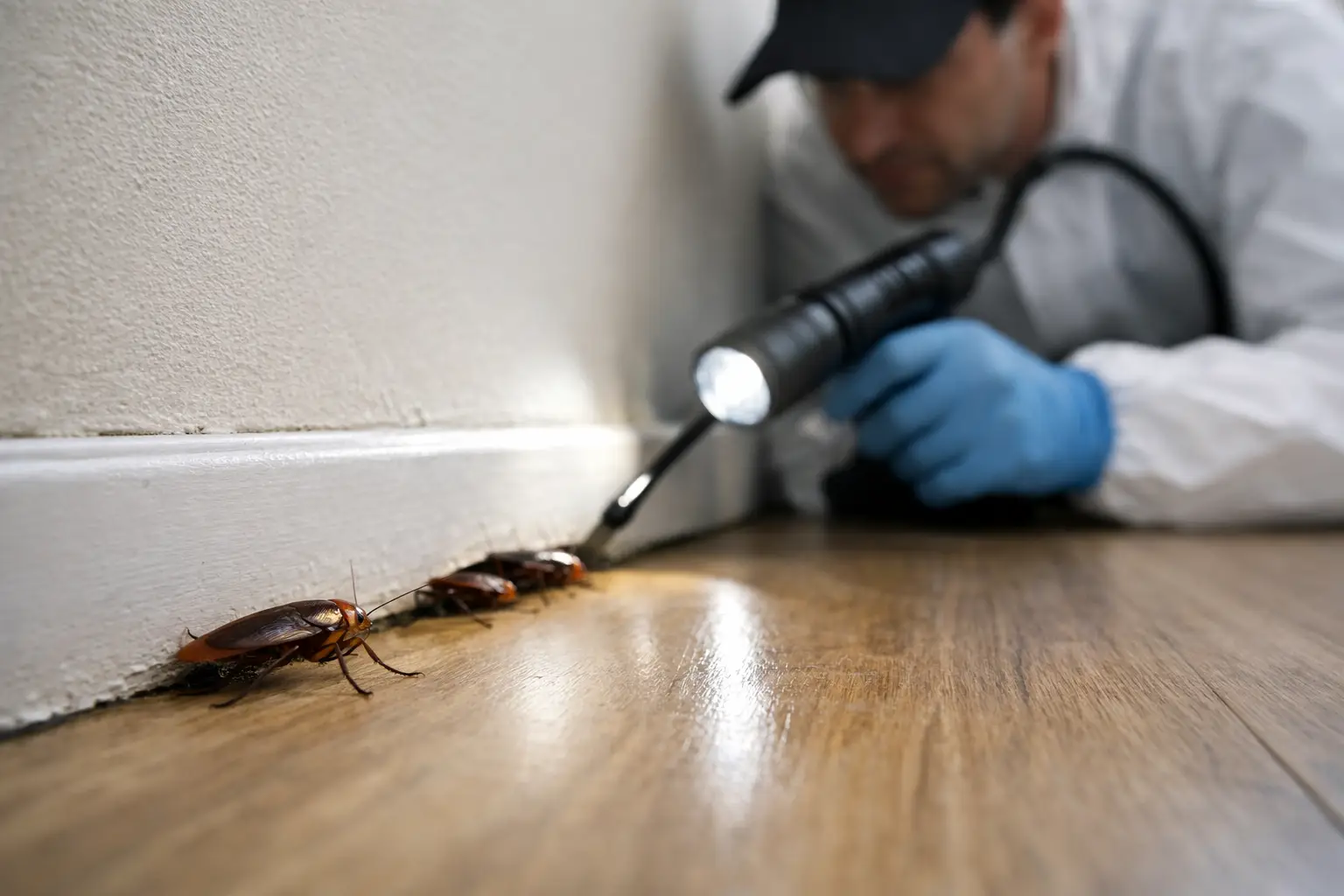
A cockroach found near a kitchen drain does not always point to the same problem as one appearing in a dry office cabinet. Learning how to identify cockroach species gives you useful clues about where they are nesting, how quickly the infestation may grow, and what treatment approach is most likely to stop it. It also helps separate a one-off sighting from the warning signs of an established population.
For property owners and facility managers, identification should guide action, not replace it. Roaches are fast-moving, often active at night, and commonly seen only after an infestation has progressed. A clear photo or a safely collected specimen can help a pest management professional confirm the species and trace the source.
Why Cockroach Species Identification Matters
Cockroach species differ in their preferred food, moisture levels, hiding places, and breeding behavior. A small German cockroach in a food preparation area requires a different inspection focus from a large American cockroach emerging from a floor drain. Treating every roach as the same pest can leave harborages untouched and allow activity to return.
Species identification also matters for hygiene and business operations. Cockroaches can move between waste areas, drains, storage spaces, and food-contact environments, carrying contaminants on their bodies. In homes, they can aggravate allergies and create ongoing stress. In commercial settings, recurring activity can affect sanitation standards, customer confidence, and compliance.
The most dependable identification uses more than color alone. Look at the roach’s size, body shape, markings behind its head, wing development, and the exact place where it was found. Evidence nearby, such as droppings, shed skins, egg cases, and musty odors, adds valuable context.
How to Identify Cockroach Species by Key Features
Start by observing without handling the insect. Cockroaches can carry bacteria, and crushing one may spread contamination. If possible, take a clear photograph from above with an object nearby for scale, such as a coin or key. Note the room, time of day, and whether the area was damp, warm, or close to food waste.
German cockroach
German cockroaches are among the most common indoor species and one of the most difficult to control once established. Adults are small, usually about one-half to five-eighths of an inch long, with a light brown or tan body. Their most recognizable feature is a pair of dark, parallel stripes on the shield-like section directly behind the head.
They favor warm, humid areas close to food and water. Kitchens, pantries, coffee stations, bathrooms, dishwasher cavities, refrigerator motors, and gaps around plumbing are common harborages. Although adults have wings, they rarely fly. Seeing German cockroaches during the day can indicate substantial pressure on their hiding spaces or a heavier infestation.
Their young, known as nymphs, are smaller, darker, and wingless. A female often carries a brown egg case at the end of her body until shortly before it hatches. That breeding pattern helps populations build quickly when food, moisture, and shelter are available.
American cockroach
The American cockroach is considerably larger, often measuring one and one-half inches or more. It is reddish-brown with a pale yellow or tan figure-eight-like marking behind the head. Adults are broad-bodied and fully winged, and they may glide or fly short distances, particularly in warm conditions.
This species is strongly associated with damp, sheltered areas such as drains, sewers, utility rooms, boiler rooms, refuse areas, and service shafts. It may enter occupied spaces through plumbing openings, floor drains, gaps around pipes, or poorly sealed access points. Finding one in a bathroom or kitchen does not necessarily mean it is breeding inside a cabinet, but it does warrant an inspection of moisture sources and entry routes.
American cockroaches are sometimes confused with other large outdoor roaches. The reddish-brown color and pale marking behind the head are the most useful visual clues.
Brown-banded cockroach
Brown-banded cockroaches are small, around one-half inch long, but their behavior sets them apart. They prefer drier and warmer locations than German cockroaches, including bedrooms, offices, closets, wall hangings, furniture, electrical equipment, and high cabinets.
Adult males are slender and often appear light brown, while females have a wider body and shorter wings. Both adults and nymphs show pale brown bands across the back or wings, although the bands can be subtle depending on age and lighting. Their egg cases may be glued to hidden surfaces, including furniture, shelves, and the undersides of drawers.
If small roaches are appearing far from sinks, kitchens, and drains, brown-banded cockroaches should be considered. Their tendency to spread through furniture and stored items means inspection should extend beyond the room where activity was first reported.
Oriental cockroach
Oriental cockroaches are dark brown to almost black, with a glossy, heavy-looking body. Adults are generally about one inch long. Males have short wings that cover part of the abdomen, while females have much smaller wing pads. Neither is a strong flier.
They prefer cool, damp conditions and are often found around basements, drains, garbage areas, crawl spaces, and exterior ground-level voids. Their slow movement and dark appearance can make them easy to distinguish from the lighter, quicker German cockroach. However, moisture problems are usually central to their presence, so treatment should include correcting leaks, drainage issues, and access gaps.
Do Not Rely on Size or Color Alone
Roach appearance changes through its life cycle. Nymphs do not have developed wings and can look very different from adults. A young German cockroach, for example, may appear nearly black, while a newly molted roach can look pale until its outer body hardens. Lighting, dirt, and damage to the specimen can also hide key markings.
Other insects may be mistaken for cockroaches. Beetles, crickets, water bugs, and even certain true bugs can cause confusion. A cockroach usually has a flattened oval body, long thread-like antennae, six spiny legs, and two short appendages at the rear called cerci. Still, a photograph alone may not be enough for certainty.
The location is often as informative as the insect itself. Repeated activity under a sink suggests a different pathway than sightings around a false ceiling, loading area, electrical panel, or dry storage room.
Match the Inspection to the Evidence
Once you have a likely species, inspect the conditions that support it. Look for food residue, grease buildup, leaking pipes, standing water, overflowing waste, cardboard clutter, cracked seals, and gaps around utility lines. In commercial kitchens and food businesses, inspect beneath equipment, behind wall-mounted units, inside motor compartments, and along floor-wall junctions.
Watch for these signs of established activity:
- Pepper-like dark droppings, especially around German cockroach harborages
- Cylindrical droppings or smears in larger-roach hiding areas
- Brown egg cases, shed skins, or dead roaches in drawers and voids
- A persistent oily or musty odor in a heavily affected area
- Multiple nymphs, which often indicate nearby breeding rather than an occasional intruder
Avoid responding with a single spray application and assuming the problem is resolved. Repellent products can scatter roaches into deeper voids, while eggs and hidden nymphs may survive. The right method depends on the species, infestation level, building layout, sanitation conditions, and whether sensitive areas such as food preparation zones are involved.
When Professional Identification Is the Better Choice
Professional support is especially valuable when you see roaches repeatedly, find nymphs or egg cases, manage a multi-unit property, or operate an F&B, retail, office, or industrial site. In these settings, the source may be beyond the immediate room. Roaches can travel through shared plumbing, service risers, deliveries, storage materials, and neighboring units.
A qualified pest management team can identify the likely species, inspect harborages that are difficult to access, and recommend a targeted treatment plan. Effective control combines treatment with sanitation advice, exclusion work, monitoring, and follow-up rather than depending on a one-time response. Servcare applies this practical, prevention-focused approach to help clients protect hygiene, operations, and long-term peace of mind.
If you spot a cockroach, keep the evidence, record where it appeared, and address moisture or food sources promptly. That small amount of information can turn a vague sighting into a faster, more effective path toward lasting control.