


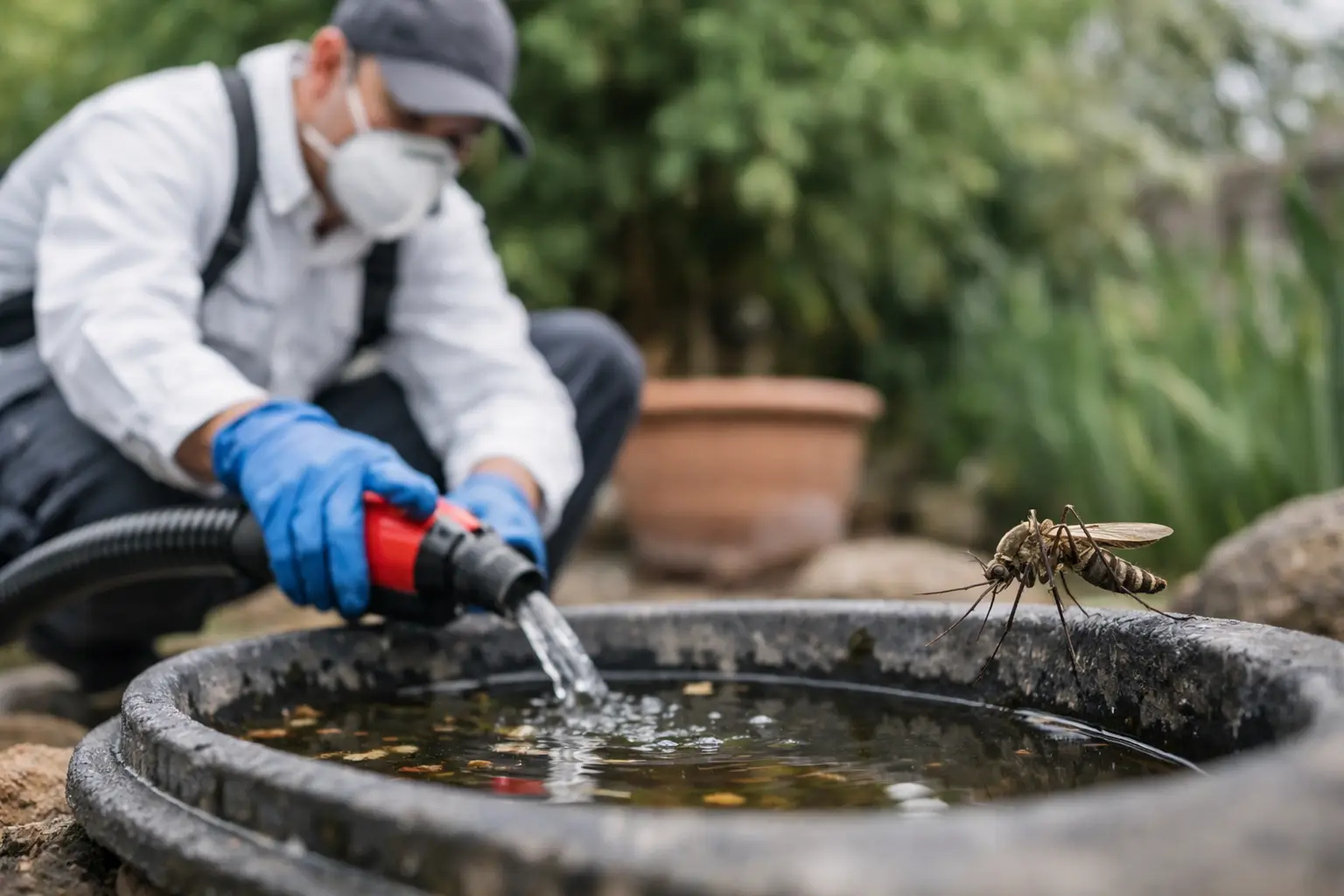
A bottle cap, plant saucer, or blocked drain can hold enough water to create a mosquito breeding risk. To remove standing water effectively, look beyond obvious puddles and address the small, repeated sources that collect water after rain, cleaning, or daily operations. This is one of the most practical steps a property owner or facility manager can take to reduce mosquito activity before it becomes a larger pest concern.
Mosquitoes do not need a pond to reproduce. Many species can develop from egg to adult in small amounts of still water, particularly when conditions are warm and wet. Removing those water sources interrupts the breeding cycle and makes your property less attractive to mosquitoes over time.
Why Standing Water Creates a Pest Problem
Standing water provides mosquitoes with a place to lay eggs and for larvae to develop. Depending on temperature and conditions, this process can happen quickly. A brief rain shower may leave behind water in containers, drains, roof gutters, or uneven surfaces, and those areas may be overlooked until mosquito activity increases.
The risk is not limited to yards. In residential properties, common sources include balcony planters, pet bowls left outdoors, tarps, toys, and air-conditioning drip trays. At commercial sites, water may collect around loading bays, waste areas, landscaping features, floor drains, construction materials, and equipment stored outdoors.
For F&B operators, offices, retail spaces, and industrial facilities, mosquito activity can affect more than comfort. It may lead to customer complaints, employee disruption, hygiene concerns, and a poorer impression of site maintenance. In high-traffic environments, prevention is usually less disruptive and more cost-effective than responding after breeding has already occurred.
How to Remove Standing Water Around Your Property
The most effective approach is regular inspection combined with a clear plan for fixing recurring water collection points. Emptying water once is helpful, but the source should be corrected whenever possible. A container that refills after every storm will continue to create the same risk.
Start by checking areas that are exposed to rain, irrigation, washdown, or condensation. Inspect at least weekly, and more frequently during rainy periods or when mosquito activity is noticeable. Focus on places where water can remain undisturbed for several days.
Look closely at these common problem areas:
- Plant pots, saucers, vases, and watering trays
- Buckets, pails, watering cans, and unused containers
- Clogged roof gutters, drains, and drain grates
- Tarps, plastic sheets, outdoor furniture covers, and discarded materials
- Air-conditioning trays, condensate lines, and equipment bases
- Uneven pavement, potholes, loading areas, and poorly graded soil
- Tires, toys, decorative items, and outdoor storage bins
Empty and scrub containers that hold water, rather than simply pouring them out. Scrubbing helps remove mosquito eggs that may cling to the inside surface above the waterline. Store containers upside down or under cover so they cannot collect rainwater again.
For plant saucers, avoid allowing excess water to remain after watering. If a saucer is needed, empty it regularly and check it after rainfall. Change water in decorative features or outdoor containers often, and keep them clean. A properly maintained water feature may need circulation or treatment, but a neglected one can quickly become a breeding site.
Fix the Conditions That Let Water Collect
Some standing water issues are easy to empty. Others point to a maintenance problem that needs a lasting repair. The difference matters because repeated mosquito breeding often begins with a site condition that has never been corrected.
Clear leaves, soil, and debris from gutters and drains so water can flow away as intended. If a drain is slow, damaged, or routinely blocked, arrange for appropriate maintenance instead of relying on occasional clearing. Drainage systems should move water away from buildings and avoid leaving stagnant pools at grates or channels.
Check outdoor surfaces after rain. Water that gathers in the same spot on a walkway, driveway, rooftop, or loading bay may indicate poor grading, a damaged surface, or blocked drainage. Small puddles can sometimes be managed with simple cleaning or regrading, while larger or persistent pooling may require a contractor or building maintenance team.
Tarps deserve special attention. A loose tarp can form low pockets that hold rainwater even when the material appears to cover equipment properly. Pull tarps taut, use a frame that prevents sagging, or choose a storage method that does not create water-catching folds.
For air-conditioning systems, inspect drip trays and drain lines as part of routine maintenance. Water from condensation is easy to miss because it is not tied to rainfall. If a tray overflows or a condensate line drains poorly, the issue should be repaired promptly to reduce moisture, mosquito risk, and potential water damage.
Standing Water Control for Businesses and Facilities
Businesses need a prevention routine that is clear enough for staff to follow and consistent enough to work across shifts. A single inspection before an event or audit is not a long-term strategy. Water sources can appear between inspections through weather, cleaning activities, deliveries, landscaping work, or improper storage.
Assign responsibility for checking outdoor areas, waste zones, drains, roof access points, and equipment storage areas. Document recurring locations so maintenance teams can see patterns rather than treating each occurrence as unrelated. For example, a drain that repeatedly holds water after washdown may need repair, not another reminder to sweep it.
Waste management areas should remain clean, accessible, and well drained. Bags, containers, and discarded packaging can trap rainwater when they are stored improperly. Keep lids closed, avoid leaving loose items outdoors, and remove unused materials that can become hidden water reservoirs.
Construction and renovation sites also require close attention. Open containers, plastic sheeting, wheelbarrows, equipment recesses, and temporary drainage arrangements may collect water quickly. Site managers should include mosquito prevention in daily housekeeping, especially where work is prolonged or the site is close to occupied buildings.
When Drains and Water Features Need Professional Attention
Do not attempt to enter drains, treat unknown water systems, or use chemicals without understanding the safety and environmental implications. Some standing water is connected to drainage infrastructure, underground systems, rooftop access areas, or equipment that requires trained maintenance personnel.
Professional pest management may be appropriate when mosquito activity continues despite regular source reduction, when larvae are found repeatedly, or when a large property has multiple difficult-to-access water collection points. A professional inspection can identify likely breeding sources, assess site conditions, and recommend a control plan that supports ongoing prevention rather than relying on temporary spraying.
For commercial properties, coordinated pest management and facilities maintenance are particularly valuable. Mosquito control works best when inspections, drainage upkeep, sanitation, landscaping, and targeted treatment are managed as connected responsibilities. Servcare supports this preventive approach with tailored mosquito control solutions designed around the conditions at each site.
A Simple Routine That Prevents Repeat Breeding
Consistency is what turns water removal into effective mosquito prevention. Set a recurring inspection schedule, especially after rainfall. Empty containers, clear drains, correct storage practices, and report persistent pooling before it becomes normal on the property.
It also helps to involve the people who use the space every day. Household members can recognize water collecting on balconies or patios. Employees can report pooling near work areas, equipment, and waste stations. Early reporting gives property managers time to resolve small issues before mosquitoes have an opportunity to breed.
If you keep finding water in the same location, treat that as useful information. The right next step is rarely to empty it again and hope for the best. Find out why it is collecting, correct the condition, and keep the area on the inspection routine. That practical habit protects comfort, hygiene, and peace of mind long after the water is gone.