


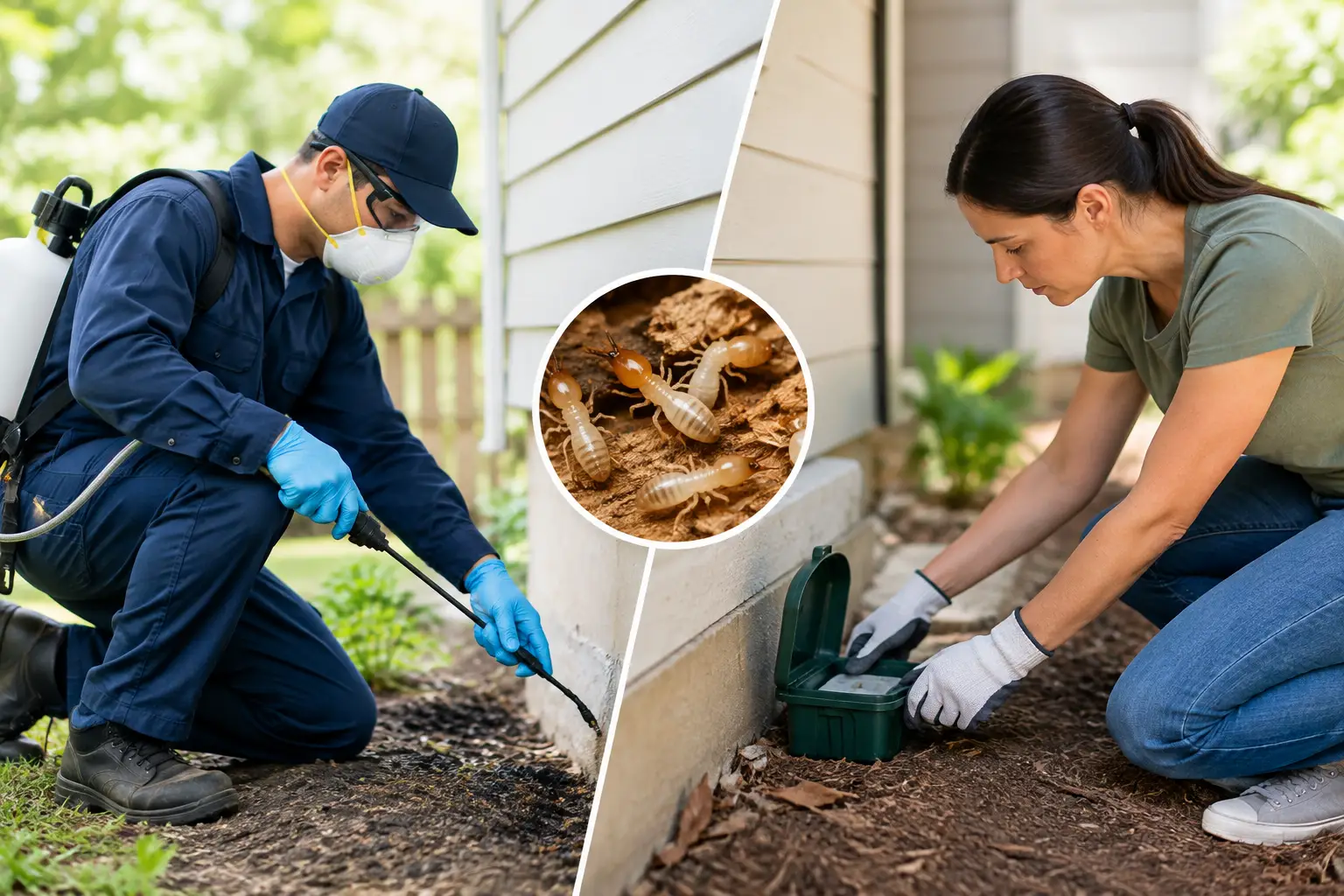
A hollow-sounding door frame, mud tubes along a wall, or a sudden swarm of winged insects can turn a small concern into a property emergency. When comparing professional versus DIY termite control, the real question is not simply which option costs less today. It is whether the treatment reaches the colony, protects the structure, and prevents damage from continuing out of sight.
Termites are not like the occasional ant trail or cockroach sighting. Subterranean termites can travel through soil, cracks, concealed voids, and structural timber while remaining largely hidden. By the time visible signs appear, feeding may already be established behind walls, beneath flooring, or around foundations. A practical response needs to account for the full extent of activity, not just the area where termites were first noticed.
Professional Versus DIY Termite Control: The Key Difference
DIY termite products are designed for accessibility. Homeowners may use bait stations, ready-to-apply sprays, foam treatments, or wood treatments to address an obvious location. These products can have a place in limited situations, particularly as a temporary measure while arranging an inspection or when dealing with a very early, clearly isolated issue.
The limitation is that visible termites represent only part of the problem. Killing termites at one exposed point does not necessarily affect the colony underground or stop other workers from using a different route into the building. If a treatment causes termites to retreat from one area, they may simply reappear elsewhere.
Professional termite control begins with diagnosis. A trained technician assesses termite signs, construction features, moisture conditions, likely entry points, and areas that may be difficult for a property owner to inspect safely. The treatment plan can then be matched to the property and the termite activity found, whether that calls for targeted localized treatment, a baiting strategy, soil treatment, monitoring, or a combination of methods.
This is the distinction that matters most: DIY products often focus on termite sightings, while professional service is designed to manage the infestation and reduce the conditions that allow it to persist.
Where DIY Treatment Can Be Useful
DIY action should not be dismissed entirely. It can help a property owner respond carefully while waiting for expert assessment. For example, a homeowner can remove damp cardboard, keep firewood and timber debris away from the building, repair obvious plumbing leaks, and avoid disturbing suspected termite mud tubes before they are inspected.
Some products may also help protect small, nonstructural wood items when used exactly as directed. However, this is very different from treating an active infestation in a wall, floor, roof structure, or commercial premises.
DIY control is most reasonable when there is no confirmed infestation and the goal is basic prevention. It becomes much less reliable when any of the following signs are present: hollow or damaged timber, mud tubes, discarded wings, bubbling paint, soft flooring, repeated swarms, or termites emerging from a structural element.
Using multiple products without a clear plan can also complicate later treatment. Heavy spraying may scatter activity, make inspections harder, or create unnecessary chemical exposure in occupied spaces. More product does not always mean better protection.
Why Professional Treatment Delivers Better Long-Term Control
A professional service provides advantages that are difficult to replicate with store-bought products. The first is inspection depth. Termite activity can be concealed behind finishes, inside cabinetry, beneath slabs, and around utility penetrations. Professionals know where termites commonly travel and how to distinguish active signs from old damage.
The second advantage is treatment reach. Depending on the property and infestation, professional-grade methods can target termite pathways and colony behavior rather than only the surface where activity is visible. Baiting systems, for instance, are designed to be carried back through the termite population over time. Soil treatments may establish a protective zone around vulnerable areas when they are appropriate for the site.
The third advantage is follow-up. Termite control is rarely a one-visit decision. Monitoring treatment progress, checking for fresh activity, and identifying new risk areas are central to preventing a recurrence. This is particularly valuable for properties with hidden structural voids, older buildings, ground-floor units, landscaping close to the structure, or a history of termite activity.
For commercial sites, the stakes can be higher. Offices, retail spaces, warehouses, and F&B operations may have ongoing maintenance demands, strict hygiene expectations, and limited tolerance for disruptions. A professional provider can coordinate treatment around operational needs while maintaining a clear record of findings and recommendations.
Cost: Upfront Savings Versus Repair Risk
DIY termite treatment usually has a lower initial price. That can make it appealing when activity seems minor. Yet the cost comparison changes quickly if termites continue feeding unnoticed and repairs become necessary.
Structural repairs may involve replacing skirting, door frames, built-in fixtures, flooring, ceiling timbers, or other components. The final expense can far exceed the cost of a professional inspection and properly planned treatment. There is also the inconvenience of repair work after an infestation has had time to spread.
Professional control costs more at the outset because it includes expertise, site assessment, treatment equipment, professional products, and follow-up recommendations. The value is in reducing uncertainty. Instead of repeatedly buying products and reacting to each new sign, property owners receive a strategy based on what is happening at their specific site.
That said, no ethical provider should promise that every building needs the most extensive treatment. The right approach depends on the construction type, termite evidence, surrounding conditions, and level of risk. A good inspection should explain why a recommended method is suitable and what ongoing protection may be needed.
Safety and Property Considerations
Termite products must be handled carefully, especially in homes with children, pets, food preparation areas, gardens, or sensitive occupants. Product labels are not a substitute for understanding how a treatment behaves in different surfaces, soils, or enclosed spaces.
Professional technicians are trained to apply treatments according to site conditions and product requirements. They can also advise on preparation steps, access requirements, and sensible precautions during and after service. This helps protect occupants while ensuring the treatment is applied where it can do the intended work.
Safety also means protecting the building itself. Drilling, injecting, lifting flooring, or treating near electrical and plumbing services without proper assessment can create avoidable damage. A professional plan aims to use the least disruptive method that still addresses the termite risk effectively.
Prevention Is Part of Effective Termite Control
Even after active termites have been treated, property conditions influence the likelihood of future activity. Moisture is a common contributor. Leaking pipes, poor drainage, condensation, and damp areas beneath sinks or near air-conditioning systems can make a property more attractive to termites.
Keep wood, cardboard, and garden waste from accumulating against exterior walls. Maintain a visible gap between soil or mulch and timber features where possible. Address water leaks promptly, and arrange periodic inspections if your property has had previous termite activity or is in a higher-risk setting.
Prevention does not guarantee that termites will never approach a building. It does make early detection and long-term management more achievable. Regular checks are especially worthwhile because termites work quietly, and property damage can develop before occupants notice a problem.
When to Call a Professional
If you have seen live termites, mud tubes, swarmers, discarded wings indoors, or unexplained timber damage, professional assessment is the safer choice. The same applies when DIY products have not stopped recurring signs, or when activity is close to structural timber, flooring, walls, or business-critical areas.
Servcare approaches termite concerns with inspection-led treatment and prevention planning, helping property owners move beyond short-term spot treatment toward dependable protection. The goal is not to create alarm, but to provide a clear path from suspected activity to informed action.
When termites may be present, avoid tearing out damaged wood or spraying the area repeatedly before it is assessed. Preserve the evidence, reduce moisture where you can, and have the property evaluated while the signs are still visible. Early, informed action gives you the best chance to protect both the building and your peace of mind.