


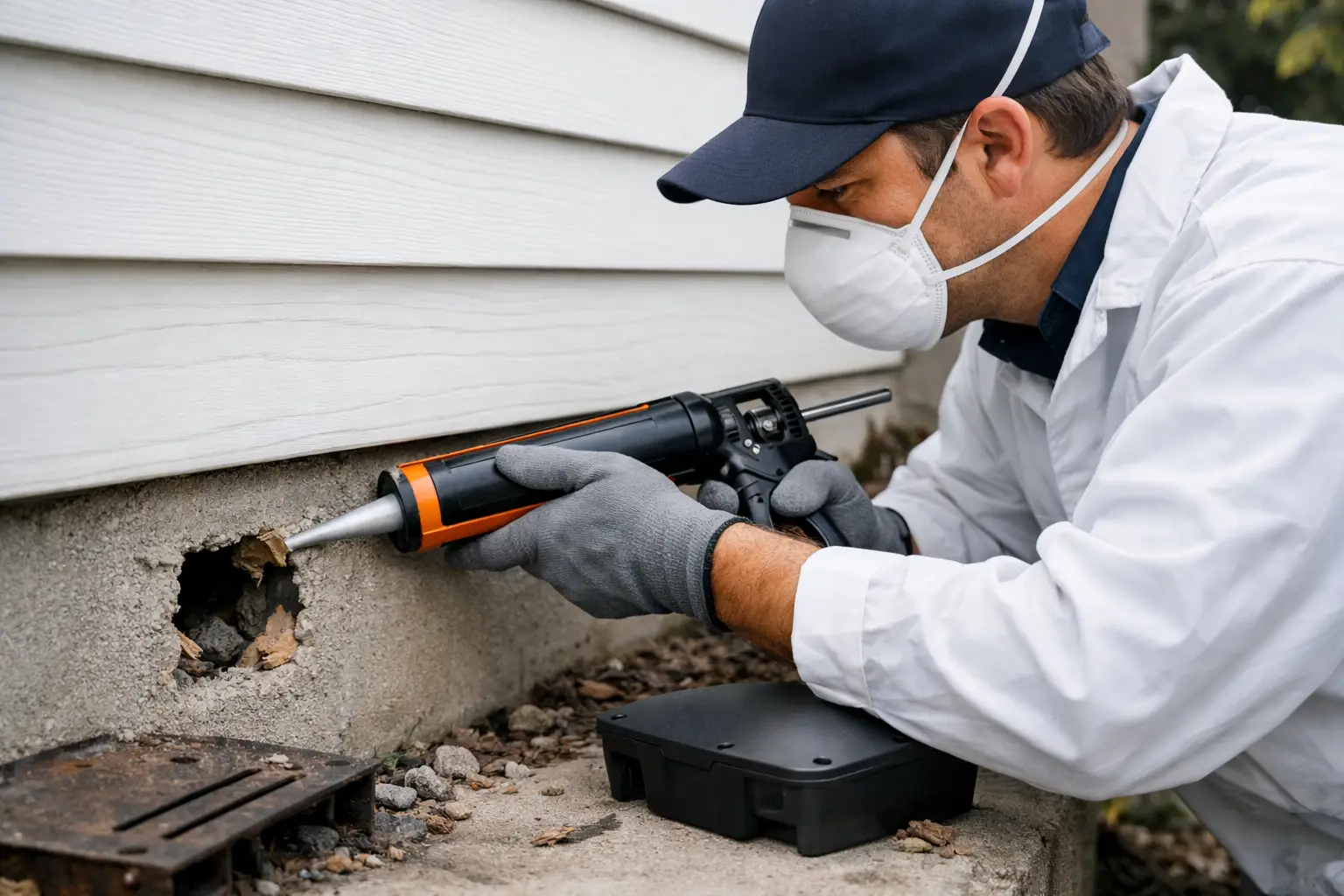
A mouse can enter through an opening as small as 1/4 inch, while rats can exploit gaps of roughly 1/2 inch. That means a loose pipe collar, cracked vent screen, or gap beneath a door can become an active route into your property. Learning how to seal rodent entry points is one of the most effective ways to stop recurring rodent activity before it becomes a larger hygiene, safety, or property damage concern.
Start With a Thorough Exterior Inspection
Rodent exclusion works best when you identify how rodents are getting in before applying any sealant. Walking around the exterior of a property in daylight is a practical first step, but do not limit the inspection to obvious holes in walls. Rodents commonly travel along pipes, cables, drain lines, ledges, and vegetation that touches the building.
Look closely at the lower portion of the structure, including exterior walls, foundations, loading areas, utility rooms, and doorways. Check around air-conditioning lines, plumbing penetrations, electrical conduits, and gas pipes. These locations often have small gaps left after installation or repairs.
For commercial premises, inspections should also cover delivery entrances, refuse storage areas, rear access doors, roof access points, and service risers. F&B operators should pay particular attention to gaps around kitchen utility lines and floor drains, where food residue and moisture can make nearby entry points more attractive.
A flashlight is useful even during the day. Shine it along seams, under doors, and behind exterior equipment. Inside the building, look for daylight visible around pipework or wall openings. Fresh droppings, gnaw marks, grease marks along walls, shredded materials, and a musty odor can help confirm where rodents are traveling.
Find the Gaps Rodents Use Most Often
Not every opening requires the same treatment. The right repair depends on the size of the gap, the material around it, whether the area moves or vibrates, and whether it is meant to provide ventilation or drainage.
Common rodent entry points include:
- Gaps beneath exterior, balcony, garage, or service doors
- Openings around pipes, cables, and utility conduits
- Damaged air vents, louvers, and exhaust screens
- Cracks in foundations, walls, and floor edges
- Broken drain covers and poorly sealed floor drains
- Roof gaps around eaves, fascia boards, and damaged tiles
Pay attention to areas that have been altered over time. A renovation, new cable installation, replaced air-conditioning unit, or repaired plumbing line can leave a small unsealed opening behind. In multi-unit buildings, rodents may move through shared service shafts and ceiling voids, so an issue in one area can affect neighboring spaces.
Choose Materials Rodents Cannot Easily Defeat
Rodents can chew through foam, rubber, plastic, untreated wood, and low-quality sealants. These materials may close a gap temporarily, but they should not be the only barrier where rodent pressure is present.
For small holes around pipes or in masonry, use copper mesh or stainless-steel wool packed firmly into the opening, then cover it with a durable exterior-grade sealant. The metal creates a chew-resistant barrier, while the sealant helps hold the material in place and blocks smaller gaps.
Larger holes in walls, foundations, or utility areas usually require stronger repair materials, such as galvanized metal flashing, metal mesh, cement mortar, or a properly fitted cover plate. A patch should extend beyond the damaged area rather than simply filling the center of the hole. This provides a more secure repair and reduces the chance that rodents can chew around the edge.
For vents, use corrosion-resistant metal screening with openings small enough to prevent rodent access. Screens must be securely fastened and should not restrict the vent’s intended airflow. Avoid sealing vents completely, as this can create moisture problems, affect equipment performance, or compromise building ventilation.
Seal Doors, Drains, and Service Areas Carefully
Doors are one of the most overlooked entry points, especially in busy commercial locations. If light can be seen beneath an exterior door, rodents may be able to enter. Install a durable door sweep or brush seal that sits close to the threshold without preventing the door from operating correctly.
For loading bays, storage rooms, and refuse areas, make sure doors close fully and are not held open for long periods. Where operations require frequent access, consider practical controls such as rapid-closing doors, physical barriers, and staff procedures that reduce unnecessary exposure.
Drains need a different approach. A drain cover should be secure, intact, and appropriate for the drainage system. Do not block drains with sealant or mesh that could prevent water flow and cause flooding. Instead, repair broken grates, fit correctly sized covers, and address gaps around drain connections where rodents may enter from surrounding voids.
Do Not Seal Active Rodents Inside
Sealing an entry point without considering whether rodents are already inside can create another problem. Rodents may become trapped in wall voids, ceilings, or storage spaces, leading to odor issues, damage, and new attempts to chew through interior materials.
Before major exclusion work, assess the level of activity. Signs such as fresh droppings appearing daily, scratching sounds in ceilings, visible rodents, or heavily gnawed food packaging may indicate an active infestation. In these cases, a coordinated rodent control plan should come first or happen alongside sealing work.
Professional treatment can reduce the existing rodent population while exclusion repairs remove their access routes. This combined approach is more reliable than relying on traps alone or sealing holes without inspection. It also helps identify hidden travel paths that may not be obvious during a basic walk-through.
Reduce What Draws Rodents to the Property
A sealed building is far more effective when food, water, and shelter are also controlled. Rodents are persistent, and a property with accessible food waste or clutter may encourage them to search harder for weaknesses.
Store dry goods and pet food in hard containers with tight-fitting lids. Keep waste bins covered, clean up spills promptly, and avoid leaving food debris in break rooms, pantries, kitchens, or outdoor dining areas. For businesses, cleaning schedules should include hard-to-reach areas beneath equipment, behind shelving, and around waste storage points.
Outside, keep vegetation trimmed away from walls and avoid allowing stored materials to accumulate against the building. Cardboard, unused equipment, pallets, and dense clutter can give rodents cover close to potential entry points. Repair water leaks and eliminate standing water where possible, since reliable moisture sources can support rodent activity even when food is limited.
How to Seal Rodent Entry Points Without Creating New Problems
The goal is not to close every opening indiscriminately. Buildings need functioning drains, ventilation, expansion joints, and access points for maintenance. A poorly planned repair can trap moisture, interfere with airflow, or make future servicing difficult.
Use materials suited to the location and preserve the original purpose of the opening. For example, a utility penetration may need a flexible exterior sealant around a metal mesh backing, while a wall crack may need a masonry repair. A vent should receive a properly secured screen, not a solid patch. When an opening is connected to utilities, drainage, fire safety systems, or food preparation areas, professional assessment is the safer choice.
It is also wise to document repairs. Facility managers can keep a simple record of the location, material used, date repaired, and any signs of continued activity. This makes routine inspections more efficient and helps reveal patterns, such as recurring gaps around a loading dock or service shaft.
When Professional Rodent Exclusion Is the Better Option
DIY repairs can be appropriate for a clearly visible, minor gap. However, professional help is recommended when rodent activity is recurring, entry points are difficult to locate, or access involves ceilings, rooflines, drains, service risers, or shared building areas.
A professional inspection considers more than the visible hole. It examines rodent species, movement patterns, nesting potential, sanitation conditions, structural vulnerabilities, and the risk of re-entry. This is especially valuable for food businesses, industrial facilities, and multi-unit properties, where a single overlooked access route can affect operations, compliance, and customer confidence.
Servcare approaches rodent control with inspection, targeted treatment, and practical exclusion recommendations designed for lasting protection. The focus is on resolving the conditions that allow rodents to return, while keeping safety and minimal disruption in view.
After repairs are complete, continue checking the property regularly, particularly after heavy rain, construction work, maintenance visits, or changes to landscaping. A small gap addressed early is far easier to manage than a rodent problem that has had time to spread through the building.