

A new home can look spotless at a viewing yet still contain pests behind cabinets, beneath flooring, or within concealed utility areas. A pest inspection before moving in gives you a clear picture of what is happening before furniture, groceries, and family routines make access more difficult. It is a practical step that protects your comfort, health, and property investment from day one.
For homebuyers, tenants, landlords, and facility managers, the goal is not simply to find an insect or rodent. It is to identify active pest activity, conditions that may support an infestation, and early signs of damage that could become expensive if left untreated.
Why a Pest Inspection Before Moving In Is Worth It
Moving is already a demanding process. Discovering cockroaches in kitchen cabinets, rodent droppings in a storeroom, or termite damage after unpacking creates disruption when you should be settling in. An inspection helps prevent that unwelcome surprise.
Some pests are easy to miss during a standard property viewing. Sellers and previous occupants may have cleaned thoroughly, while pests remain hidden in voids, drains, false ceilings, wall gaps, and areas under sinks. A fresh coat of paint can also conceal staining or repaired surfaces, but it cannot resolve an underlying termite or moisture issue.
A professional inspection provides a more reliable basis for decisions. If there is evidence of a problem, you can arrange treatment before move-in, discuss responsibilities with the relevant party, or plan necessary repairs. If no active infestation is found, you gain reassurance and a useful baseline for protecting the property going forward.
The Pest Risks Most Often Overlooked
The pests found in a property depend on its age, condition, surrounding environment, and previous use. In Singapore’s warm, humid climate, pest activity can develop quickly where food, water, shelter, and entry points are available.
Cockroaches in kitchens and concealed areas
Cockroaches are commonly found around plumbing, floor traps, appliance voids, cabinet hinges, and cracks near food preparation areas. Seeing one cockroach does not always mean there is a major infestation, but it should not be dismissed. Their egg cases, droppings, shed skins, and musty odor can point to a larger hidden population.
This matters especially in kitchens because cockroaches can contaminate food-contact surfaces and contribute to poor hygiene conditions. Before moving in, treatment can be completed while cupboards and counters are empty, allowing better access to harborages.
Rodent activity in ceilings, storerooms, and service spaces
Rodents can enter through surprisingly small openings around pipes, vents, doors, and utility lines. Their presence may be identified through droppings, gnaw marks, rub marks along walls, nesting material, or scratching sounds above ceilings.
A rodent issue is more than an inconvenience. Rats and mice can contaminate stored items, damage electrical wiring, and create sanitation concerns. Effective control requires more than placing bait. The source of access and the conditions attracting rodents must also be addressed to reduce repeat activity.
Subterranean termites and hidden structural damage
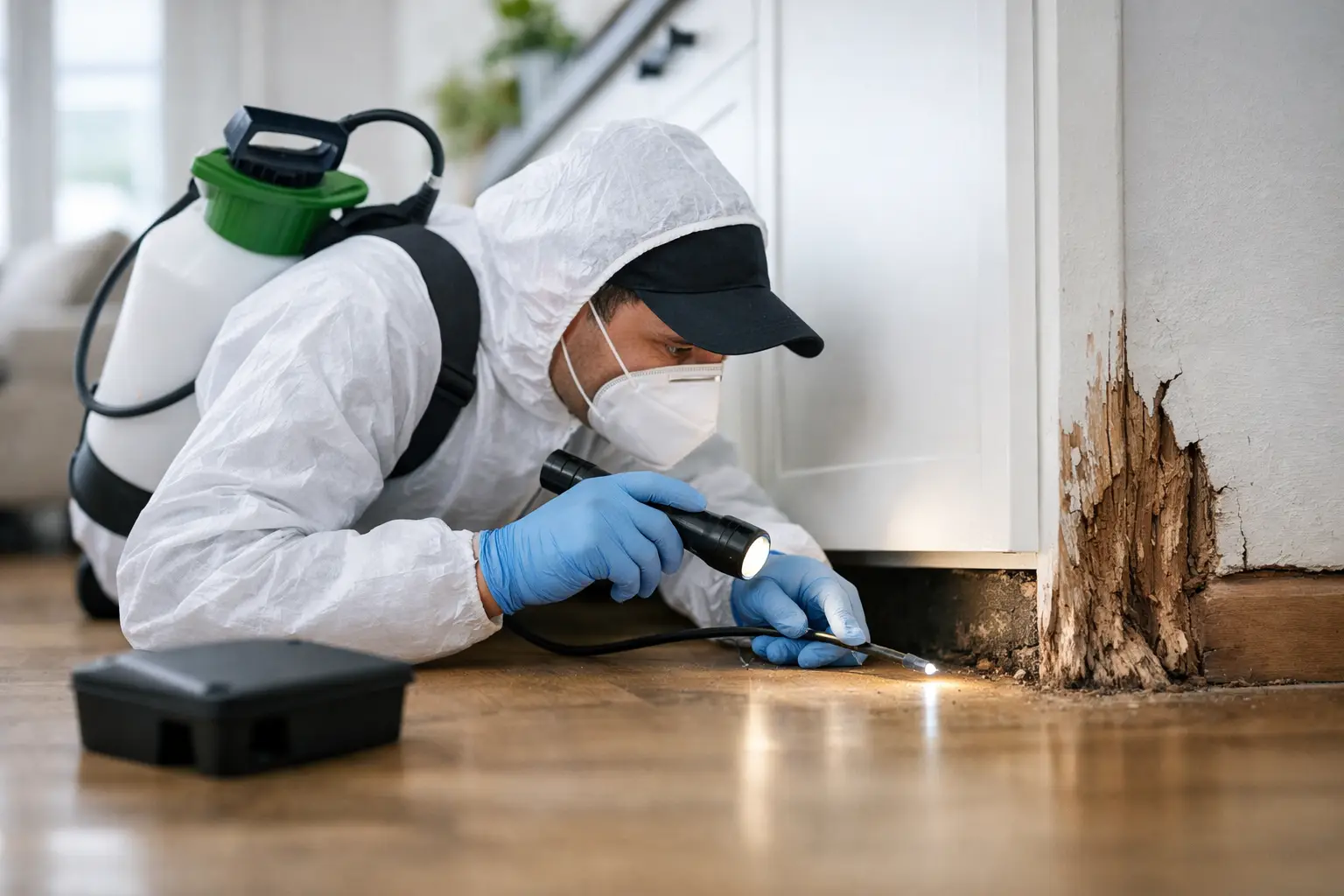
Termites are often difficult to detect without a focused inspection. Subterranean termites travel through concealed routes and may feed on wood inside door frames, built-in cabinetry, skirting, flooring, and other timber elements. By the time obvious damage appears, the infestation may have been active for some time.
Warning signs can include mud tubes, hollow-sounding wood, blistered paint, frass in certain termite cases, or doors and cabinets that suddenly fit poorly. Not every sign confirms an active termite colony, which is why professional assessment is valuable. Early intervention can prevent minor localized activity from becoming extensive property damage.
Mosquito breeding conditions around the property
A move-in inspection should also consider areas where water can collect, particularly on balconies, patios, roof areas, drains, plant trays, and outdoor storage spaces. Mosquito control is not limited to treating adult mosquitoes. Reducing breeding opportunities is essential for long-term prevention.
Even a well-maintained home can develop breeding risks if drains are blocked, containers are left exposed, or water collects after rainfall. Checking these conditions before occupancy makes it easier to establish good maintenance habits from the start.
What a Professional Inspection Should Assess
A meaningful inspection is not a quick visual walk-through. It should consider both signs of existing pest activity and the environmental factors that make future activity more likely.
The inspection process typically examines accessible areas such as kitchens, bathrooms, utility spaces, storerooms, false ceilings, built-in cabinets, door frames, floor edges, external perimeters, drains, and service penetrations. The inspector looks for evidence including droppings, nesting materials, insect remains, mud tubes, damaged timber, grease marks, moisture issues, gaps, and other entry points.
The final recommendation should be specific to the property. A recently renovated apartment with no signs of infestation may only need preventive advice and monitoring. An older landed property with moisture concerns and timber features may warrant a more detailed termite assessment. A food-related commercial space requires particular attention to sanitation, storage, drains, and compliance-sensitive areas.
A good pest management provider should explain what was found, what it means, and what should happen next. Clear advice matters because unnecessary treatment is not good service, but delaying a confirmed issue can increase the cost and disruption later.
When to Schedule the Inspection
The best time is after the property is vacant or substantially cleared, but before renovation work, deep cleaning, or move-in. Empty rooms allow better access to skirting boards, cabinets, corners, utility areas, and signs that would otherwise be hidden by furniture.
If renovation is planned, arrange the inspection before work begins whenever possible. Renovation can disturb pest harborages, open concealed areas, and create new gaps around pipes or fittings. It can also cover evidence that would have helped identify a pre-existing problem.
For rental properties, an inspection is useful when taking possession, especially if the unit has been vacant for a period or has a history of pest complaints. For businesses, it is particularly valuable before opening a new office, retail space, warehouse, or F&B outlet, where pest issues can affect operations and reputation from the outset.
What to Do If Pests Are Found
Finding pest activity does not automatically mean you should walk away from a property. The right response depends on the pest type, the scale of activity, the extent of damage, and whether the underlying cause can be corrected.
For a limited cockroach issue, a targeted treatment combined with cleaning and exclusion may be sufficient. For rodents, control should be paired with proofing of gaps and improved waste or food storage practices. For termites, the priority is determining whether activity is active, identifying affected areas, and recommending a treatment strategy that protects the structure.
Avoid relying on a quick over-the-counter spray as the only response. Surface spraying may kill visible insects while leaving nests, breeding sites, access routes, or colonies untouched. The result is often temporary relief followed by recurring activity.
Professional treatment before move-in has a practical advantage: technicians can access more areas without needing to work around belongings, pets, staff, or household routines. Any preparation steps and re-entry guidance should be explained clearly so treatment can be carried out safely and with minimal disruption.
Prevention Starts Before the First Box Arrives
After inspection or treatment, a few property habits can make a meaningful difference. Keep food in sealed containers, clear waste regularly, repair leaks promptly, avoid storing cardboard for long periods, and keep drains and outdoor areas free from standing water. Check that door sweeps, pipe openings, and window gaps are properly sealed.
Prevention is not about creating a perfectly pest-proof building, because no property is completely immune to pests. It is about making the environment less attractive and responding early when warning signs appear.
Servcare approaches pest management with tailored inspection, science-backed treatment methods, and prevention measures designed for lasting protection. For a home or business premises, that professional guidance can help ensure a fresh start does not come with a hidden pest problem.
Before you collect the keys and begin unpacking, give the property one final check that goes beyond appearance. A well-timed inspection can turn uncertainty into a clear plan and help you move in with greater confidence.