

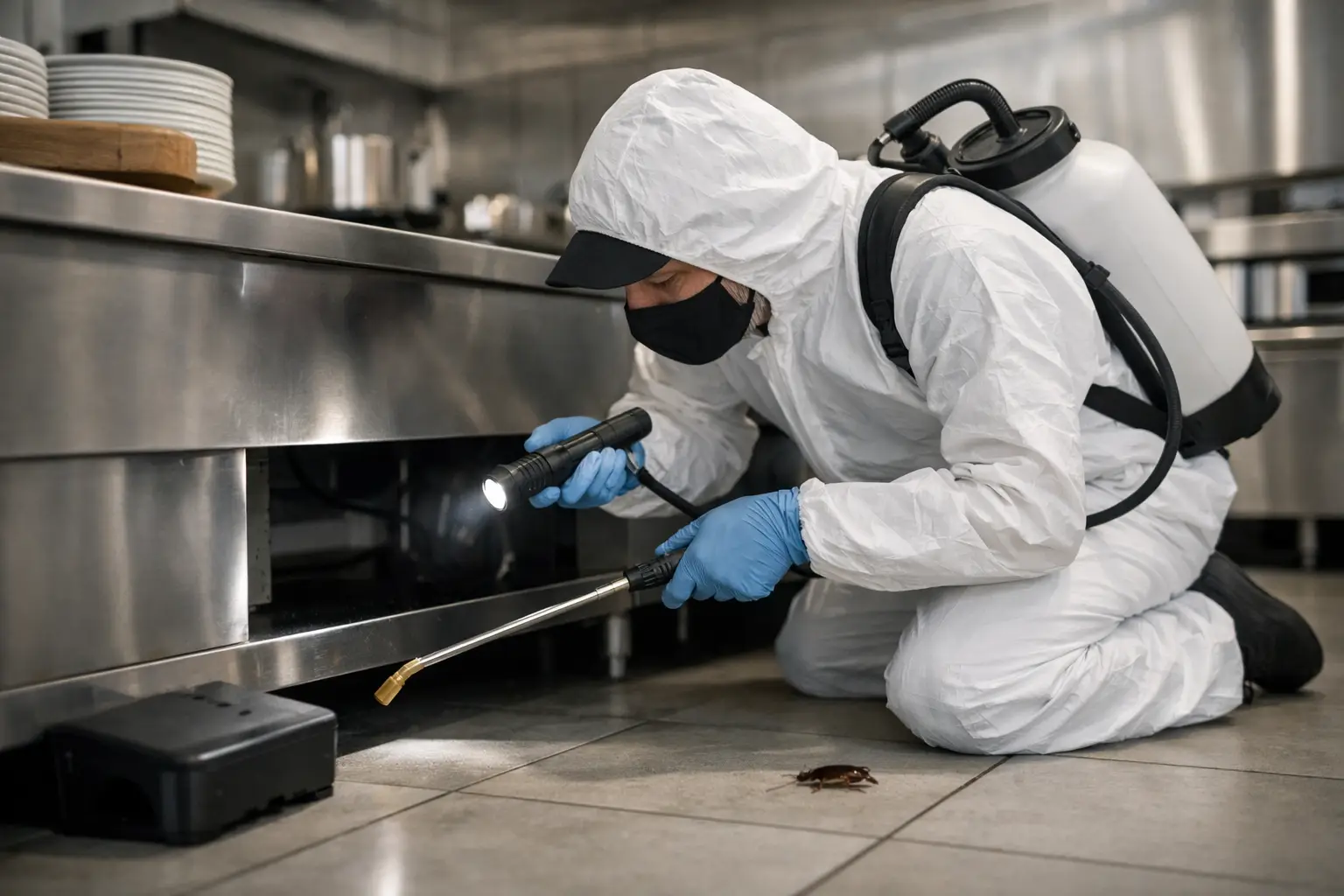
A cockroach sighting near a prep sink, rodent droppings behind dry storage, or drain flies around a bar station can quickly become more than a cleaning issue. This F&B pest compliance guide helps food operators turn pest control into a practical part of food safety, protecting customers, staff, stock, and the reputation built around every meal served.
F&B Pest Compliance Guide: What Operators Need to Control
Pest compliance is not achieved by arranging treatment only after pests are seen. Food and beverage premises need a documented, preventive system that identifies risks early, corrects the conditions pests depend on, and shows that action was taken.
Pests can contaminate ingredients, food-contact surfaces, packaging, and equipment through droppings, urine, shed skin, nesting materials, and bacteria carried on their bodies. Rodents can also damage electrical cables and storage materials, while cockroaches can move easily through cracks, drains, and shared building services.
For operators, the goal is straightforward: prevent pest access, remove food and water sources, detect activity early, and keep clear records of inspections and corrective actions. The exact requirements depend on the type of operation, local food safety rules, lease obligations, and the findings of an inspection. A central kitchen, for example, may need more frequent monitoring than a small coffee kiosk, while a restaurant in an older mixed-use building may face greater risks from neighboring units and common drainage lines.
Start With a Site-Specific Pest Risk Assessment
A useful pest program starts with an inspection of the entire operation, not just the area where activity was reported. A qualified pest management professional should assess the kitchen, dining area, receiving zone, waste room, staff areas, ceiling voids, drains, exterior perimeter, and adjoining spaces where access may occur.
The inspection should identify pest species or likely activity, entry points, harborage areas, moisture sources, food sources, and conditions that could allow an infestation to return. Cockroach risks often build around warm equipment, grease accumulation, gaps beneath cabinetry, and damp service areas. Rodent activity may be linked to unsecured waste, damaged door sweeps, gaps around pipe penetrations, or deliveries left near rear entrances.
This assessment matters because the treatment plan should match the risk. Repeated general spraying may provide temporary relief, but it does not resolve a leaking drain, poorly managed waste area, or a structural gap large enough for rodents to enter. Effective compliance depends on correcting these root causes alongside targeted treatment.
Know the warning signs your team should report
Kitchen and service staff are often the first people to notice early pest activity. They should know to report droppings, gnaw marks, grease marks along walls, insect sightings, damaged packaging, unusual odors, and dead pests. Reports should be made promptly, with the location and time recorded.
A single sighting does not always indicate a large infestation. However, in an F&B environment, it should never be dismissed. A fast investigation can prevent a small issue from developing into contamination, stock loss, customer complaints, or failed inspection findings.
Build Pest Prevention Into Daily Operations
The strongest pest control program supports good sanitation and facility maintenance. Even professional treatment will have limited long-term effect if food debris, standing water, and accessible waste remain available every day.
Cleaning schedules should address the areas pests use, not only the surfaces customers see. Pay close attention to under-counter spaces, behind refrigerators, beneath cooking equipment, floor drains, grease traps, storage racks, and waste holding areas. Food spills should be cleaned promptly, and cleaning equipment should be dried and stored properly after use.
Food storage also needs consistent discipline. Keep dry goods in sealed, pest-resistant containers where practical, rotate inventory, remove expired stock, and avoid storing cartons directly on the floor. Cardboard can provide harborages for cockroaches and may conceal pest activity, especially when supplies are held for long periods.
Waste management is equally critical. Bins should have fitted lids, be emptied on schedule, and be cleaned to prevent residue buildup. External waste areas require particular attention because they can attract rodents and flies that later find a route indoors. If your premises share waste facilities with other tenants, document concerns and raise building-level issues early.
Keep an Inspection-Ready Compliance File
Pest compliance is partly about what you do and partly about what you can demonstrate. A complete pest control file gives managers, auditors, and food safety inspectors a clear view of how risks are being managed.
Your records should be organized, current, and accessible to the responsible person on site. They commonly include:
- Service reports showing inspection findings, treatment completed, devices checked, and recommendations made.
- A site plan showing monitoring devices, bait stations, insect light traps, or other relevant control points.
- Trend records that show where pest activity is increasing, decreasing, or recurring.
- Corrective action logs for repairs, deep cleaning, waste issues, or sanitation gaps identified during service.
- Product and safety documentation for treatments used, where applicable.
A report should not be filed away without review. The manager or designated food safety lead should check recommendations, assign corrective actions, and confirm completion. If a technician repeatedly notes gaps beneath doors or poor drain hygiene, the records should show when the issue was fixed and who verified it.
Use Monitoring Data, Not Assumptions
Monitoring devices help reveal pest activity before it becomes obvious to staff or customers. Depending on the site and pest risk, this may include glue monitors for crawling insects, rodent monitoring points, insect light traps in suitable non-food-preparation locations, or other approved control methods.
The value is in the trend, not simply the device count. A rise in cockroach catches near one prep area may point to a plumbing leak, equipment sanitation issue, or structural opening. Repeated rodent activity near a loading entrance may indicate access from an exterior drainage route or poor delivery-area housekeeping.
Avoid treating monitoring as a box-checking exercise. Devices need correct placement, routine checks, labeling, and accurate records. More devices are not automatically better. A well-planned monitoring layout based on site conditions is more useful than an overcrowded plan that no one reviews.
Work With a Qualified Pest Management Provider
F&B operators need a provider that understands the balance between pest elimination, food safety, staff safety, and operational continuity. Treatments should be targeted, applied according to label directions and site conditions, and coordinated with kitchen schedules wherever possible.
Ask how the provider identifies root causes, documents activity, manages follow-up visits, and communicates urgent findings. A professional should explain what was found, what treatment is appropriate, what your team needs to do next, and how the result will be measured. The best service relationship is collaborative: your pest management team controls pest activity, while your operations team maintains sanitation, storage, and maintenance standards.
In Singapore, F&B operators should also ensure their pest management provider meets applicable licensing and regulatory expectations. Servcare combines experienced technicians, science-backed methods, and preventive recommendations to help businesses manage pest risks with confidence and minimal disruption.
Respond Properly When Activity Is Found
When pest activity is confirmed, act quickly but avoid panic-driven decisions. Isolate or discard food and packaging that may have been contaminated, clean and sanitize affected areas according to your food safety procedures, and investigate the source. The response may also require checking adjacent storage, drains, equipment voids, and neighboring areas.
Document what was found, where it was found, the immediate actions taken, and the corrective steps planned. If treatment is required, ensure staff understand any preparation instructions and re-entry guidance. Follow-up inspections are essential because eliminating visible pests is not the same as confirming the underlying risk has been controlled.
A compliant F&B pest program is built through consistent small actions: a sealed gap, a cleaned drain, a reviewed service report, and a staff member who reports activity early. Those habits protect more than an inspection score. They help preserve the safe, dependable experience customers expect every time they choose your business.