

A cockroach seen near a pantry, rodent droppings behind storage racks, or mosquito activity around a loading area can quickly become more than a maintenance concern. This commercial pest management guide explains how businesses can respond with control measures that protect hygiene, staff, customers, inventory, and daily operations – without relying on short-term fixes.
For offices, retail stores, F&B premises, warehouses, and industrial facilities, the right approach begins before pests become highly visible. Effective pest management is a planned, documented process that identifies conditions attracting pests, controls active activity, and reduces the chance of recurrence.
Why Commercial Pest Control Requires a Different Approach
Commercial sites create pest risks that homes often do not. Frequent deliveries, shared waste areas, food handling, drainage systems, false ceilings, storage rooms, and high foot traffic can all provide pests with access to food, water, shelter, or entry points.
The consequences can also be more serious. A pest sighting may lead to customer complaints, contaminated stock, failed audits, workplace disruption, or damage to a business’s reputation. Rodents can chew wiring and packaging. Cockroaches can contaminate food-contact surfaces. Subterranean termites can cause gradual but significant damage to timber elements and built-in fixtures.
This is why commercial pest management should not be treated as a one-time spray service. A treatment may reduce visible pests, but it will not solve the underlying issue if food residue, moisture, access gaps, or breeding sites remain. The most reliable programs combine inspection, targeted treatment, sanitation support, exclusion work, monitoring, and regular review.
Start With a Site-Specific Pest Risk Assessment
Every commercial property has a different pest profile. An F&B outlet may need close attention around grease traps, kitchens, floor drains, and delivery areas. A warehouse may be more exposed to rodents entering through loading bays or nesting among stored goods. Offices can face cockroach issues in pantries, server rooms, and shared refuse areas.
A professional inspection should identify the pest species, evidence of activity, likely harborages, entry routes, and environmental factors supporting the infestation. This matters because control methods vary. Treating for cockroaches is not the same as managing rodents, mosquitoes, or subterranean termites.
The inspection should also consider surrounding conditions. Nearby construction, vegetation, drainage, neighboring units, and communal waste areas can influence pest pressure. In multi-tenant buildings, a problem may extend beyond one unit, so coordination with building management may be necessary for lasting control.
What a Useful Inspection Should Cover
A thorough assessment looks beyond the areas where pests were first seen. It should review food and water sources, waste handling, drains, cracks and service penetrations, storage practices, ceiling voids, exterior grounds, and signs of nesting or breeding.
For businesses operating in Singapore, pest management should also support applicable hygiene and operational requirements. A provider with appropriate NEA licensing and technical knowledge can help facility teams put practical controls in place while working carefully around people, food, equipment, and sensitive work areas.
Prioritize the Pests That Create the Greatest Business Risk
Not every pest issue calls for the same response time or treatment plan. Prioritization helps managers direct resources where they will have the greatest protective value.
Cockroaches are a high concern in food areas, pantries, washrooms, and warm equipment spaces. They hide in narrow cracks, behind appliances, and around plumbing. Because they are largely active at night, a daytime sighting may indicate a more established issue.
Rodents bring contamination and property risks. Droppings, gnaw marks, rub marks along walls, damaged cartons, and unusual odors should be investigated promptly. In warehouses and food-related environments, rodent activity can spread quickly when access points and food sources are not controlled.
Mosquito management focuses on preventing breeding rather than only reacting to adult mosquitoes. Standing water in drains, trays, containers, roof gutters, and outdoor equipment areas can create breeding opportunities. Regular source reduction is essential, especially during periods of increased rainfall.
Subterranean termites require careful assessment because damage can develop out of sight. Mud tubes, hollow-sounding timber, blistered paint, or weakened wooden fixtures may be warning signs. Early professional action can limit damage before repairs become more disruptive and costly.
Build Prevention Into Daily Operations
Pest prevention works best when it becomes part of normal site management rather than an occasional cleaning task. Staff do not need to become pest specialists, but they should know what to report and how routine practices affect pest activity.
Good housekeeping is one of the strongest controls. Food should be stored in sealed containers where appropriate, spills cleaned promptly, and waste removed on a consistent schedule. Cardboard, clutter, and unused materials should not be allowed to accumulate in storerooms, as they can create shelter for cockroaches and rodents.
Moisture control is equally important. Report leaking pipes, condensation, clogged drains, and standing water quickly. Many pests depend on reliable water sources, so fixing a small leak can have a meaningful impact on long-term activity.
Exclusion measures help keep pests from entering in the first place. Door sweeps, screened vents, sealed gaps around pipes, repaired wall cracks, and properly maintained loading doors can reduce access. These measures are especially valuable for rodent control, but they also limit cockroach movement between service areas and interior spaces.
Use Treatments That Fit the Site and the Pest
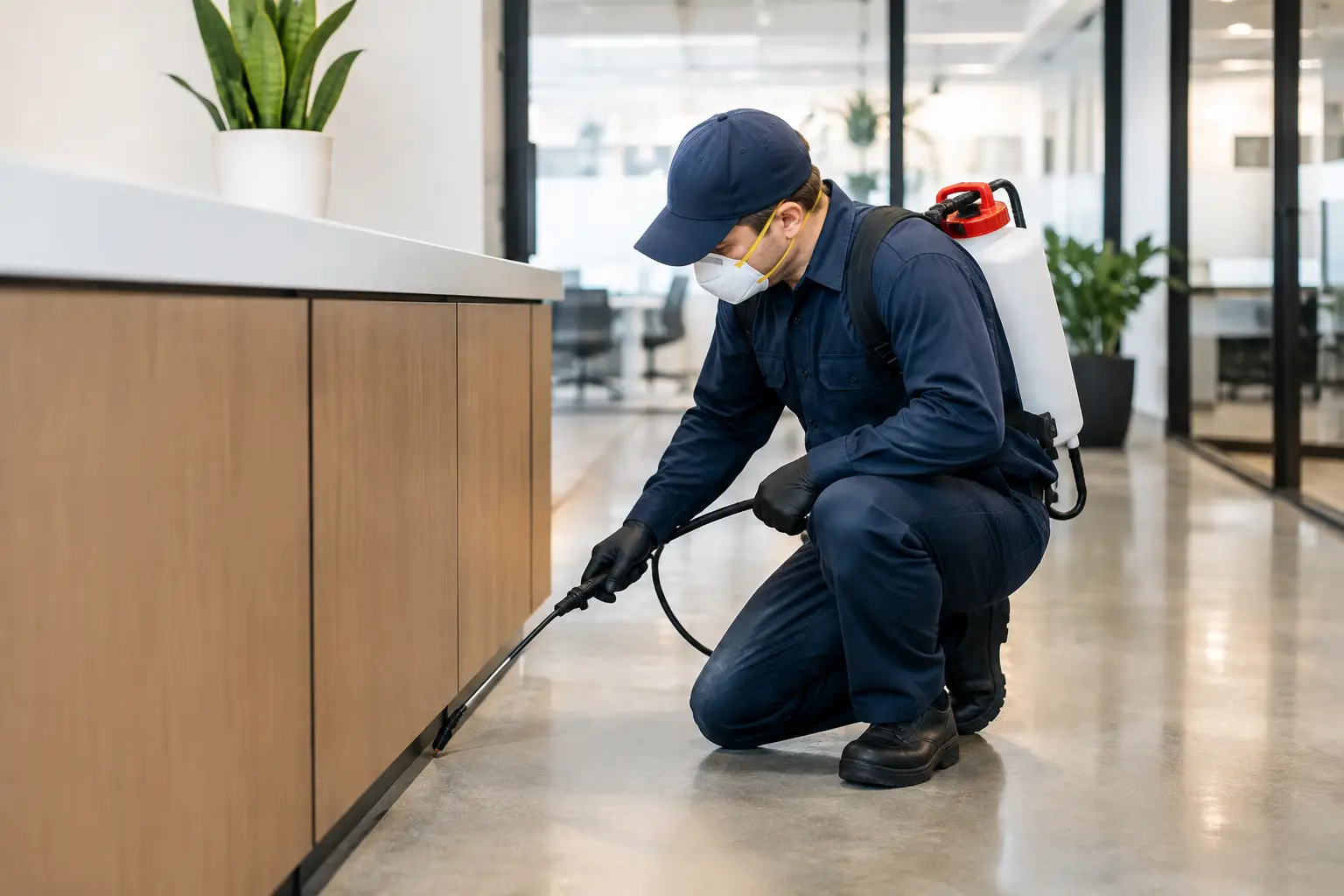
The right treatment should be based on inspection findings, not a standard response applied to every location. Professional pest management may include carefully placed baits, targeted residual treatments, trapping and monitoring systems, larval mosquito control, or termite treatment methods suited to the construction and risk level of the property.
There are trade-offs to consider. A strong treatment may provide quick knockdown in an active infestation, but ongoing monitoring and environmental correction are needed to prevent a return. In food handling areas, treatment timing and product selection must be planned carefully to minimize disruption and protect hygiene standards. In offices or customer-facing spaces, discreet placement and clear communication matter just as much as treatment effectiveness.
Eco-conscious pest management does not mean ignoring a serious infestation. It means using products and methods responsibly, applying them where they are needed, and reducing unnecessary exposure. A tailored plan should protect people, pets where relevant, operations, and the surrounding environment while still addressing the pest pressure effectively.
Make Monitoring and Documentation Part of the Program
A commercial pest program should produce clear records, not just a service receipt. Documentation helps managers spot patterns, demonstrate due diligence, and make better decisions about corrective actions.
Service reports should record pest evidence, treatment areas, products or devices used, monitoring results, recommendations, and follow-up needs. Trend data can reveal whether activity is linked to a particular season, shift pattern, supplier delivery, waste area, or building defect.
For example, repeated cockroach activity near the same pantry may point to a plumbing void or a cleaning gap. Rodent catches near a loading bay may signal an entry point that has not been sealed. Mosquito findings in an exterior area may indicate that routine source reduction is being missed.
A Practical Review Routine
Facility managers should review pest records regularly with their service provider and act on recommendations promptly. The review should confirm whether activity is decreasing, whether corrective work has been completed, and whether treatment frequency still matches the site’s risk.
High-risk businesses may need more frequent inspections than a low-traffic office. It depends on food handling, building condition, operating hours, waste volume, nearby environmental pressures, and the history of pest activity. The goal is not to schedule visits for their own sake, but to maintain the right level of protection for the property.
Choose a Provider for Long-Term Protection
A dependable commercial pest partner should take time to understand your operation before recommending a program. Look for trained professionals, regulatory credentials, clear reporting, safe work practices, and the ability to explain why a treatment or preventive measure is needed.
Experience matters, particularly when pest activity is complex or recurring. At Servcare, pest management plans are built around inspection findings, science-backed methods, and practical prevention steps that support business continuity. The focus is on resolving the conditions behind pest activity, not simply treating what happens to be visible on the day of service.
The most useful question to ask is not, “How fast can this be sprayed?” It is, “What will stop this from affecting our business again?” When your team, site practices, and pest management provider work from the same plan, prevention becomes a reliable part of protecting your premises and the people who depend on it.