


A single rodent sighting rarely tells the full story. The greater concern is what happens after it disappears: droppings in a storeroom, gnaw marks near electrical cables, contaminated stock, or a hidden entry point that allows more rodents inside. Smart rodent monitoring systems give property owners and facility managers earlier, more useful visibility into this activity, so control can begin before a small issue becomes an established infestation.
For homes, that can mean protecting food areas and family comfort. For businesses, especially F&B outlets, warehouses, retail spaces, and offices, early detection helps protect hygiene standards, operations, and reputation. Technology is not a substitute for professional pest control, but when used correctly, it can make rodent prevention more responsive and more precise.
How Smart Rodent Monitoring Systems Work
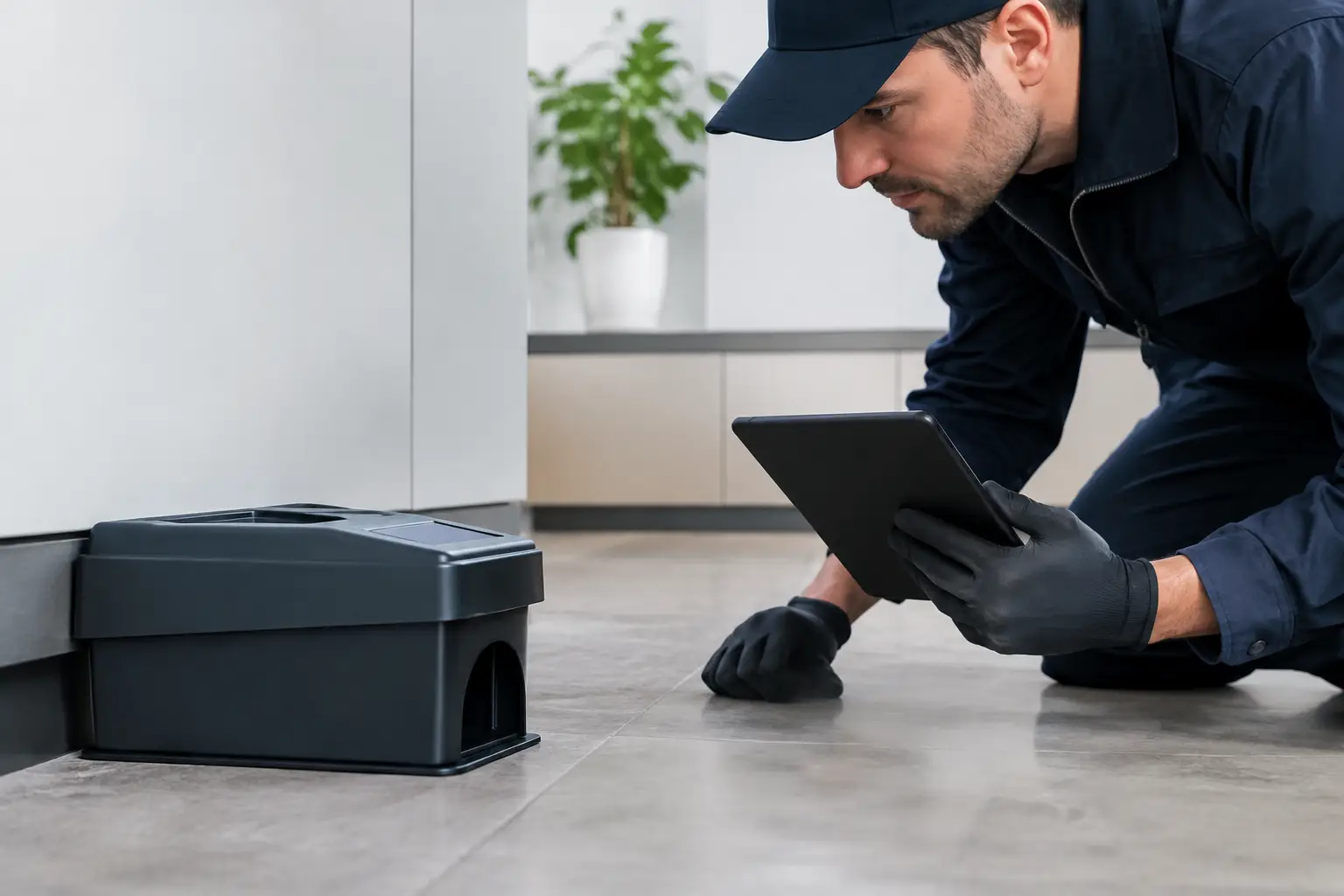
Smart monitoring systems use connected devices placed in areas where rodents are likely to travel, feed, or nest. Depending on the system, these devices may include sensor-equipped traps, motion detectors, cameras, or monitoring stations that send activity alerts to a dashboard or designated contact.
Rather than relying only on scheduled visual checks, the system records possible rodent activity as it occurs. A facility manager may receive a notification that a trap has been triggered, while a pest management professional can use the data to identify recurring activity at a specific location. This shortens the time between detection and action.
The value is not simply receiving an alert. It is understanding what the alert means. Rodents often travel along walls, behind equipment, above ceilings, near drains, and through service voids. Repeated activity at one monitoring point may indicate a nearby harborage area, an accessible food source, or a gap in the building exterior. A trained inspection is still needed to confirm the cause and recommend the right corrective work.
Why Earlier Detection Matters
Rodents reproduce quickly when food, water, and shelter are available. By the time signs are obvious, such as widespread droppings or damage to packaging, the problem may already extend beyond the area where it was first noticed. Early detection gives teams a better chance to intervene while rodent pressure is still limited.
This is especially relevant in commercial environments. A rodent incident can lead to product loss, cleaning disruption, staff concerns, and customer complaints. In food-related premises, it can also create serious compliance and contamination risks. Monitoring data gives businesses a clearer record of when activity was detected, where it occurred, and what response was taken.
For homeowners, smart monitoring can be useful in less frequently accessed locations, including roof spaces, utility areas, storage rooms, and behind built-in cabinetry. These are places where rodent activity may go unnoticed until odors, noises, or damage become difficult to ignore.
What a Monitoring Alert Can and Cannot Tell You
An alert is a prompt to investigate, not a complete diagnosis. It can show that a device was activated or that movement was detected, but it may not immediately confirm the rodent species, the size of the infestation, or the exact route used to enter the property.
False triggers are also possible. Device placement, environmental conditions, insects, pets, and nearby activity can affect certain types of sensors. This is why the system should be selected and positioned by people who understand rodent behavior and the conditions of the site.
A good rodent control program considers more than device data. It combines inspection findings with practical evidence such as fresh droppings, grease marks, gnawing, burrows, damaged food packaging, and structural gaps. The aim is to remove the conditions that support rodent activity, not just respond to each individual alert.
Where Smart Monitoring Delivers the Most Value
Smart systems are often most valuable where routine checks are difficult, hygiene requirements are high, or a fast response can prevent wider disruption. They may be suitable for multi-unit commercial properties, F&B back-of-house areas, warehouses, loading bays, manufacturing facilities, and locations with long operating hours or limited access windows.
They can also support larger sites where multiple monitoring stations are needed. Instead of treating every location with the same level of attention, a pest management team can prioritize areas showing verified activity. This can reduce unnecessary disruption and focus resources where they are most needed.
That said, not every property requires a connected monitoring system. A small home with a one-time issue may be better served by a thorough inspection, targeted treatment, and proofing work. The right approach depends on the level of rodent pressure, the size and layout of the property, the risk to operations, and whether ongoing reporting is needed.
Monitoring Is Most Effective With Exclusion and Sanitation
Technology cannot compensate for easy access to food or entry points. If rodents can enter through gaps around pipes, damaged door seals, unscreened vents, or poorly maintained drains, new activity can continue after traps are placed. Likewise, accessible food waste, cluttered storage, and overflowing bins create conditions that encourage rodents to stay.
An effective program should address detection, removal, and prevention together. After activity is identified, the next steps may include targeted trapping, safe treatment where appropriate, sealing entry routes, improving waste management, and adjusting storage practices. In commercial premises, teams may also need guidance on cleaning schedules, stock rotation, and keeping goods raised off the floor.
This integrated approach matters because rodents are adaptable. Removing one animal without correcting the underlying conditions may provide only temporary relief. Long-term protection comes from making the property less accessible and less attractive to rodents.
Choosing a System and Service Partner
When considering smart rodent monitoring systems, look beyond the device itself. Ask how alerts are reviewed, what response process follows an alert, and whether the provider will conduct a proper site inspection. Clear reporting is helpful, but professional interpretation and corrective action are what turn information into results.
For businesses, it is worth clarifying who receives notifications, how incidents are documented, and how quickly the affected area can be checked without disrupting operations. The monitoring plan should also account for the site layout, food-handling practices, waste areas, loading zones, and neighboring premises.
Safety should remain central. Devices and treatments should be appropriate for the environment, particularly where children, pets, customers, food, or sensitive equipment are present. A qualified pest management provider can recommend measures that are effective while minimizing unnecessary risk.
At Servcare, rodent control is approached as a prevention-focused service, not a one-off response. With experienced inspection, science-backed methods, and practical recommendations for each property, the goal is to stop current activity and reduce the chance of recurrence.
A Smarter Way to Stay Ahead of Rodent Activity
Smart monitoring is most useful when it supports informed decisions. It can help reveal activity sooner, strengthen inspection records, and direct attention to the areas that need it most. But the best results still come from combining reliable monitoring with professional treatment, exclusion work, sanitation improvements, and regular follow-up.
If signs of rodents are appearing repeatedly, do not wait for the problem to become more visible. A timely assessment can identify the source of activity and put a practical protection plan in place before rodents affect your home, operations, or peace of mind.