


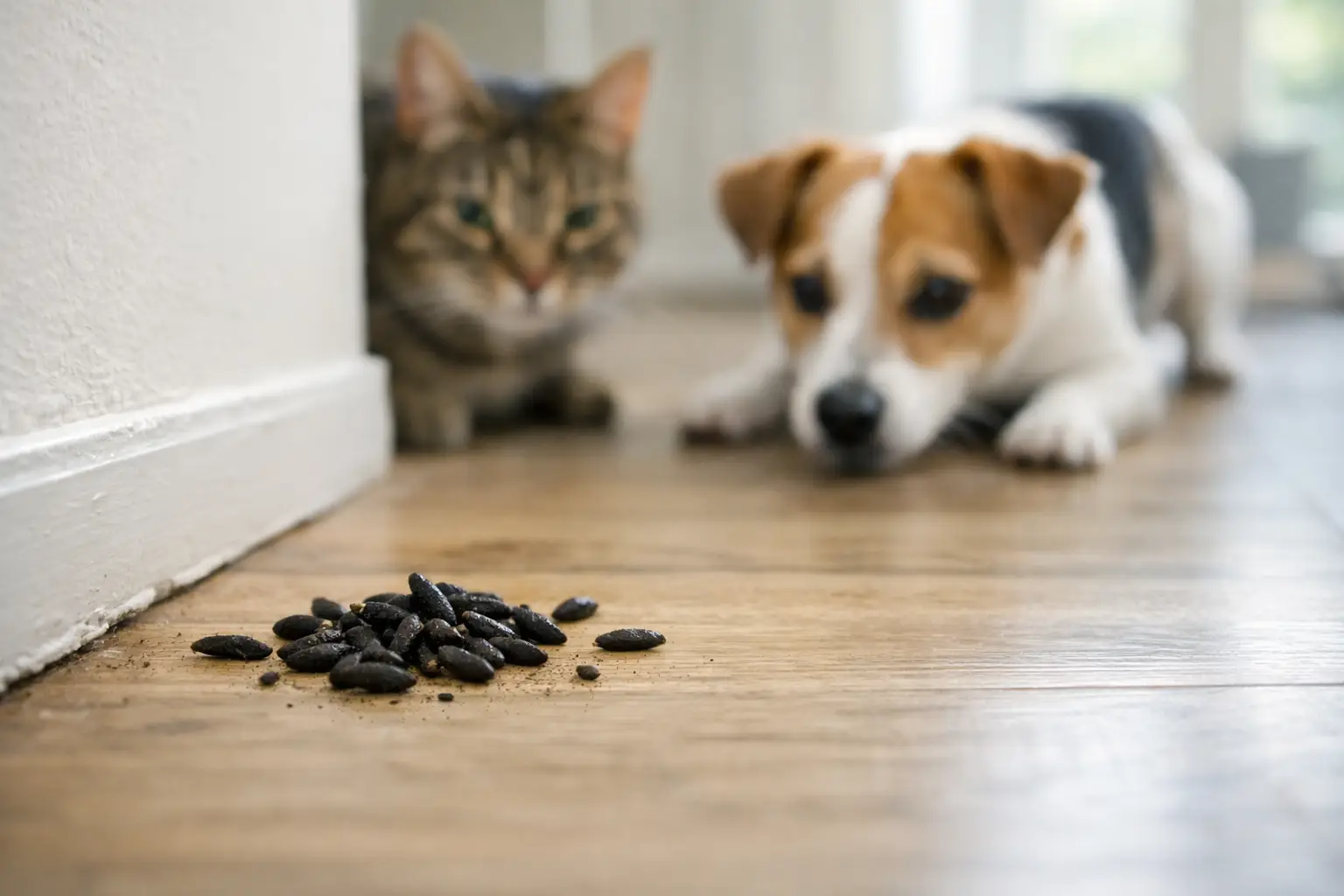
A few dark pellets behind the refrigerator or beside a pet’s food bowl can mean more than an unpleasant cleanup. If you are asking, “are rodent droppings dangerous to pets?” the practical answer is yes. Droppings can expose dogs, cats, and other household pets to bacteria, parasites, and contaminated food or water. The level of risk depends on the amount of exposure, your pet’s health, and whether rodents are still active, but it is a problem worth addressing promptly.
Pets investigate with their noses and mouths. A dog may eat droppings during a walk around the yard, while a cat may track through a hidden nesting area and then groom its paws. Even when pets do not directly consume droppings, contamination can spread to feeding areas, bedding, floors, and storage spaces.
Are Rodent Droppings Dangerous to Pets?
Rodent droppings may carry disease-causing organisms picked up from the rodents’ bodies, urine, nesting material, or surroundings. Rats and mice are commonly associated with bacteria such as Salmonella and Leptospira. These organisms can cause gastrointestinal illness and, in some cases, more serious infections.
The concern is not limited to visible pellets. Rodents can contaminate dry food, pet treats, water bowls, counters, and stored items as they move through a property. Their urine may also be present near droppings, even if it is not easy to see. A single dropping does not always result in illness, but repeated activity increases the chance of exposure and signals an infestation that needs control.
Young pets, senior pets, pregnant animals, and pets with weakened immune systems may be more vulnerable. Outdoor dogs and cats can also encounter rodent activity in gardens, sheds, drainage areas, and under decks, where it is harder for owners to notice the evidence.
Illnesses and complications to be aware of
Pets that ingest contaminated material may develop vomiting, diarrhea, reduced appetite, fever, tiredness, or abdominal discomfort. These signs can have many causes, so they do not automatically mean rodent-related illness. Still, tell your veterinarian about any known contact with rodent droppings, urine, or contaminated food.
Leptospirosis deserves particular attention because it can be transmitted through exposure to infected rodent urine in soil or standing water. It may affect the kidneys or liver and can be serious without timely veterinary care. Vaccination can reduce risk for some dogs, but it does not replace rodent prevention or good hygiene.
Rodent droppings can also contain parasite eggs or contribute to a broader contamination problem. In homes and businesses that store food, including pet food, rodent activity can create an ongoing cycle: rodents access a food source, contaminate it, and return to the same area.
When exposure needs veterinary attention
If your pet eats rodent droppings, contact your veterinarian for guidance, especially if the pet is very young, elderly, unwell, or has a chronic condition. Do not try to induce vomiting unless a veterinarian specifically instructs you to do so. The advice may differ depending on your pet’s size, the suspected amount eaten, and whether other hazards are present.
Seek veterinary care promptly if your pet develops repeated vomiting, diarrhea, unusual lethargy, fever, excessive thirst, yellowing of the eyes or gums, difficulty breathing, or changes in urination. Bring clear details: when exposure may have happened, where the droppings were found, and whether your pet could have consumed bait, a dead rodent, or spoiled food as well.
That last point matters. Rodent control products can pose a separate and potentially urgent risk to pets. If you suspect a pet has eaten rodent bait or a rodent that may have consumed bait, contact a veterinarian immediately. Keep all pest control products secured and use treatments selected and placed by trained professionals with pet safety in mind.
Safe cleanup protects pets and people
It is tempting to sweep or vacuum dry droppings quickly. That can disturb contaminated dust and spread it into the air. Instead, keep pets away from the area while you clean and wear disposable gloves.
Ventilate the space if possible. Lightly wet droppings and nearby surfaces with an appropriate disinfectant, allowing it to sit as directed on the product label. Use paper towels to pick up the material, place the waste in a sealed bag, and dispose of it in a covered trash bin. Clean and disinfect the surrounding floor, shelf, or surface afterward, then wash your hands thoroughly.
Avoid dry sweeping, dry brushing, or vacuuming fresh droppings. Wash pet bowls, toys, and washable bedding if they may have been exposed. Discard pet food, treats, or packaging that has signs of gnawing, droppings, urine stains, or unusual odors. Food stored in thin plastic or cardboard packaging is especially vulnerable.
For heavy accumulation, nesting material, droppings in ceiling voids, or contamination in commercial food-handling areas, professional support is the safer choice. The cleanup is only one part of the job. Unless the rodents’ entry points, food sources, and harborages are addressed, new droppings can appear soon after cleaning.
Signs that rodent activity is still present
Fresh droppings are usually dark, moist-looking, and soft. Older droppings tend to become dry, gray, and crumbly. However, appearance alone is not a reliable way to determine whether an infestation is active, particularly in warm or humid environments.
Look for a pattern of evidence around kitchens, storerooms, utility rooms, false ceilings, garbage areas, and pet feeding stations. Gnaw marks on food containers, shredded paper or fabric, greasy rub marks along walls, scratching sounds, and a persistent musky odor can all indicate rodents are established nearby.
In a business, rodent evidence should be treated as both a hygiene and operational concern. F&B operators, retailers, warehouses, and offices may face contamination of stock, staff concern, customer complaints, and possible compliance issues. Early inspection is usually less disruptive than allowing activity to spread into concealed areas.
Preventing future contact with droppings
Prevention begins by making the property less accessible and less rewarding for rodents. Keep pet food in tightly sealed, chew-resistant containers rather than leaving open bags in cabinets, garages, or storerooms. Feed pets at set times where practical, and clear leftover food and water overnight.
Check doors, pipe openings, vents, and gaps around utility lines. Rodents can enter through surprisingly small openings, then travel through wall voids and ceiling spaces without being seen. Outdoor clutter, overgrown vegetation near walls, poorly managed waste, and standing water can also support rodent activity.
A professional rodent control program should go beyond placing traps or bait. Effective control starts with inspection, identifies likely entry points and nesting areas, reduces the conditions attracting rodents, and uses a treatment plan suited to the property and its occupants. Ongoing monitoring is valuable when a site has recurring pressure, multiple food sources, or complex building access points.
Servcare approaches rodent control with the goal of reducing current activity while helping clients prevent the next infestation. For homes, that means protecting family spaces and pets. For commercial properties, it means maintaining cleaner operations, protecting stock, and giving teams greater peace of mind.
Finding droppings is a useful warning sign, not a reason to panic. Keep pets away from the affected area, clean carefully, watch for symptoms after known exposure, and address the rodent source before it becomes a repeated health and hygiene concern.