


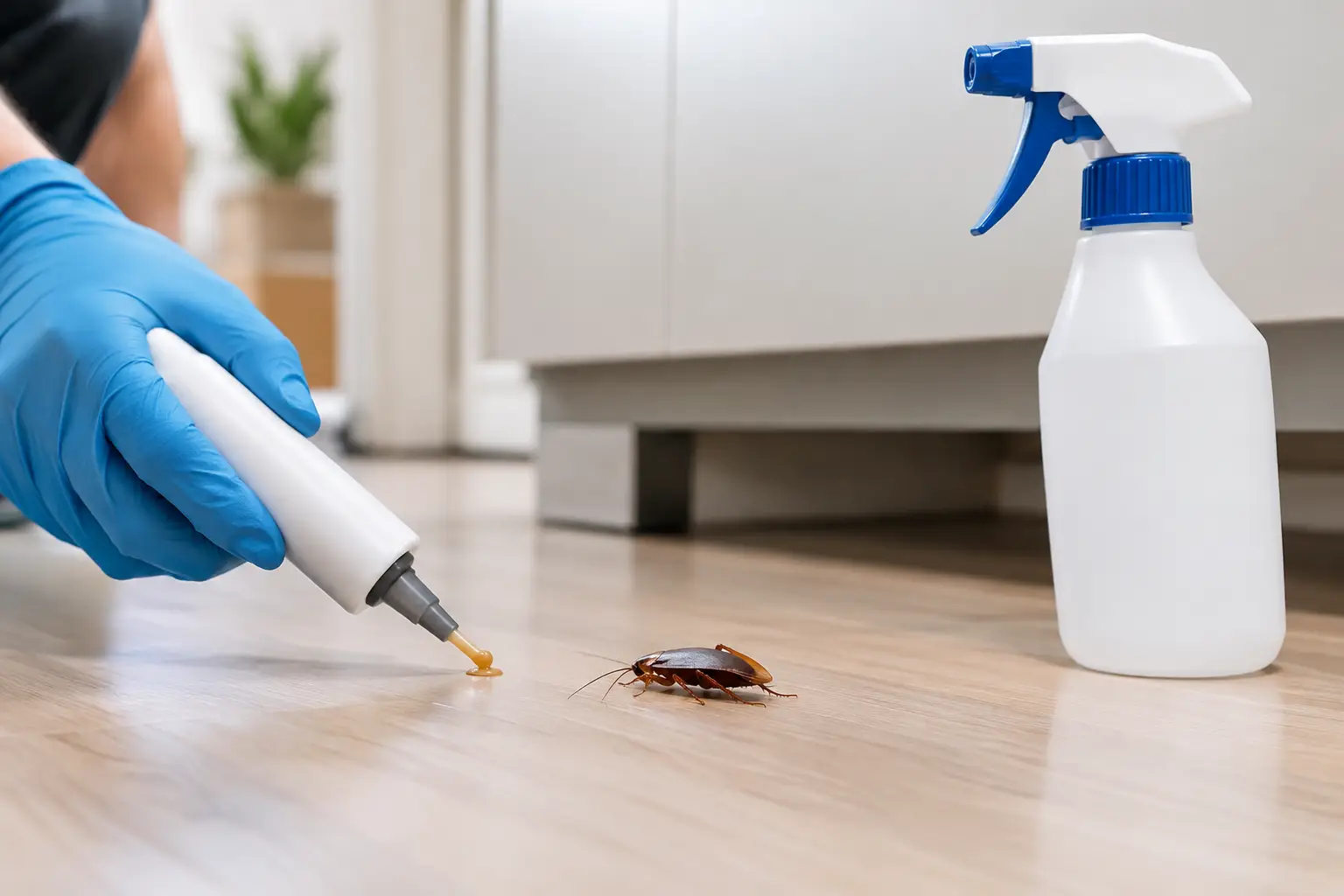
A cockroach sighting often creates one immediate question: what will get rid of it fastest? In the gel bait versus spray decision, speed matters, but so does what happens after the visible roach disappears. The right treatment must reach hidden harborages, reduce the breeding population, and help prevent the next wave of activity.
For homes, offices, retail spaces, and food premises, the best choice depends on the species, infestation level, layout, sanitation conditions, and how safely treatment can be carried out. Gel bait and insecticide sprays can both have a role in professional cockroach control, but they work very differently.
How Gel Bait Works Against Cockroaches
Gel bait is a targeted formulation that combines an attractive food source with a slow-acting insecticide. Small, carefully placed dots of bait are applied near cockroach travel routes and hiding places, such as cabinet hinges, cracks around plumbing, electrical trunking, false ceilings, and voids behind equipment.
A cockroach feeds on the bait and returns to its harboring area before it dies. Depending on the product and species, secondary transfer may also help affect other cockroaches that contact droppings, carcasses, or contaminated surfaces. This delayed action is a key reason gel bait is often effective for established infestations: it is designed to work beyond the roach you can see.
Gel bait is especially useful where broad chemical application is not desirable. When applied correctly and in the right quantity, it offers discreet treatment with minimal disruption to normal activity. It is commonly suitable for sensitive areas, including kitchens, offices, and commercial premises, provided the treatment plan follows the site’s safety requirements.
Its limitation is that bait must remain appealing. Heavy grease, exposed food, overflowing bins, and easy access to water can make cockroaches less likely to feed on it. Some populations may also avoid a particular bait formulation, which is why professional technicians monitor activity and may rotate products when needed.
When Spray Treatment Makes Sense
Insecticide spray is often chosen when immediate knockdown is needed. A contact spray can kill exposed cockroaches quickly, making it useful when activity is visible in accessible areas or when a technician needs to flush pests from certain cracks and voids during an inspection.
Residual sprays are different from household aerosol sprays. A professional may apply a residual insecticide to selected surfaces where cockroaches travel, so pests that cross the treated area are affected later. This can provide valuable coverage around entry points, service ducts, floor-wall junctions, refuse areas, and other targeted zones.
However, spray alone rarely solves a well-established cockroach problem. Roaches spend much of their time concealed in narrow gaps, behind appliances, inside wall voids, or close to heat and moisture sources. Killing the few that emerge does not necessarily reach the egg cases, nymphs, or breeding adults deeper inside the harborages.
Spray also requires careful site control. Treated surfaces may need time to dry, food-contact areas need appropriate protection, and occupants may be asked to follow specific re-entry or cleaning instructions. For F&B operators and facilities with strict hygiene requirements, application method and documentation matter as much as the product itself.
Gel Bait Versus Spray: The Practical Difference
The simplest distinction is this: spray is often strongest for rapid visible reduction, while gel bait is often stronger for reaching the concealed population over time. Neither option should be treated as a universal answer.
Gel bait is usually the better fit when cockroach activity is recurring but largely hidden. It can be placed precisely in cracks, cabinets, equipment zones, and other locations where roaches feed and travel. Because it is not applied as a broad surface treatment, it can be a practical option for occupied spaces when managed by trained professionals.
Spray may be more appropriate when there is heavy visible activity, a need to treat identified travel routes, or an outdoor and perimeter condition that requires residual protection. It can also support a larger treatment plan where access conditions make bait placement difficult.
A common mistake is applying both products carelessly in the same area. Spraying directly over or too close to gel bait can contaminate it or make it less attractive to cockroaches. Professional treatment planning avoids this conflict by identifying where baiting, residual application, monitoring, and exclusion work best together.
Why One-Off Treatments Often Fail
Cockroach control is not simply a product choice. It is an inspection and prevention issue. German cockroaches, for example, can reproduce quickly in warm, food-rich environments. American cockroaches and other larger species may enter through drains, service risers, delivery areas, or gaps around pipes. The source of activity changes the treatment strategy.
A long-term program should identify the conditions allowing cockroaches to survive. In many properties, these include food residue beneath appliances, moisture from leaking pipes, cluttered storage, poorly managed trash, or unsealed gaps near utilities. Removing these conditions makes bait more effective and reduces the reliance on repeated chemical treatment.
For commercial sites, pest activity can also travel between units or floors. Treating one tenant space without considering adjacent areas, shared service corridors, grease traps, loading bays, or waste rooms can lead to recurring sightings. Facility managers benefit from a coordinated approach that records findings, tracks hotspots, and addresses the conditions that support pest movement.
Choosing the Right Approach for Your Property
The most dependable choice begins with an on-site assessment, not a guess based on a single sighting. A technician should look for live activity, droppings, egg cases, harborages, water sources, access points, and signs of pest movement between rooms or units.
Gel bait may be recommended as the primary treatment when activity is concentrated indoors, especially around kitchens, pantries, cabinets, equipment, and plumbing lines. It is often a strong option for recurring German cockroach activity because it targets feeding behavior rather than relying only on contact with a treated surface.
A spray-based treatment may be recommended where there is widespread movement along surfaces, a need for targeted crack-and-crevice application, or a perimeter issue involving larger cockroach species. In higher-pressure infestations, professionals may use a carefully coordinated combination of bait, residual treatment, monitoring devices, sanitation advice, and exclusion work.
The right plan should also account for people and operations. Households with children or pets, food-handling businesses, healthcare settings, and industrial facilities all have different exposure concerns and operating requirements. Product selection, placement, timing, and follow-up should reflect those realities.
What You Can Do Between Treatments
Professional treatment performs best when the property is made less favorable to cockroaches. Keep food in sealed containers, clean crumbs and grease from preparation areas, empty trash regularly, and avoid leaving pet food out overnight. Repair leaks promptly, since cockroaches can survive longer with water than without food.
Do not move bait placements, wipe them away, or apply store-bought aerosols around them unless your pest management provider advises otherwise. These actions can reduce bait acceptance and make it harder to assess whether the treatment is working. If you continue seeing cockroaches, note where and when sightings occur. Those details can help identify the true harborages.
Follow-up is particularly valuable because cockroach eggs may hatch after the first visit. A technician can inspect whether activity has reduced, refresh or reposition bait, adjust the treatment method, and address new evidence before the infestation rebuilds.
Servcare approaches cockroach control as more than a quick spray. With inspection-led treatment, professional-grade products, and prevention guidance, the goal is to reduce active infestations while protecting the hygiene, comfort, and confidence of everyone using the property.
If cockroaches keep returning, do not judge a treatment by the first few hours alone. Choose a plan that targets where they live, removes what sustains them, and includes the follow-up needed to keep the problem from becoming routine.