


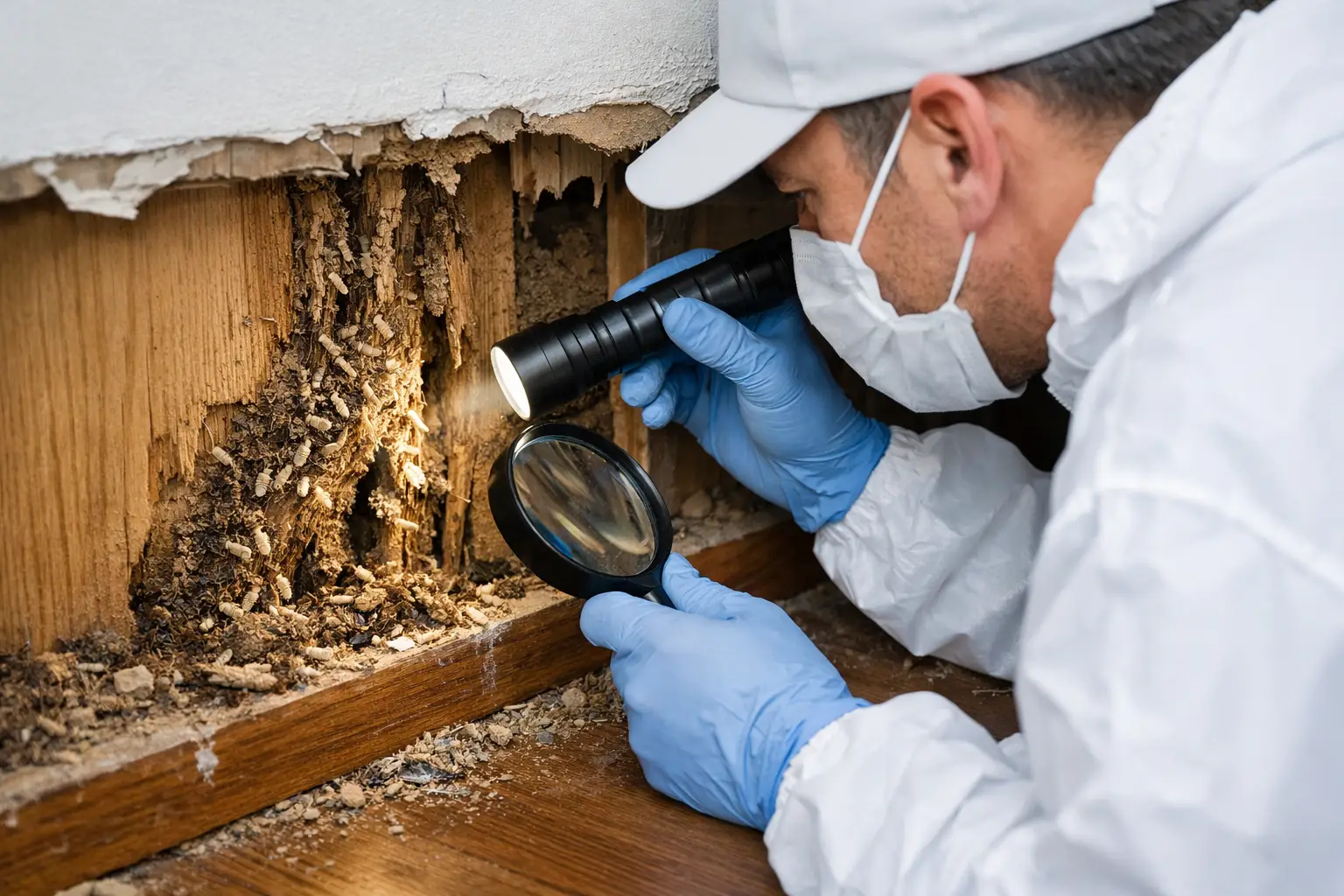
A pencil-thin mud tube along a wall, a door frame that suddenly sounds hollow, or a patch of blistered paint can point to a termite problem long before you see an insect. Knowing how to inspect termite colonies properly helps you identify warning signs early, but it also sets realistic expectations: subterranean termite colonies are usually hidden underground or inside building materials. The goal of a property inspection is not to dig up a colony. It is to find evidence of activity, likely entry points, moisture conditions, and damage that requires professional treatment.
Start With the Areas Termites Use to Enter
Subterranean termites need moisture and protected access between the soil and a food source such as timber, paper-backed materials, cardboard, or wood-based fixtures. Begin your inspection around the exterior perimeter of the building, focusing on where soil, plants, paving, utility lines, and structural surfaces meet.
Look closely at foundation walls, exterior columns, expansion joints, cracks around plumbing pipes, and areas where landscaping sits against the building. In Singapore’s warm, humid conditions, moisture can remain around these points for long periods, making them especially relevant during a termite inspection.
Check whether mulch, soil, stored timber, or garden features are touching wooden components. These conditions do not automatically mean termites are present, but they can conceal termite pathways and make inspection more difficult. Keep the area as visible and accessible as possible rather than covering suspected signs or disturbing them immediately.
Look for mud tubes, but do not rely on them alone
Mud tubes are among the clearest signs of subterranean termite activity. Termites build these narrow earthen tunnels to travel while retaining moisture and avoiding light. They may appear on concrete walls, floor edges, pipes, wooden posts, or inside service areas.
An active tube may look moist or freshly built, but appearance alone is not conclusive. A tube can remain after activity has stopped, while active termites may be feeding elsewhere without building an obvious tube in a visible location. Do not break open every tube during a self-check. Photograph it, note its location, and arrange for an assessment. A trained technician can inspect it in a controlled way and determine whether it is part of current activity.
Inspect Interior Areas With a Systematic Approach
Termite signs indoors are often subtle because colonies feed from within wood or concealed voids. Work room by room, beginning with lower levels, ground-contact areas, bathrooms, kitchens, utility spaces, and locations near plumbing. These areas are more likely to have hidden moisture from leaks, condensation, or poor drainage.
Examine skirting boards, door frames, window frames, built-in cabinets, timber flooring, wooden partitions, and areas beneath sinks. Look for small holes, fine soil-like material, bubbling paint, warped surfaces, weakened wood, or lines that seem to follow joints and edges. Subterranean termites typically keep their feeding areas concealed, so visible surface damage may indicate more extensive hidden damage behind it.
Use the handle of a screwdriver to tap wood gently. A dull or hollow sound can suggest internal galleries, especially when paired with other evidence. Avoid aggressively probing, cutting, or pulling apart affected materials. Damaging a concealed termite route can cause the insects to retreat temporarily, making professional detection harder while leaving the colony untreated.
Know the Difference Between Termites and Other Pests
Termites are often mistaken for ants, particularly during swarming events. Correct identification matters because treatment methods vary significantly.
Winged termites, also called alates, have straight antennae, a broad waist, and four wings of similar length. Flying ants have elbowed antennae, a pinched waist, and front wings that are noticeably longer than their rear wings. Finding discarded equal-sized wings near windows, lights, vents, or doors can indicate that termites have swarmed nearby or within the property.
Wood damage can also be caused by moisture, fungi, wood-boring beetles, or general wear. Termite-damaged wood may have a layered or honeycombed appearance, sometimes with soil or mud packed into the galleries. By contrast, drywood termite pellets are small, hard, and granular, while subterranean termites are more likely to leave mud-related evidence. A professional inspection is the safest way to confirm the pest and select the right response.
Check Moisture Sources and Concealed Risk Areas
A termite colony is more likely to establish activity where food, shelter, and moisture are consistently available. That makes moisture management part of a meaningful inspection, not a separate maintenance task.
Check for leaking pipes under sinks, slow drainage around bathrooms, condensation near air-conditioning systems, damaged sealant around wet areas, and water pooling near external walls. Also inspect cluttered storerooms, cardboard boxes on the floor, unused timber, and areas behind large furniture where ventilation is limited. These conditions can make termite signs easier to miss and create favorable conditions for ongoing activity.
For commercial properties, facility managers should include loading zones, pantry areas, service ducts, false floors, storage rooms, and utility penetrations in regular checks. F&B and retail environments may have frequent deliveries, packaging materials, wet cleaning routines, and hidden service spaces that increase inspection demands. A small unchecked issue can become a disruption to operations, maintenance schedules, and customer confidence.
Why Finding the Colony Is Not a DIY Task
The phrase “inspect termite colonies” can be misleading. A mature subterranean colony may be located in soil, below slabs, behind walls, beneath flooring, or in another inaccessible area connected to the building through concealed pathways. Seeing termites at one location does not reveal the colony’s full size, the number of entry points, or whether more than one colony is involved.
Professional termite inspections use a broader assessment of the property. This includes identifying conducive conditions, checking likely termite routes, evaluating affected materials, and determining whether activity appears current. Depending on the site, technicians may use specialist detection tools and targeted inspection methods to assess concealed areas with minimal disruption.
This distinction matters because surface spraying alone is rarely a dependable solution for subterranean termites. The treatment must address the termite activity and help establish lasting protection around vulnerable areas. The right approach depends on construction type, the extent of damage, access limitations, moisture conditions, and the treatment history of the property.
What to Document Before Calling a Professional
If you find a possible termite sign, clear photos and a few practical details can help speed up the next step. Record the exact location, when you first noticed it, whether the area has had leaks or renovation work, and whether you have seen wings, insects, mud tubes, or damaged timber.
Do not move infested furniture through the building or discard affected materials before an assessment unless there is an immediate safety concern. Moving items can spread hidden termites or remove useful evidence. If timber is severely weakened, keep people away from the area and avoid placing weight on damaged flooring, stairs, or fixtures.
A qualified pest management provider can then confirm the issue, explain the recommended treatment method, and advise on repairs or moisture corrections that support long-term prevention. Servcare approaches subterranean termite control through careful inspection, tailored treatment planning, and practical preventive guidance designed to protect the property with minimal unnecessary disruption.
When to Arrange a Termite Inspection
Arrange a professional inspection promptly if you see mud tubes, discarded wings, live termites, hollow-sounding wood, unexplained paint blistering, or damaged timber. You should also schedule an assessment after persistent water leaks, major renovation work, or if a neighboring property has confirmed termite activity. Waiting for visible structural damage is a costly strategy because termites often feed out of sight for months or longer.
A periodic termite inspection is also sensible for properties with ground-floor timber features, known moisture problems, previous termite activity, or landscaping close to structural walls. For businesses, inspection intervals should reflect the building’s age, construction, stored materials, and operational risk rather than following a one-size-fits-all schedule.
The most useful inspection is one that turns early clues into a clear decision. Protecting a home, workplace, or commercial site starts with noticing the signs, preserving the evidence, and bringing in qualified help before concealed activity becomes visible damage.