

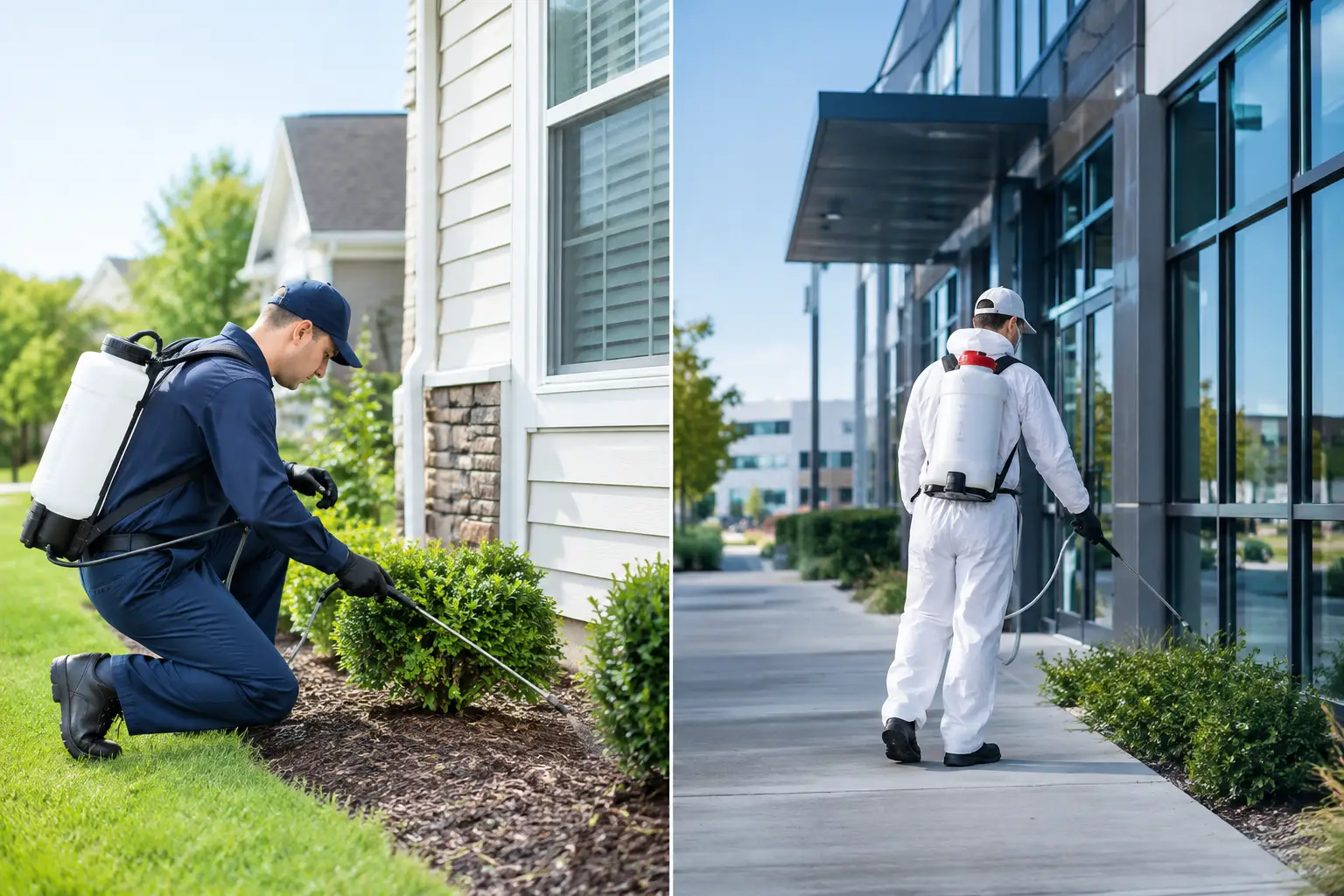
A cockroach in a kitchen cabinet and a cockroach in a restaurant kitchen may be the same pest, but the response cannot be the same. Residential versus commercial pest control involves different levels of risk, treatment planning, documentation, and follow-up. The right approach protects more than the immediate space – it protects the people, operations, reputation, and property connected to it.
For both homes and businesses, effective pest management starts with finding the source of activity. However, the size of the property, the number of people affected, hygiene requirements, and operational demands determine what a professional program should look like.
Residential Versus Commercial Pest Control: Key Differences
Residential pest control is designed around family safety, comfort, and protection of the home. A treatment plan may focus on areas such as kitchens, bathrooms, bedrooms, balconies, roof spaces, drains, and garden areas. The goal is to stop active infestations while reducing the conditions that allow pests to return.
Commercial pest control has a wider responsibility. A pest issue can disrupt work, contaminate food, damage stock, affect audits, and undermine customer confidence. Offices, retail spaces, warehouses, industrial facilities, and F&B establishments each present different risks. Their programs need to account for larger footprints, shared spaces, deliveries, waste handling, employee activity, and the possibility of pests moving between units or floors.
The treatment methods may overlap, especially for cockroaches, rodents, mosquitoes, and subterranean termites. What changes is the scope and control required around those methods. A commercial site often needs a structured service schedule, monitoring points, service records, corrective recommendations, and clear communication with the people responsible for the premises.
The Stakes Are Different
At home, pest activity can quickly affect daily life. Rodents may contaminate food storage areas and chew wiring. Cockroaches can spread through cabinets and appliances. Mosquito breeding can develop in overlooked containers, drains, or outdoor areas. Subterranean termites may cause extensive damage before they are noticed.
For a business, those same concerns have operational consequences. An F&B operator must protect food preparation and storage areas. A warehouse needs to prevent rodents from damaging inventory and packaging. A retail business must avoid pest sightings that make customers question cleanliness. Facility managers need reliable pest control that supports a hygienic environment without unnecessarily interrupting tenants or staff.
This is why commercial pest management is not simply a larger version of a home treatment. It is a preventive system that must work around the way a site operates.
Inspection Sets the Direction
A proper inspection is essential in both settings. Spraying only where pests are seen may reduce activity temporarily, but it often leaves nesting sites, entry points, food sources, or breeding conditions untreated.
In a residence, an inspection may identify leaking pipes under a sink, gaps around utility lines, cluttered storage, standing water, or termite-prone areas near the structure. The recommendations are usually practical and specific to household habits, building layout, and the safety needs of children and pets.
In a commercial property, inspection goes further. A technician may assess waste disposal areas, loading bays, false ceilings, floor drains, pantry spaces, storage rooms, landscape areas, pest entry routes, and the condition of neighboring units. The inspection also considers schedules and workflows. A treatment that is technically effective but disrupts food preparation, customer traffic, or production without planning is not a good commercial solution.
Treatment Must Match the Environment
For residential properties, treatments are usually tailored to the infestation and the household. A cockroach issue may require targeted gel baiting and crack-and-crevice treatment. Rodent control may involve trapping, exclusion work, and sanitation advice. Mosquito control can include source reduction and treatment of identified breeding areas. Termite control may require a detailed assessment of the affected structure and surrounding soil conditions.
Commercial sites may require the same core tools, but with stronger coordination and monitoring. For example, a restaurant may need discreet cockroach treatment around equipment and service areas, together with drain management and better waste practices. A warehouse may require strategically placed rodent monitoring devices, regular inspection of incoming goods, and attention to exterior vegetation and loading areas.
The safest treatment is not always the one that uses the most product. Professional pest control relies on selecting the right method, applying it precisely, and combining it with sanitation and exclusion measures. This reduces unnecessary exposure while improving long-term results.
Frequency Depends on Risk, Not Just Pest Sightings
Homeowners often call for help after seeing a pest, and that is understandable. Some homes need a one-time treatment followed by a review visit, while others benefit from regular preventive servicing. The right frequency depends on the pest pressure, property condition, nearby construction, surrounding vegetation, and how easily pests can enter.
Commercial properties generally need more consistent attention because activity can begin even when no one has reported a sighting. Food waste, frequent deliveries, high foot traffic, and multiple occupants create opportunities for pests to enter and establish themselves. Regular servicing helps identify warning signs early, before a minor issue becomes a complaint, contamination concern, or costly disruption.
For facilities with strict hygiene expectations, prevention also supports accountability. Clear service records and recommendations show that pest risks are being actively managed rather than ignored until an incident occurs.
Prevention Is the Shared Foundation
Whether the property is a home or a business, treatment alone is rarely enough. Prevention is what makes results last. Pest professionals can reduce existing activity, but property occupants and managers play a role in maintaining conditions that are less attractive to pests.
Food should be stored in sealed containers, spills should be cleaned promptly, and waste should be removed and contained properly. Leaks, damaged seals, cracks, and gaps should be addressed. Outdoor containers and drains should be checked for standing water. In commercial settings, these actions may need to be built into cleaning schedules, staff routines, and vendor management rather than left to individual discretion.
The difference is accountability. In a home, one household can adjust its routines quickly. In a business, several teams may share responsibility for hygiene, storage, maintenance, and waste. A dependable pest control provider helps make those responsibilities clear through practical recommendations that fit the site.
Choosing the Right Service for Your Property
A residential provider should be able to explain what is happening, how the treatment will be performed, and what residents should do before and after service. You should feel comfortable asking about safety precautions, likely results, and signs that further treatment may be needed.
For commercial pest control, look for a provider that understands your type of operation. The provider should be able to inspect thoroughly, recommend a service frequency based on actual risk, coordinate work with your operating hours, and maintain clear documentation. Technical standards, trained personnel, and access to professional-grade products matter because commercial pest issues can develop quickly across complex environments.
In Singapore, choosing an NEA-licensed provider also gives property owners and managers added reassurance that pest control work is being handled to recognized regulatory standards. Servcare combines experienced technicians, entomologist support, and tailored treatment plans to help homes and businesses control current infestations while building stronger protection against future activity.
A pest problem does not need to become a recurring source of stress. When treatment is matched to the property, carried out with care, and supported by practical prevention, your home or business is better positioned to stay safe, clean, and protected.