


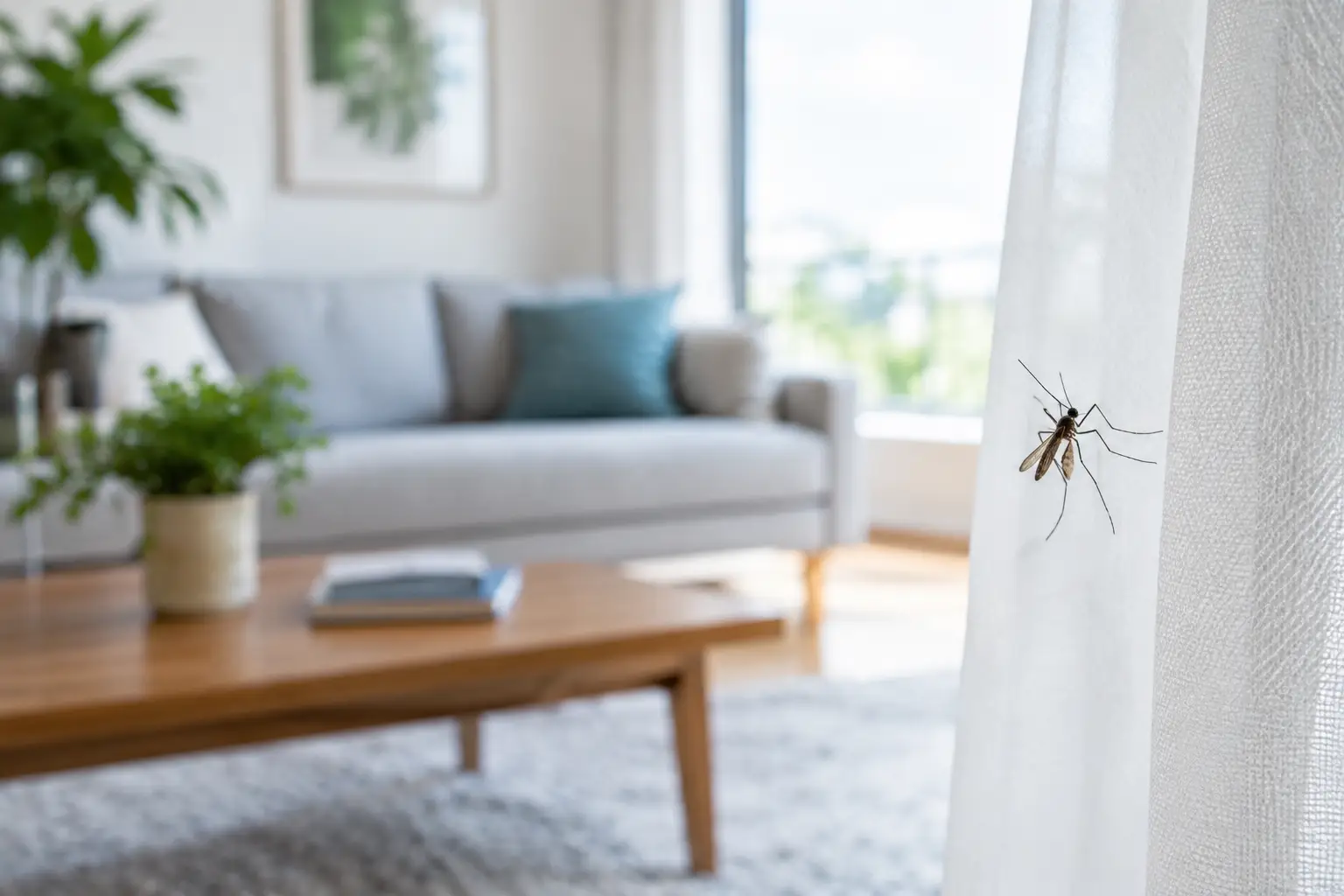
A mosquito circling a bedroom at night is more than a small annoyance. It can interrupt sleep, leave painful bites, and signal a breeding or entry problem that needs attention. Knowing how to stop mosquitoes indoors starts with identifying where they are coming from, then addressing both the insects you see and the conditions that allow more to appear.
For homes, offices, food businesses, and facilities, the most reliable approach is not simply spraying what is flying. Effective mosquito control combines source reduction, exclusion, targeted treatment, and ongoing prevention.
Why mosquitoes are appearing indoors
Mosquitoes may enter through open doors, unscreened windows, gaps around utility lines, or poorly sealed vents. They are also drawn inside by people, standing water nearby, and darker, sheltered areas where they can rest during the day.
In some cases, the source is much closer than expected. Mosquitoes can breed in very small amounts of stagnant water, including water collected in plant saucers, floor drains, trays beneath air-conditioning units, buckets, discarded containers, and even clogged gutters outside a window.
A few mosquitoes indoors after a door has been left open may be a temporary nuisance. Seeing them repeatedly, finding bites every day, or noticing mosquitoes in multiple rooms suggests an ongoing entry point or a breeding source on or near the property.
How to stop mosquitoes indoors at the source
The first priority is removing places where mosquitoes can lay eggs. This matters because adult mosquito treatments may reduce the insects currently flying indoors, but they will not solve a problem if new mosquitoes continue to emerge nearby.
Remove standing water every week
Walk through indoor and outdoor areas with fresh eyes. Empty, scrub, and dry containers that hold water. Change water in flower vases regularly, avoid leaving wet cleaning equipment in enclosed areas, and make sure drip trays do not collect water for long periods.
Pay close attention to less visible locations. Floor drains that are rarely used, air-conditioning drainage areas, rooftop planters, basement utility rooms, and storage spaces can create ideal conditions when water is allowed to sit. In commercial premises, maintenance teams should include mosquito source checks in routine site inspections.
If a water feature, drainage point, or operational container cannot be emptied, it may need a specific treatment or maintenance plan. The right method depends on the setting, whether people or food are nearby, and the possibility of water entering drains or the environment.
Check outdoor areas connected to the building
Mosquito activity indoors often begins just outside. Clear leaves and debris from gutters, ensure drains flow properly, and remove items that collect rainwater. Tarps, unused equipment, construction materials, recycling containers, and ornamental planters are common trouble spots.
In Singapore’s warm, humid conditions, mosquito breeding can develop quickly. Regular source reduction is particularly important during rainy periods, when hidden water collection points can multiply across a property.
Block mosquitoes from getting inside
Once breeding sources are under control, reduce access to the building. This is especially useful for properties close to landscaping, drainage channels, construction sites, or areas with frequent door traffic.
Inspect window screens for tears, loose frames, and gaps at the edges. Repair damaged screens promptly and fit screens where windows are regularly opened. Door sweeps and weather stripping can help close gaps below or around doors, while self-closing doors reduce the chance of mosquitoes entering high-traffic areas.
For offices, retail spaces, and F&B operations, entrances deserve special attention. Doors that are held open during deliveries or peak periods can allow mosquitoes in repeatedly. Practical measures such as managing delivery schedules, keeping rear access points closed when not in use, and using suitable air curtains can reduce entry without disrupting operations.
Fans can also help in occupied rooms. Mosquitoes are weak fliers, so air movement makes it harder for them to land and bite. A fan is not a complete control method, but it can provide useful short-term relief while the underlying issue is being addressed.
Deal with mosquitoes already indoors
When adult mosquitoes are already inside, use a measured response. Start by targeting the rooms where activity is highest, particularly bedrooms, rest areas, storerooms, and dim corners near plants or curtains.
A handheld electric swatter, vacuum, or appropriate indoor mosquito trap can help reduce isolated adult mosquitoes. Traps are most useful as a supporting measure, not as proof that the source has been eliminated. If a trap continues catching mosquitoes day after day, inspect for breeding areas and access points rather than relying on the device alone.
Consumer insect sprays may provide fast knockdown when used according to the label. However, spraying heavily throughout a home or business is rarely the best answer. It can expose occupants unnecessarily, miss hidden resting areas, and create false confidence while breeding continues elsewhere.
Take extra care around children, pets, food preparation surfaces, sensitive equipment, and people with respiratory concerns. Never use products intended for outdoor use indoors, and do not apply insecticides to bedding, food-contact surfaces, or areas where the label does not permit use.
When mosquito sprays are not enough
Recurring activity often needs a professional inspection. This is particularly true when mosquitoes appear despite regular cleaning, when multiple units or rooms are affected, or when a business must protect hygiene standards and customer confidence.
A professional mosquito control program begins with a site assessment. The goal is to identify likely breeding zones, mosquito resting sites, and structural entry points. Treatment can then be tailored to the property rather than relying on broad, routine spraying.
Depending on the findings, professional measures may include targeted larval control in suitable water-holding areas, adult mosquito treatment in identified resting zones, exclusion recommendations, and scheduled monitoring. For commercial sites, documentation and preventive service plans can also support internal hygiene procedures and operational consistency.
Servcare approaches mosquito control with this longer-term focus: reducing active mosquito populations while helping property owners prevent the conditions that allow mosquitoes to return. A tailored plan is especially valuable for larger properties, food-related businesses, and premises with complex drainage or landscaping.
Common mistakes that allow mosquitoes to return
The most common mistake is treating only the mosquitoes that are visible. One adult mosquito can be annoying, but its presence may point to a bigger pattern outside, below, or behind the occupied space.
Another mistake is overlooking small water sources. A bucket is easy to spot. A plant saucer behind furniture, a blocked drain, or water trapped beneath stored items is not. Assigning clear responsibility for weekly checks makes a meaningful difference in shared homes and workplaces.
Finally, avoid assuming mosquitoes only bite after dark. Some species are active during daylight hours, so daytime bites near windows, desks, or living areas should still prompt an inspection.
A practical prevention routine
For most properties, a short weekly routine is more effective than occasional intensive cleanup. Empty and dry water-holding items, inspect drains and air-conditioning areas, check screens and door seals, and keep exterior storage orderly. After heavy rain, repeat the inspection rather than waiting for mosquito activity to become obvious.
If bites or sightings continue after these steps, treat that pattern as useful information. It means there is likely a persistent source, entry route, or sheltered resting area that has not yet been found. A careful inspection can turn recurring mosquito frustration into a clear, manageable prevention plan.