


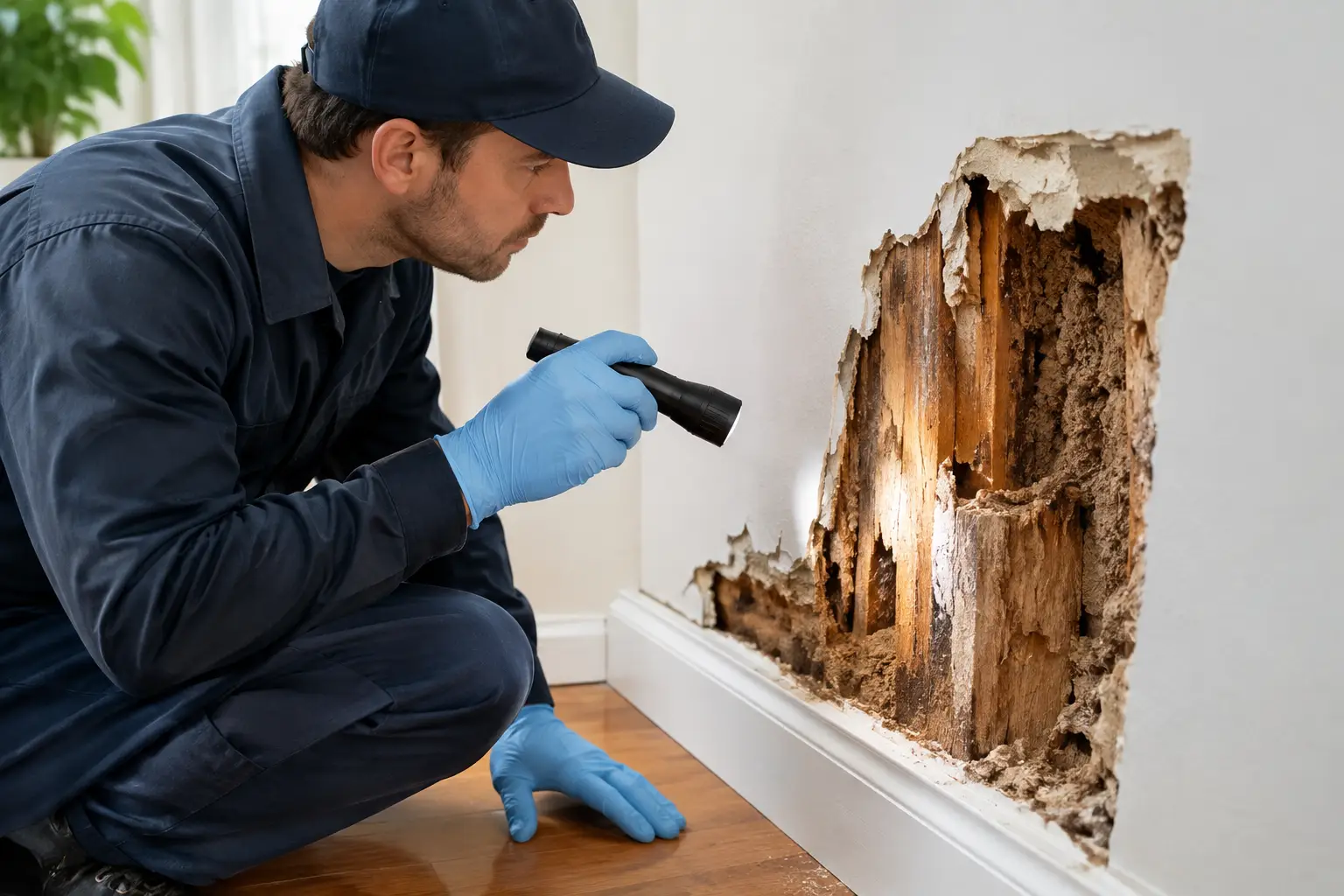
Fresh termite damage after a professional visit can be unsettling, especially when you believed the problem was resolved. So, can termites return after treatment? Yes, they can – but renewed activity does not always mean the original treatment failed. Termites live in large, hidden colonies, and a property can remain vulnerable if moisture, access points, or untreated wood continue to attract them.
The right response is not to panic or reach for a household spray. It is to identify what you are seeing, determine whether termites are actively feeding, and have a trained professional assess the property’s protection. A well-planned termite program addresses the colony, the conditions that support it, and the risks that could lead to future activity.
Can Termites Return After Treatment?
Subterranean termites can return to a treated property months or even years later. They may come from a surviving portion of the original colony, a nearby colony, or a new colony that has found a route into the building. In dense urban areas, where properties are close together and termite pressure can be persistent, ongoing vigilance matters.
Termite treatment is not a one-time promise that termites will never approach a building again. It is a professional strategy designed to eliminate active infestation and reduce the likelihood of reinvasion. How long protection lasts depends on the treatment method, construction type, soil conditions, drainage, landscaping, and whether the property is maintained after service.
A professional inspection is essential because termites often remain out of sight. They travel through soil, wall voids, floor joints, and concealed timber. By the time visible signs appear, they may have been feeding for some time.
Why Termite Activity May Reappear
Seeing termites again can have several explanations. The most common is a new entry route. Subterranean termites need moisture and contact with the ground or a suitable concealed pathway. A small gap around pipes, cracks in concrete, untreated expansion joints, or soil built up against walls can give them access.
Moisture is another major factor. Leaking plumbing, poor drainage, air-conditioning condensate, and persistently damp areas can make a property more attractive to termites. Even a highly effective treatment is best supported by repairs that remove the damp conditions termites prefer.
In some cases, the activity you notice is not new damage at all. Old termite tunnels, hollowed timber, and discarded wings can remain visible after treatment. Mud tubes may also stay in place even when the termites inside are no longer active. Only a careful inspection can distinguish inactive evidence from a live infestation.
Treatment coverage also matters. Buildings are not always simple to protect. Extensions, inaccessible voids, foundations, utility penetrations, and neighboring structures can affect where termites travel. A tailored treatment plan considers these conditions rather than applying the same approach to every property.
Signs That Need Professional Attention
Termites are quiet pests, but their signs should be taken seriously. Do not wait for extensive damage before arranging an assessment. Contact a pest management professional if you see fresh mud tubes on walls, foundations, pipes, or other surfaces; soft or blistered wood; doors or windows that suddenly stick; hollow sounds when tapping timber; or winged termites emerging indoors.
Small piles of wings near windows, lights, or doors can be a warning that termite swarmers have entered or emerged near the property. Swarmers do not cause the damage themselves, but they indicate that a mature colony may be nearby.
For business owners and facility managers, early action protects more than the building. Termite damage can disrupt renovation schedules, create maintenance liabilities, and affect the condition of stock, fixtures, or customer-facing spaces. F&B, retail, office, and industrial facilities benefit from routine inspections because activity may begin in low-traffic areas long before employees notice it.
What a Reliable Follow-Up Inspection Should Cover
A proper follow-up is more than a quick look at the original problem area. The technician should inspect accessible locations where termites commonly travel, including exterior walls, utility entry points, wet areas, false ceilings, timber fixtures, storage spaces, and areas with known moisture concerns.
The inspection should also consider changes since the last treatment. Has there been water damage, construction work, landscaping changes, new cabinetry, or a plumbing leak? These details can alter termite risk and may explain why activity has appeared in a different location.
If live termites are found, the next step depends on the extent and location of the infestation. Localized treatment may be suitable for a contained issue, while broader soil treatment, baiting, or other measures may be needed when termite movement is widespread. The best option is based on evidence, not assumptions.
At Servcare, termite management is approached as a long-term property protection service, with inspection findings used to guide the treatment and prevention plan. This helps property owners make informed decisions without unnecessary disruption.
How to Reduce the Risk of Termites Returning
Professional treatment does the critical work of addressing termite activity, but property maintenance supports lasting protection. Start by keeping soil, mulch, and garden materials from bridging exterior walls or covering weep holes and inspection points. Termites use concealed routes, and clear access makes early signs easier to spot.
Address water issues promptly. Repair leaking pipes, maintain drainage, and avoid allowing water to pool near foundations or ground-level walls. Indoors, pay attention to bathrooms, kitchens, utility rooms, and areas beneath sinks, where a slow leak can create ideal conditions for termites.
Avoid storing cardboard, scrap timber, wooden pallets, or other cellulose materials directly on the ground or against walls. These materials can provide both food and cover. In commercial settings, organized storage and regular checks around loading areas can reduce hidden pest risks.
Finally, schedule inspections at intervals recommended for your property. The right frequency depends on the building’s age, construction, surrounding environment, history of termite activity, and level of risk. Properties with a previous infestation generally deserve closer monitoring than those with no known termite history.
Treatment Is Strongest When Prevention Continues
The goal of termite control is not simply to make visible insects disappear. It is to protect the structure by stopping active infestation, identifying weaknesses, and maintaining conditions that are less favorable to termites.
No responsible professional can claim that a property will never face termite pressure again. What dependable termite management can provide is a clear plan: evidence-based treatment for current activity, practical recommendations for reducing risk, and follow-up support when conditions change.
If you suspect termites have returned, preserve the evidence where possible. Avoid breaking mud tubes, spraying the insects, or removing damaged materials before an inspection, as these actions can make it harder to trace their route. A timely professional assessment can clarify whether the activity is old, new, or ongoing – and give you a practical path to protecting your property with confidence.