


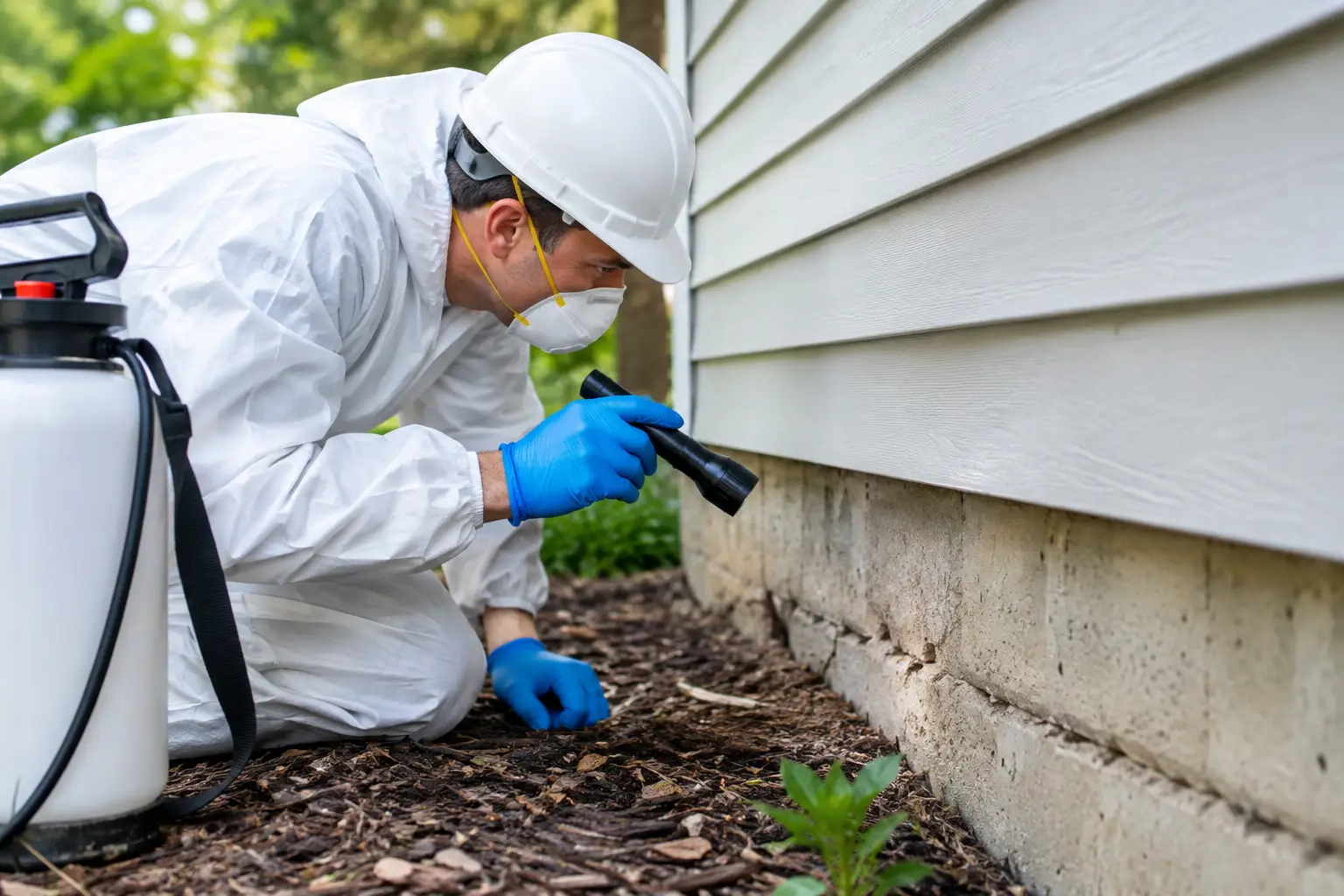
A termite problem rarely begins with an obvious warning. By the time timber sounds hollow, paint starts bubbling, or mud tubes appear along a wall, termites may already have been feeding out of sight for months. Effective termite control is not simply about killing the insects you can see. It is about locating the colony’s access points, stopping active damage, and creating protection that helps keep your property secure.
For homeowners, termites can threaten a major financial investment. For facility managers and business operators, they can affect building condition, maintenance budgets, and confidence in the premises. A prompt, professional response makes a meaningful difference because subterranean termites work continuously and often remain hidden behind finishes, flooring, walls, and built-in fixtures.
Why termites are difficult to detect
Subterranean termites need moisture and protection from open air. Rather than moving visibly across a room, they usually travel through soil, cracks, joints, service penetrations, and enclosed timber. They may construct narrow mud tubes to bridge exposed surfaces and maintain a humid route between their nest and a food source.
That behavior makes a visual check alone unreliable. A clean-looking room can still have termite activity behind a baseboard or beneath a floor. Likewise, the presence of winged insects near lights does not automatically confirm a termite infestation. Flying ants and termites can look similar from a distance, but the right treatment depends on accurate identification.
A proper inspection considers more than visible insect activity. It assesses vulnerable timber, moisture conditions, entry points around the building perimeter, plumbing areas, expansion joints, false ceilings, and previous treatment history. This is where trained technicians add value: they look for the conditions that allow an infestation to continue, not just the damage it has already caused.
Signs that call for termite control
Some signs deserve immediate attention, especially when they appear close to timber, walls, or ground-level areas. Mud tubes on foundations, columns, or pipes are a common indicator of subterranean termite movement. Timber that sounds unusually hollow when tapped, doors that suddenly fit tightly, and thin blistering or peeling paint can also signal concealed damage.
You may also find discarded wings near windows, doors, or light fixtures after a termite swarm. Swarming does not show exactly where a colony is located, but it does indicate that termite activity may be present nearby. Do not assume the problem is over because the winged insects have disappeared. The reproductive termites may be gone, while workers continue feeding in concealed areas.
In commercial settings, signs can be easy to overlook during daily operations. Storage areas, service corridors, pantry spaces, utility rooms, timber fixtures, and floor edges should be included in routine property checks. For food and beverage operations, retail spaces, offices, and industrial facilities, early assessment helps prevent a small issue from becoming a disruptive repair project.
What professional termite control involves
A dependable termite treatment begins with an inspection and a clear explanation of the findings. The technician should identify the likely termite species or activity type, affected areas, potential entry routes, and the treatment approach recommended for the property. There is no single treatment that suits every building, because construction methods, infestation extent, moisture conditions, and accessibility all matter.
For active subterranean termite infestations, treatment may involve applying professional-grade termiticide to targeted soil or structural areas to establish a protective barrier. In some situations, baiting systems may be appropriate. Baits are designed to be carried back by foraging termites, helping to affect the colony over time. This approach can be useful where direct treatment is limited or where ongoing monitoring is preferred.
The trade-off is that baiting may require more patience and scheduled monitoring, while liquid barrier treatments can provide more immediate protection in treated zones. A qualified pest management professional should explain why a particular method is suitable, what areas will be treated, and what follow-up is needed. Clear expectations are part of reliable service.
At Servcare, termite work is approached as a protection plan rather than a one-time spray. With experienced technicians, science-backed methods, and treatment guidance supported by entomologist expertise, the focus is on resolving active risk while reducing the conditions that support future termite activity.
Treatment should account for safety and access
Professional treatment should be planned around the people using the property. This is especially important in homes with children or pets, as well as workplaces, food handling areas, retail environments, and facilities with sensitive equipment. Technicians should provide practical preparation and post-treatment guidance, including access requirements and any precautions relevant to the treatment area.
Eco-conscious pest management does not mean ignoring a serious infestation. It means using treatment thoughtfully: applying the appropriate method, targeting the right locations, and avoiding unnecessary disruption. When termites are active, delaying effective intervention can lead to more extensive repairs and a greater overall impact on the property.
Why do-it-yourself termite treatments often fall short
Store-bought sprays may kill termites that are exposed, but subterranean termites are rarely concentrated in open areas. The colony may be underground, inside a wall void, or entering through a point far from the visible damage. Treating the surface without addressing hidden routes can cause activity to shift rather than stop.
DIY products can also create false reassurance. If termites disappear from one location, it does not confirm that the colony has been eliminated. Without an inspection, it is difficult to know whether the insects are termites, where they are entering, or whether structural timber has been affected.
There is a place for property owners to take preventive action, such as fixing leaks and reducing wood-to-soil contact. But active termite control requires a more precise approach. Professional tools, product knowledge, treatment records, and follow-up inspections help turn a reaction into a long-term prevention strategy.
Prevention starts with property conditions
No treatment can change every environmental factor around a building, but simple maintenance can reduce termite-friendly conditions. Moisture is one of the most significant concerns. Repair leaking pipes, improve drainage where water collects, and address persistent dampness around bathrooms, kitchens, utility areas, and exterior walls.
Keep timber, cardboard, and wood debris away from ground contact where possible. Avoid storing unused wooden materials directly against exterior walls or in damp, poorly ventilated spaces. If landscaping or renovation work brings soil close to the building, make sure inspection zones and termite barriers are not unintentionally covered or damaged.
Regular inspections matter even after treatment. New cracks can form, plumbing can leak, renovation can alter access points, and termite pressure can change over time. For properties with a history of termites or high-risk construction details, a scheduled monitoring plan offers greater reassurance than waiting for visible damage.
Termite protection for businesses and facilities
Businesses have additional reasons to act early. Termite damage can affect timber fittings, documents, inventory storage, partitions, display structures, and building finishes. More importantly, unexpected repairs can interrupt operations and create avoidable stress for tenants, staff, and customers.
A tailored commercial program should fit the site’s risk profile. A restaurant may need careful coordination around food preparation zones and storage areas. An industrial facility may need inspections planned around equipment access and safety procedures. An office or retail site may need discreet work that minimizes disruption to occupants and visitors.
The best programs combine inspection, treatment where necessary, practical site recommendations, and documented follow-up. This gives facility managers a clearer record of what was found, what was done, and what should be monitored next.
When to arrange an inspection
Arrange a professional inspection as soon as you see mud tubes, termite wings, suspicious timber damage, or recurring insect activity around wood. It is also sensible to inspect before major renovations, after water damage, when purchasing an older property, or when neighboring properties have reported termites.
Termites are easiest to manage before damage becomes extensive. A careful inspection provides answers, even when the concern turns out not to be termites. That certainty helps property owners make informed decisions instead of relying on guesswork.
Protecting a property is often about responding to the small warning signs before they become expensive ones. If something about your timber, walls, or building perimeter does not look right, a timely termite assessment can provide the clarity and peace of mind needed to act with confidence.