


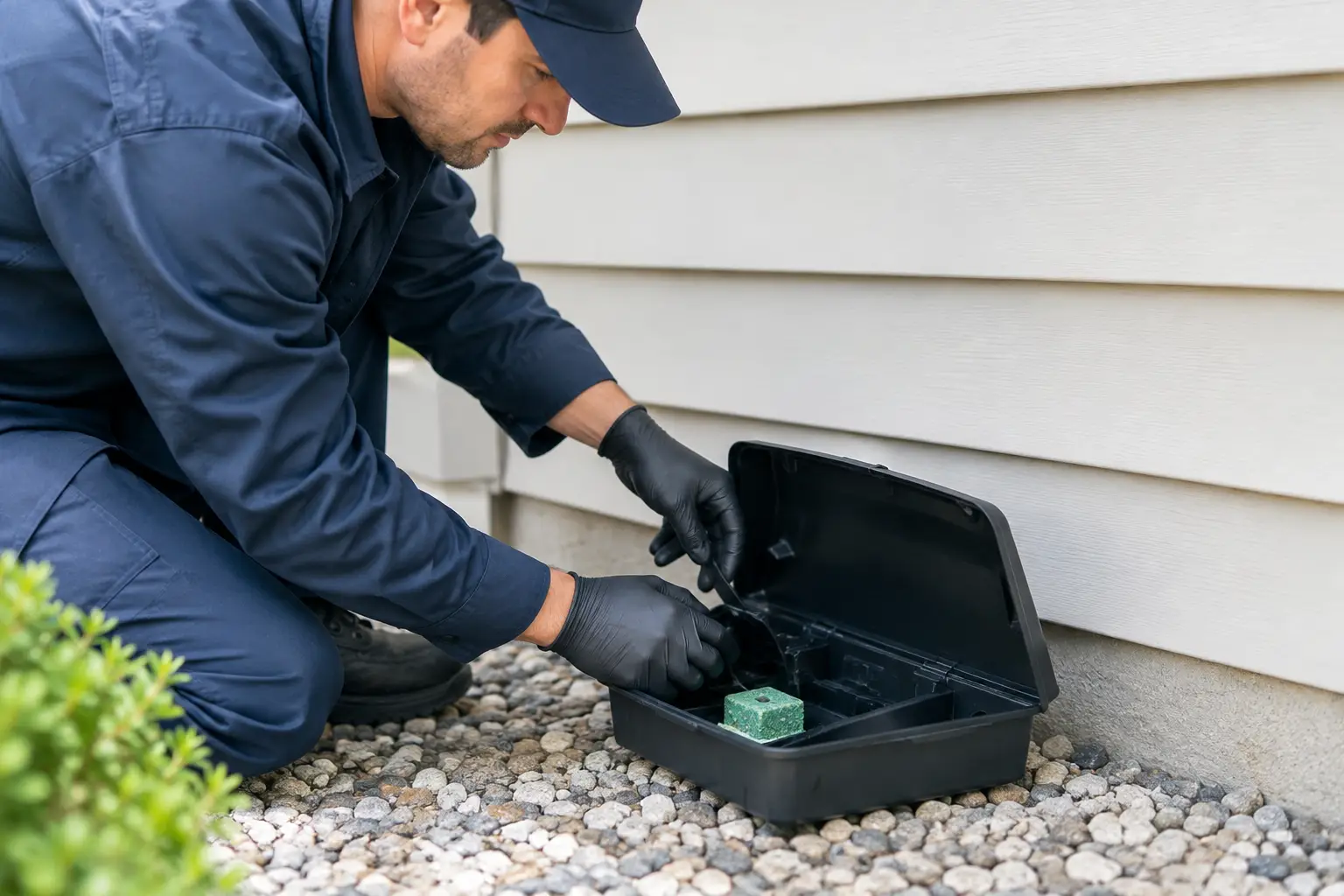
A rat seen near a bin area or a mouse in a pantry is rarely the full problem. Rodent bait stations can reduce active rat and mouse populations, but they work best as one controlled part of a wider plan that removes food, water, shelter, and entry points. For homes and businesses, the objective is not simply to place bait. It is to stop recurring activity safely and protect the people, products, and property on site.
What Rodent Bait Stations Actually Do
A bait station is a secure enclosure that holds rodenticide bait in a protected position. It is designed to encourage rodents to feed while limiting casual access by children, pets, and non-target animals. Commercial-grade stations are typically lockable, durable, and fixed in place so they cannot be easily moved or tipped over.
The station itself is not the treatment. The bait inside is the active control measure, while the enclosure helps deliver it in a more controlled way. Rats and mice tend to travel along walls, behind equipment, beneath shelving, and through quiet service areas. A station must be positioned on these active travel routes to have a practical effect.
This distinction matters because a bait station left in an open, convenient-looking spot may be ignored completely. Rodent control is based on inspection and evidence, not guesswork.
When Bait Stations Are a Good Fit
Bait stations are often useful where rodent activity is established or where a property has recurring external pressure. This can include refuse areas, loading bays, storerooms, ceiling void access points, utility areas, landscaped edges, and perimeter walls. In commercial settings, they can form part of a monitored pest management program that documents activity and supports hygiene standards.
For an office, retail unit, or residential property, a carefully managed station may help reduce rodent movement before it develops into a larger indoor issue. For F&B and industrial facilities, placement and servicing require even greater care. Food-handling areas, sensitive production zones, and locations with frequent public access call for a treatment plan that accounts for safety, compliance, and operational continuity.
Bait stations are not automatically the right first response in every situation. If a single mouse has entered through an obvious gap, exclusion work and targeted trapping may resolve the issue more directly. If rodents are nesting inside a wall void or ceiling space, professionals may need to identify the route and assess the risk of an inaccessible carcass before selecting a treatment method.
Why Placement and Monitoring Matter
Rodents are cautious, especially rats. They avoid unfamiliar objects and may not feed from a newly installed station immediately. Station placement should follow signs of activity such as droppings, gnaw marks, rub marks, tracks, burrows, damaged packaging, and sightings reported by occupants.
A professional technician also considers competing food sources. An overflowing dumpster, unsecured pet food, grease buildup, bird feed, or poorly managed waste can make bait far less attractive. If rodents have easy access to food every night, stations alone are unlikely to provide lasting control.
Monitoring reveals whether a station is doing its job. Bait consumption, species indicators, rodent movement, and changes in activity over time help determine whether the approach should continue or be adjusted. A station that remains untouched does not necessarily mean there are no rodents. It may be in the wrong location, contain unsuitable bait, or be competing with a stronger food source.
Safety Is More Than a Locked Box
Tamper-resistant rodent bait stations are a sensible safety measure, but they are not a reason to treat rodenticides casually. Every station needs to be secured, labeled where appropriate, and placed away from areas where unauthorized people or animals could interfere with it. Products and treatment methods should be selected for the environment and the level of risk.
This is particularly important in households with young children or pets, and in businesses that serve the public. Property managers should also consider wildlife exposure around outdoor areas. A responsible program aims to use the least intrusive effective method, while still addressing the infestation decisively.
Poorly managed bait can create unnecessary hazards. Loose bait, damaged stations, unrecorded placements, and irregular servicing reduce both safety and effectiveness. They can also make it difficult to determine where treatment has occurred or why rodent activity continues.
Rodent Bait Stations Need Exclusion Work
The most reliable rodent control programs pair treatment with proofing. Rats and mice can enter through surprisingly small gaps around pipes, doors, drains, vents, utility conduits, and damaged screens. A mouse may fit through an opening about the width of a pencil, while rats can exploit gaps around poorly maintained building services.
After activity is reduced, identify how rodents are getting in and close those access points with suitable materials. Repair door sweeps, seal gaps around pipe penetrations, cover vents with appropriate mesh, and correct damaged drain covers or wall openings. The exact solution depends on the building design, because sealing an entry point without checking for active rodents inside can sometimes shift the problem elsewhere.
Housekeeping also has a direct effect. Waste should be contained and removed on schedule, food should be stored in sealed containers, spills should be cleaned promptly, and clutter should be reduced in storage areas. Outside, keep vegetation from growing tightly against walls and address standing water or drainage issues that support rodent activity.
Common Mistakes That Keep Infestations Going
One common mistake is treating a bait station as a permanent set-and-forget device. Rodent pressure changes with construction, weather, nearby waste conditions, and building use. Stations require regular inspection, cleaning, replenishment when appropriate, and relocation when activity shifts.
Another mistake is placing stations only after rodents are seen indoors. By that stage, there may already be an established route through the building. External monitoring and good waste management can help identify pressure earlier, particularly at properties with loading activities or shared refuse areas.
Businesses sometimes overlook communication. Cleaning staff, facilities teams, tenants, and kitchen operators may each notice signs that others do not report. Clear reporting procedures help a pest management provider investigate sightings quickly and track patterns instead of reacting to isolated complaints.
Finally, avoid moving stations without guidance. Their location may be part of a documented control plan, and moving one can expose it to interference or interrupt monitoring data.
When Professional Rodent Control Is the Better Choice
Professional support is especially valuable when sightings are frequent, droppings are appearing in food or storage areas, gnawing damage is visible, or activity returns after repeated DIY efforts. It is also the safer option when rodents are present near children, pets, customers, food, electrical systems, or sensitive work areas.
A qualified pest management team begins with inspection. The technician should assess the likely species, locate signs of feeding and nesting, identify entry routes, review sanitation conditions, and recommend a tailored combination of baiting, trapping, exclusion, and monitoring. This approach is more dependable than applying the same treatment at every property.
For commercial sites, professional records can also support internal hygiene processes and demonstrate that rodent risks are being actively managed. Servcare applies experienced, science-backed pest management methods with a focus on controlled treatment, practical prevention, and customer peace of mind.
A well-managed bait station is quiet protection, not a substitute for building maintenance. Address the conditions that invite rodents in, monitor the places they use, and seek professional help before a small sign becomes a costly disruption.