

Termites rarely announce themselves before damage begins. They work inside timber, behind walls, beneath flooring, and along concealed entry points where a property can look perfectly sound from the outside. For many owners, the question is simple: when should termite inspection be done to prevent a small, hidden issue from becoming a costly repair?
The most practical answer is before there is a visible problem. A professional termite inspection is a preventive measure that helps identify conditions that attract termites, early signs of activity, and areas that may need protection. For homes and businesses, regular inspections offer greater control, fewer surprises, and more confidence that property integrity is being actively protected.
When Should a Termite Inspection Be Done?
For most properties, an annual termite inspection is a sensible baseline. This allows a trained technician to check vulnerable areas before termite activity has time to develop into widespread damage. However, the right schedule depends on the building’s age, construction, environment, maintenance history, and any previous termite concerns.
In Singapore’s warm, humid conditions, subterranean termites can remain active throughout the year. Properties with gardens, ground-floor timber features, moisture issues, or soil contact around the building may need closer attention. Commercial premises and facilities with extensive fit-outs, storage areas, false ceilings, or timber fixtures can also benefit from planned inspections rather than waiting for a complaint or visible damage.
An annual inspection should not be treated as a substitute for action when warning signs appear. If you notice suspicious changes between scheduled visits, arrange an inspection promptly. Termites do not always cause obvious surface damage, and delaying an assessment can allow the problem to spread unnoticed.
Key Times to Schedule an Inspection
Before Buying or Moving Into a Property
A termite inspection should be part of the due diligence process before purchasing a home, commercial unit, or industrial property. Fresh paint, new flooring, or renovated walls can conceal prior damage, while an otherwise well-maintained building may still have termite entry points below ground or within hidden structural areas.
An inspection provides a clearer picture of the property’s condition and potential treatment needs. It can also help a buyer plan for preventive measures before furniture, inventory, equipment, or tenants move in. Addressing a concern early is generally less disruptive than discovering it after occupancy.
Before and After Major Renovations
Renovation changes the way a building is used and can create new termite risks. Removing walls may expose old timber damage. New cabinetry, flooring, built-in platforms, and timber finishes can introduce vulnerable materials. Landscaping work, plumbing changes, and alterations around ground-level areas may also affect moisture and soil conditions near the property.
Schedule an inspection before renovation work begins, particularly if contractors will be opening up floors, walls, or concealed service areas. This gives you an opportunity to identify existing activity before it is covered over. A follow-up inspection after the work is complete can confirm that protective measures remain suitable for the updated layout.
After Water Leaks, Flooding, or Persistent Dampness
Moisture does not create termites, but it can make a property more favorable to them. Leaking pipes, drainage problems, water-damaged timber, condensation, and damp areas beneath sinks or near bathrooms should be taken seriously. These conditions may also soften wood and make early termite damage more difficult to recognize.
If a water issue has persisted for weeks or caused visible damage, arrange a termite inspection once the source of moisture is being addressed. The inspection should work alongside repairs, not replace them. Long-term termite prevention depends on controlling conditions that support pest activity as well as treating any confirmed infestation.
When You See Possible Warning Signs
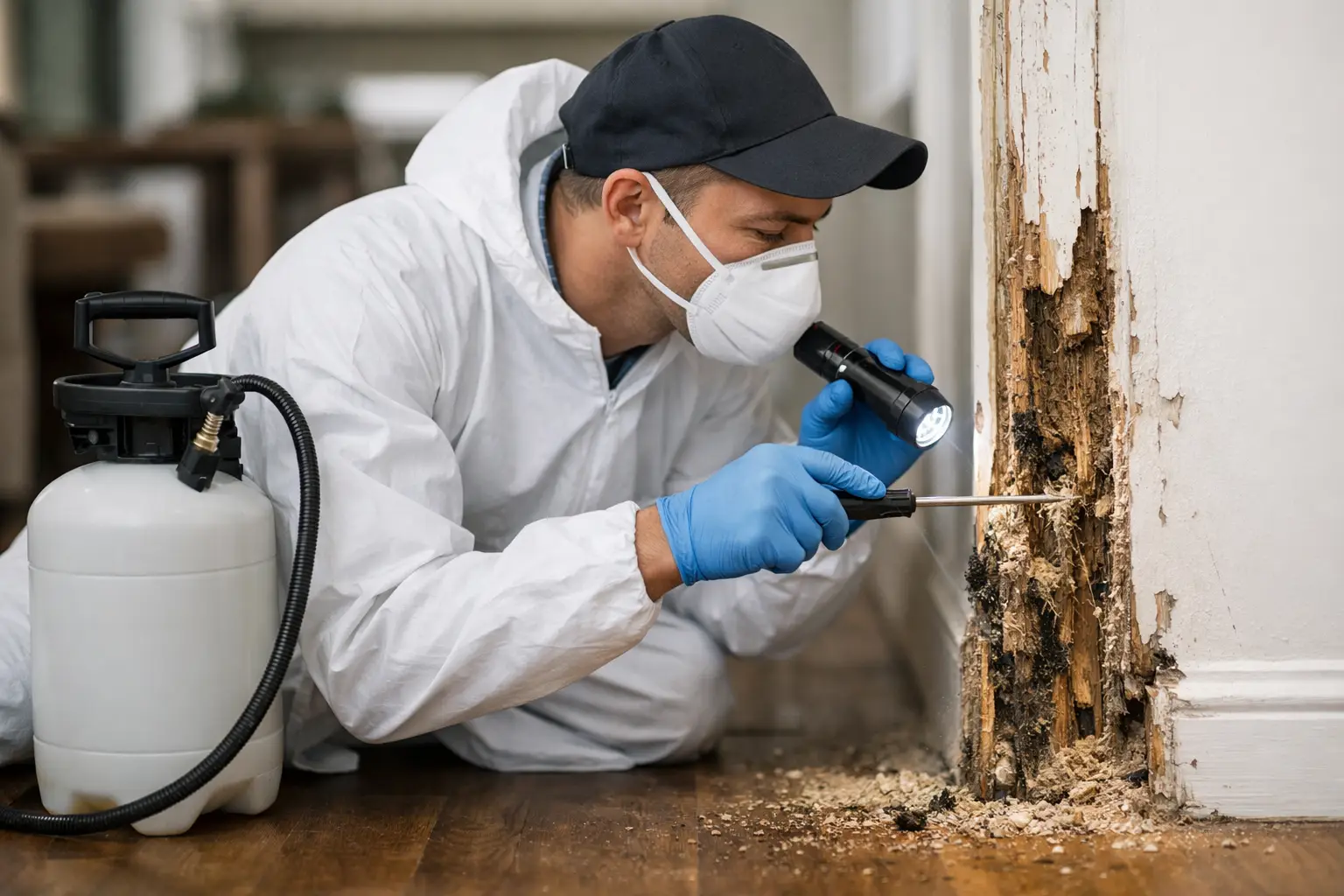
Do not wait for the next annual visit if you see mud-like lines on walls, foundations, pipes, or other surfaces. Subterranean termites build shelter tubes to travel between soil and food sources while staying protected from light and dry air. These tubes can be a strong sign that professional assessment is needed.
Other warning signs include hollow-sounding timber, bubbling paint, doors or windows that suddenly become difficult to close, soft or blistered wood, and fine debris near damaged timber. Swarming winged insects or discarded wings near windows and lights can also indicate termite activity, although a technician should confirm the species before treatment decisions are made.
A single sign does not always prove an active infestation. Water damage, wood decay, and other insects can look similar. That is why a professional inspection matters: it replaces guesswork with a proper assessment of the affected area, the likely source, and the appropriate next step.
When a Neighboring Property Has Termites
Termites do not recognize property boundaries. If a neighboring home, unit, or business has confirmed subterranean termite activity, nearby properties may face increased risk, especially where buildings share landscaping, soil areas, service routes, walls, or close structural connections.
This does not mean every nearby property is infested. It does mean an inspection is a prudent preventive step. Early checks can identify conducive conditions and help owners act before termites establish themselves inside the building.
How Often Should Commercial Properties Be Checked?
For commercial and industrial sites, inspection frequency should reflect the operating environment. A low-risk office with limited timber furnishings may follow an annual schedule. An F&B outlet, warehouse, retail store, school, facility with landscaped grounds, or site with regular deliveries and storage may require more frequent monitoring as part of an integrated pest management plan.
The trade-off is straightforward. More frequent inspections require planning and service investment, but they can reduce the likelihood of business disruption, damaged fixtures, contamination concerns, and avoidable repair costs. For facility managers, the best plan is one that fits the property’s risk profile and can be documented over time.
A professional provider should inspect accessible internal and external areas, assess signs of activity and conducive conditions, and recommend practical prevention measures. The goal is not simply to find termites. It is to reduce the opportunity for termites to enter, feed, and remain undetected.
What Happens During a Professional Termite Inspection?
A thorough inspection begins with a review of the property layout, known concerns, past treatment records, and any changes since the previous visit. The technician then examines high-risk areas such as skirting boards, door frames, cabinetry, utility zones, ground-floor walls, outdoor timber, planters, and locations where moisture or soil contact may occur.
Not every concealed area can be inspected without opening finishes, so a reliable assessment should be clear about its scope and limitations. If activity is found, the technician should explain what was observed, where it is located, what treatment options are suitable, and what follow-up is needed. Prevention may involve correcting moisture issues, reducing timber-to-soil contact, improving housekeeping around storage areas, and establishing ongoing monitoring.
For properties with confirmed activity, one-off action may not be enough. Subterranean termites often travel through hidden routes, and treatment should focus on eliminating the colony risk while protecting vulnerable areas over time. Servcare approaches termite control with tailored inspections and long-term prevention in mind, helping property owners make informed decisions without unnecessary disruption.
Do Not Let a Quiet Problem Set the Schedule
The best time to inspect for termites is before damage forces the issue. Schedule annual checks as a baseline, arrange assessments before property transactions and renovations, and act quickly after moisture problems or suspicious signs appear. A timely inspection protects more than timber – it protects the confidence that your home, workplace, or facility remains safe, well maintained, and ready for the years ahead.