

A cockroach spotted near the high chair or tiny bites appearing after a night of sleep can make any parent want an immediate solution. But safe pest control for children is not about spraying more often or choosing a product simply because its label says “natural.” It means identifying the pest, reducing the conditions that support it, and using the least disruptive effective treatment with clear safety controls.
Children interact with homes differently from adults. They crawl along baseboards, touch floors, put objects in their mouths, and spend time close to the areas where pests hide. A sound pest management plan protects them from both the risks pests can create and unnecessary exposure to treatments.
Why pests require a careful response
Pests are more than an unpleasant sight. Cockroaches can contaminate food surfaces and leave allergens behind, which may aggravate respiratory symptoms in sensitive children. Mosquitoes create bite and disease concerns. Rodents can contaminate stored food, leave droppings in hidden areas, and damage wiring or insulation. Termites do not usually threaten health directly, but unchecked activity can compromise parts of a property over time.
The right response depends on the pest, the extent of activity, and where it is found. One or two ants near a countertop may call for sanitation and sealing entry points. Rodent droppings in a kitchen cabinet, active cockroaches around appliances, or signs of termites require a more thorough inspection and professional plan. Treating every situation as a quick spray job can miss the source of the problem and lead to repeat exposure without lasting results.
What safe pest control for children looks like
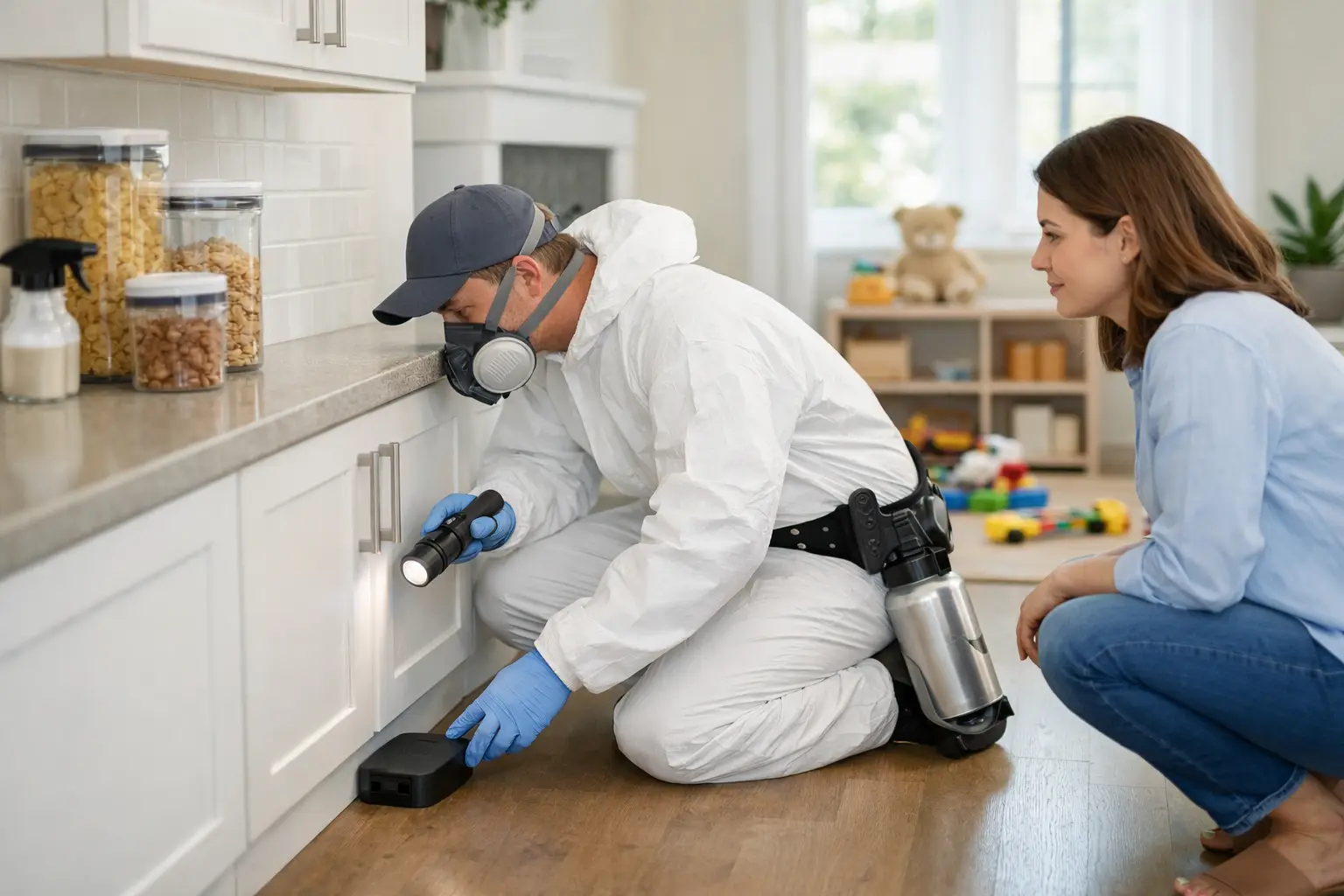
A child-conscious approach starts with inspection, not application. A trained technician should look for pest activity, nesting areas, food and water sources, entry points, and conditions that allow populations to grow. This makes it possible to target treatment where it is needed rather than applying products broadly throughout living spaces.
Targeted treatments can include enclosed bait placements, crack-and-crevice applications, monitoring devices, trapping, exclusion work, and focused treatments in inaccessible voids. The method should be selected for the pest and the environment. For example, bait may be appropriate for cockroach activity in protected locations, while rodent control often requires a combination of trapping, proofing gaps, and removing access to food.
No pest control method is entirely without considerations. Even lower-toxicity or eco-conscious options must be used correctly, stored securely, and kept out of reach of children. The safest option is often the one that reduces pest pressure effectively with the smallest necessary treatment footprint.
Ask what will be used and where
Before treatment begins, ask the provider to explain the pest diagnosis, proposed method, treatment locations, preparation requirements, and any restrictions for children, pets, food, or toys. A reputable professional will answer plainly and provide instructions that fit the property rather than offering vague assurances.
It is also reasonable to ask whether nonchemical measures can reduce the need for treatment, whether the product is intended for indoor residential use, and when treated areas can be used again. Follow the technician’s instructions and the product label exactly. Reentry timing varies by treatment, ventilation, location, and product, so there is no single rule that applies to every home.
Prepare your home with children in mind
Good preparation helps treatment work better and limits unnecessary contact. It also gives parents a chance to address the everyday conditions that pests depend on.
Store food in sealed containers and clean crumbs, spills, and grease from counters, under appliances, and around dining areas. Empty trash regularly, rinse recyclables, and avoid leaving pet food out overnight. Repair dripping pipes and dry damp areas under sinks, since cockroaches, ants, and rodents are drawn to accessible water.
Before a scheduled service, put away children’s toys, blankets, pacifiers, feeding equipment, and loose items from treatment zones. Wash any items that may have been left out against the provider’s preparation instructions. Keep children away from the work area while service is underway, and do not allow them to touch traps, bait stations, monitoring devices, or treated surfaces.
Afterward, resist the urge to scrub every treated crack or crevice immediately. That can reduce the effectiveness of a targeted treatment. Your technician can identify which surfaces may be cleaned normally and which areas should be left undisturbed for a specified period.
Prevention does the most for long-term safety
The most child-friendly pest control program is one that prevents recurring infestations. Prevention reduces the frequency and scale of treatments while protecting the comfort and hygiene of the home.
Start by closing gaps around pipes, utility lines, doors, and windows. Install door sweeps where needed and repair torn screens. Keep cardboard, clutter, and stored items organized, especially in utility spaces and under sinks, because these areas can provide cover for cockroaches and rodents. Outdoors, remove standing water from containers, maintain drains, and keep vegetation from pressing tightly against the building.
For mosquitoes, regular source reduction is particularly valuable. Small amounts of standing water in planters, trays, drains, or outdoor containers can support breeding. Consistent inspection is more effective than waiting until bites become frequent.
For termites, watch for moisture issues, damaged wood, mud tubes, or changes around timber features. A professional inspection is the dependable way to confirm termite activity, because much of the damage can remain hidden behind walls, flooring, or built-in fixtures.
Avoid common DIY mistakes
Parents often reach for aerosol sprays because they are readily available and seem fast. In practice, spraying visible insects can scatter certain pests into new hiding places, while leaving eggs, nesting sites, and access points untouched. Overusing products can also create avoidable exposure in areas where children play.
Avoid mixing cleaning chemicals or pesticides, applying products more frequently than directed, or using outdoor products indoors. Do not transfer pest control products into unlabeled containers. Keep all products in their original packaging, in a locked cabinet or secured location that children cannot access.
Homemade remedies have limits as well. Some may have little effect on an established infestation, while essential oils and other “natural” ingredients can still irritate skin or airways if misused. Natural does not automatically mean suitable for every child, surface, or situation.
When professional help is the safer choice
Professional support is especially valuable when pests keep returning, activity is widespread, or the issue involves rodents, termites, large cockroach populations, or persistent mosquito breeding. It is also the better option when you are unsure what pest you are seeing or where it is coming from.
An experienced provider can distinguish between occasional pest entry and an active infestation, then build a plan around inspection, targeted control, and prevention. This avoids the uncertainty of repeated trial-and-error treatments. For families, the value is not simply pest removal. It is having a clear process, appropriate safeguards, and guidance on how to keep the problem from returning.
Servcare approaches pest management with this long-term focus: finding the source, applying science-backed solutions carefully, and helping households protect the spaces children use every day.
A calm, well-planned response is often the most protective one. When you address pests early, keep children away from treatment areas, and prioritize prevention between services, your home can stay both more comfortable and better protected.