

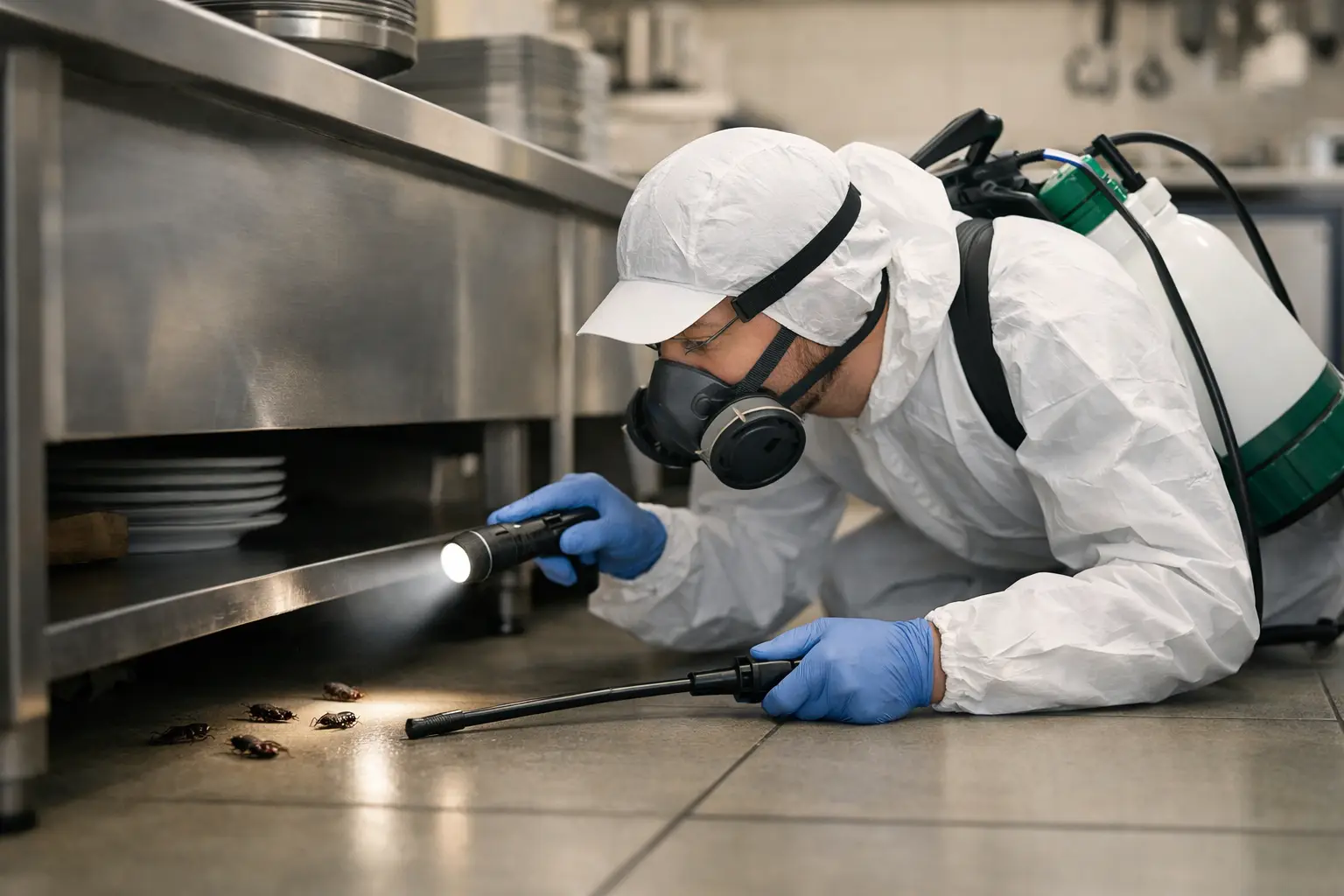
A single cockroach seen near a prep counter is rarely a single-cockroach problem. For restaurants, cafes, caterers, bakeries, and food production facilities, cockroach control for food businesses must protect far more than appearances. It helps protect ingredients, food-contact surfaces, staff confidence, customer trust, and the standards that keep operations running.
Cockroaches are drawn to the conditions food businesses naturally create: warmth, moisture, food residue, cardboard, storage areas, floor drains, and hidden voids behind equipment. Their ability to hide during the day means an infestation can grow unnoticed until sightings become frequent. At that point, a quick spray may reduce visible activity but leave the breeding population and entry points untouched.
The most dependable solution is a prevention-led program built around inspection, sanitation, exclusion, targeted treatment, and regular monitoring. Each part matters because a food business can be clean and still have a cockroach issue if pests are entering through drains, deliveries, plumbing gaps, or shared building areas.
Why Cockroaches Are a Serious Food Safety Risk
Cockroaches move through drains, waste areas, sewers, and grease-prone spaces before traveling across shelves, packaging, utensils, and food preparation zones. In doing so, they can spread bacteria and other contaminants. Their droppings, shed skins, egg cases, and odor can also signal unsanitary conditions to customers, employees, inspectors, and tenants.
For an F&B operator, the impact is operational as well as hygienic. A complaint, a failed inspection, or a social media post showing pest activity can harm a reputation that took years to build. Staff may also spend valuable time reacting to sightings instead of maintaining service standards.
The risk varies by site. A small coffee shop may struggle with cockroaches around sinks and under-counter equipment, while a central kitchen may have greater exposure around delivery bays, bulk stores, floor drains, and waste handling areas. In multi-tenant properties, pests may also move between units through service risers, false ceilings, plumbing routes, and shared refuse rooms.
Cockroach Control for Food Businesses Starts With Inspection
Effective control begins by identifying the species, infestation level, hiding places, food and water sources, and likely pathways into the premises. This is why a professional inspection is more useful than treating only where cockroaches were last seen.
German cockroaches, for example, commonly breed close to warmth and moisture. They may harbor behind refrigerators, coffee machines, dishwashers, electrical panels, wall-mounted equipment, and inside cabinet hinges. Larger cockroaches are more often linked to drains, external areas, plumbing defects, and access from sewers or refuse zones. The treatment plan should reflect those differences.
A thorough inspection should cover food preparation and washing areas, dry storage, receiving zones, staff lockers, ceiling voids, equipment gaps, grease traps, drains, waste areas, and external access points. Monitoring devices can help reveal activity that staff do not see during operating hours. They also provide a baseline for measuring whether control efforts are working.
The goal is not simply to find cockroaches. It is to understand why they are surviving on the site. Without that information, repeat infestations are much more likely.
Remove the Conditions That Help Cockroaches Thrive
Sanitation is essential, but it should be practical for a working food environment. The standard is not perfection during a busy shift. It is consistent removal of the food, water, and shelter cockroaches need after service and between deliveries.
Focus on the less visible areas where residue builds up over time. Grease behind cooklines, crumbs beneath shelving, spills around syrup stations, food debris under refrigerator units, and standing water below sinks can sustain a population even when front-of-house areas look spotless. Cardboard should not remain in storage longer than necessary because it provides both shelter and a route for pests arriving with supplies.
Waste management also deserves close attention. Bins should be lined, covered, emptied on schedule, and cleaned regularly. Waste rooms and exterior disposal points need the same level of care as kitchen spaces. If a refuse area is heavily infested, treatment inside the restaurant alone may offer only temporary relief.
Drains require a balanced approach. They should be cleaned according to the facility’s approved hygiene procedures, kept free of organic buildup, and checked for damage or dry traps. However, drain treatment is not a substitute for locating broader harborages. A cockroach seen near a drain may be using it as a route, not necessarily breeding inside it.
Exclusion Turns Treatment Into Long-Term Prevention
Even the right treatment cannot provide lasting control if cockroaches can keep entering. Food businesses should inspect for gaps around pipes, conduits, doors, floor junctions, wall cracks, and utility penetrations. Door sweeps, intact seals, properly screened vents, and well-maintained plumbing reduce access and limit movement between spaces.
Equipment layout matters too. Large appliances pushed tightly against walls can create inaccessible harborages where heat, grease, and moisture collect. Where feasible, leave enough clearance for cleaning and inspection. If a fixed unit cannot be moved routinely, build its cleaning schedule into site procedures rather than waiting for signs of pest activity.
Receiving practices are another overlooked control point. Deliveries can introduce cockroaches and egg cases in cartons, crates, or equipment packaging. Staff should inspect incoming goods, remove outer cardboard promptly, and avoid transferring unneeded packaging into food storage areas. This is especially valuable for businesses that receive frequent deliveries from multiple suppliers.
Use Targeted Professional Treatment, Not Routine Over-Spraying
In a food environment, treatment must be effective while being carefully managed around people, products, and food-contact surfaces. Broad, repeated spraying is not a long-term strategy. It can disturb cockroaches and drive them deeper into walls or equipment, while failing to reach eggs and hidden nesting sites.
Professional cockroach management typically relies on targeted applications, baiting, insect growth regulators where appropriate, crack-and-crevice treatment, and monitoring. The exact method depends on the species, layout, infestation severity, operating schedule, and site hygiene conditions. Some treatments work best when cockroach numbers are low and food competition is reduced. Others are needed when activity is established across multiple areas.
A qualified pest management provider should coordinate treatment with the business so food, utensils, and preparation surfaces are protected according to the treatment requirements. Clear communication matters. Managers and staff need to know what was found, what was treated, what housekeeping actions are required, and when follow-up monitoring will take place.
Servcare approaches cockroach management as an ongoing protection plan, combining inspection, science-backed treatment methods, and preventive recommendations tailored to the site. For food businesses, that means addressing the immediate infestation without losing sight of the conditions that allow it to return.
Build Cockroach Prevention Into Daily Operations
The strongest programs make pest prevention part of normal site management rather than a task reserved for audit season. Kitchen staff, cleaners, receiving teams, and managers all have a role in spotting changes early.
Train employees to report sightings promptly, including the location, time, and what was happening nearby. A cockroach found in a dry store, for example, may point to incoming packaging. Repeated sightings under one sink may indicate a plumbing leak or inaccessible food debris. Accurate reporting helps a technician investigate patterns instead of guessing.
Keep a simple record of pest activity, corrective actions, sanitation checks, and service reports. This supports internal accountability and makes it easier to demonstrate that the business is actively managing hygiene risks. It also helps distinguish a one-time entry from a recurring issue that needs building-level action.
Follow-up is where many control efforts succeed or fail. Cockroach eggs can survive an initial treatment, and hidden populations may emerge after activity appears to have stopped. Scheduled inspections and monitoring confirm whether numbers are declining and whether new hotspots have developed. The right frequency depends on risk factors such as the type of food operation, pest history, neighboring units, waste arrangements, and building condition.
A food business should never have to choose between operational continuity and proper pest control. With early reporting, disciplined housekeeping, secure access points, and professional monitoring, cockroach activity can be controlled before it becomes a food safety or reputation problem. The best time to act is when the first sign appears, while the solution is still focused, manageable, and far less disruptive.