

A cockroach seen near a kitchen drain, mosquito activity around a corridor, or fresh rodent droppings in a storeroom rarely points to a single pest problem. It points to conditions that allow pests to feed, breed, shelter, or enter. Integrated pest management Singapore property owners and businesses can rely on addresses those conditions alongside treatment, helping to stop the current issue without relying on repeated, blanket spraying.
For homes, the benefit is greater reassurance around family areas and daily routines. For F&B outlets, offices, retail spaces, and industrial facilities, it supports hygiene, operational continuity, and confidence among customers and staff. The goal is practical: reduce pest activity now, then make recurrence far less likely.
What Integrated Pest Management Means
Integrated pest management, often called IPM, is a structured approach to pest control. It begins with inspection and pest identification, followed by a treatment plan based on the pest species, infestation level, property layout, and activity patterns. Just as importantly, it includes the corrective measures that remove the reasons pests are present.
This matters because different pests behave differently. Cockroaches may travel through plumbing gaps, floor traps, and hidden voids. Rodents may enter through small openings near service areas or loading bays. Mosquitoes need water to breed, sometimes in overlooked places such as trays, drains, gutters, or outdoor containers. Subterranean termites can move from the ground into a building through concealed routes, causing damage before visible signs appear.
An IPM program does not assume that one product or one visit is the answer. It uses suitable professional methods where they are needed, while improving sanitation, exclusion, moisture control, and monitoring around the property. This makes treatment more targeted and supports a safer, more sustainable outcome.
Why One-Off Treatments Often Fall Short
A single treatment can reduce visible pest activity, especially during an early or localized infestation. However, pests often return when food sources, entry points, breeding sites, or harborages remain unchanged. Seeing fewer pests for a few days is not always the same as resolving the infestation.
Consider a commercial kitchen with recurring cockroach activity. Treatment may quickly reduce the active population, but grease buildup behind equipment, damp areas below sinks, poorly sealed gaps, and overnight food residue can continue to support survivors. The same principle applies to rodents in a warehouse where door gaps, unsecured waste, and cluttered storage create easy access and shelter.
The trade-off is that integrated pest management requires cooperation and follow-through. A professional can identify risks and apply appropriate treatment, but a lasting result may also depend on repairs, cleaning routines, waste management, and staff awareness. That extra effort is usually far less disruptive and costly than managing repeated outbreaks.
The Core Steps in an IPM Program
Inspection Finds the Real Source
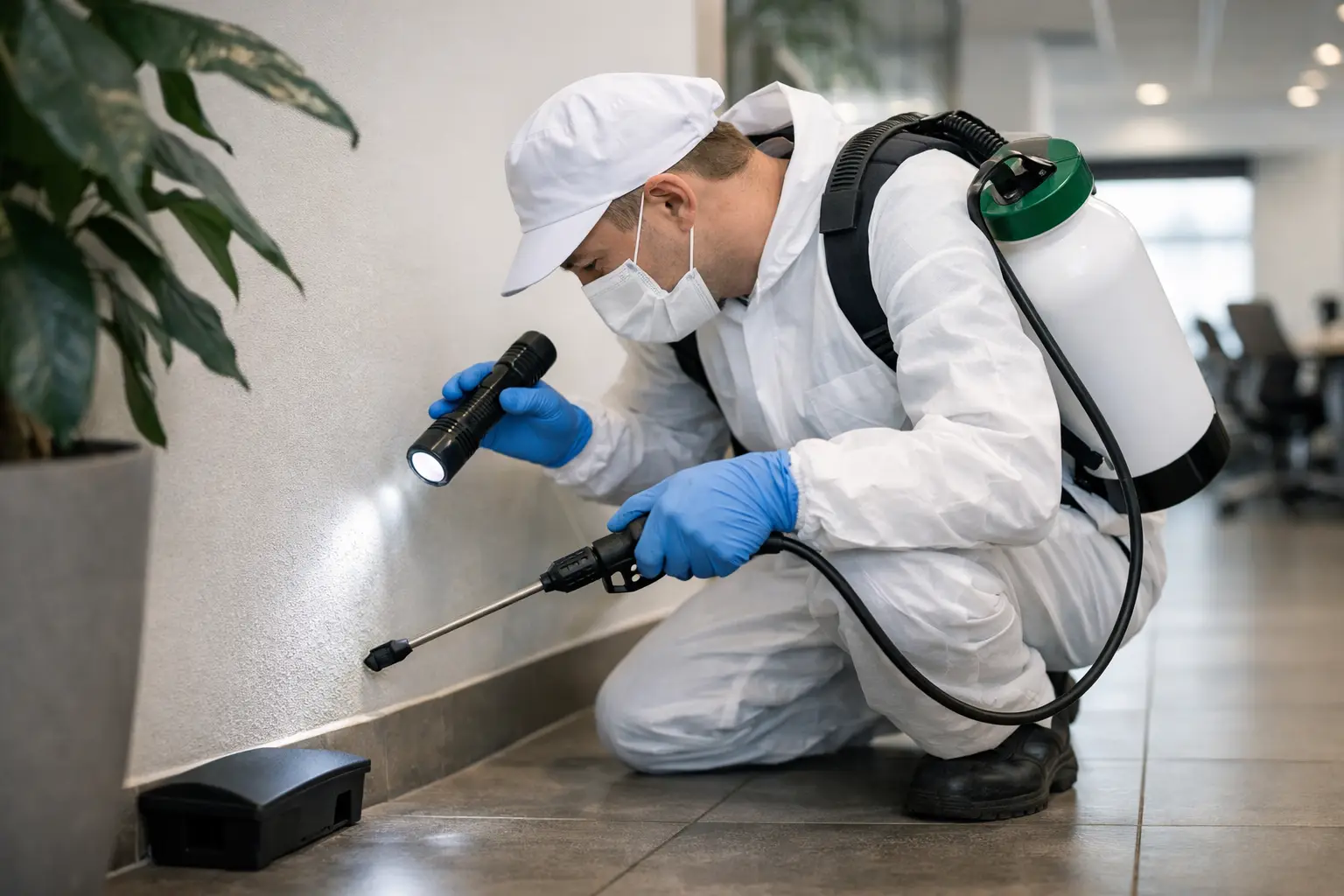
A thorough inspection is the foundation of effective pest management. Rather than treating only where a pest was seen, technicians assess likely entry routes, nesting or breeding areas, food and water sources, and signs of hidden activity. This may include checking drains, false ceilings, utility penetrations, external perimeters, waste areas, landscaping edges, and high-risk storage zones.
For businesses, inspection should also consider operational realities. A pest issue near a loading bay may be linked to delivery schedules or waste handling. In an F&B setting, the risk may increase after closing hours, when warmth, moisture, and food traces are available. Understanding these patterns helps direct treatment where it will have the greatest effect.
Identification Guides the Right Method
Not every crawling insect is a cockroach, and not every flying insect requires mosquito treatment. Correct identification prevents wasted effort and helps determine the right control method. A technician should assess the species, life stage, level of activity, and conditions contributing to the issue before recommending action.
This is particularly important for termites. Subterranean termite control should not be treated like a general insect problem. It requires a detailed assessment of affected areas, possible access routes, and the building conditions that may support termite activity. Early professional intervention can help protect structural elements and reduce the risk of more extensive damage.
Targeted Treatment Reduces Exposure
When treatment is needed, IPM favors targeted application over unnecessary broad coverage. Depending on the pest and site, this may involve carefully placed baits, traps, residual treatments in suitable locations, larval control measures, or other professional-grade methods.
The best choice depends on the environment. A family home with children or pets requires careful planning around access and use of treated areas. An operating restaurant needs methods that respect food safety procedures and minimize disruption. A facility with sensitive equipment may need a different approach again. Professional advice should be specific to the site, not based on a generic package.
Prevention Keeps Pressure Off the Property
Prevention turns pest control from a reaction into an ongoing protection plan. Small changes often have a meaningful effect: sealing openings around pipes and doors, repairing leaking fixtures, improving drain maintenance, storing food in closed containers, and removing standing water promptly.
In commercial settings, prevention also involves process. Waste should be managed on a reliable schedule, inventory should be stored to allow inspection and cleaning, and staff should know how to report early signs of activity. These measures do not replace professional treatment when an infestation is active, but they make the environment much less favorable to pests.
Monitoring Confirms Progress
Pest activity can change with weather, construction nearby, occupancy patterns, and seasonal conditions. Monitoring allows a pest management program to respond before a minor issue grows. Traps, bait stations, service records, inspection findings, and sighting reports can reveal where activity is increasing or where prevention measures need adjustment.
For larger properties and regulated environments, documentation is especially valuable. Clear reports give facility managers visibility into findings, treatment actions, recommendations, and follow-up needs. This supports internal hygiene standards and helps demonstrate that pest risks are being managed responsibly.
Integrated Pest Management for Common Urban Pests
Cockroach control often combines targeted treatment with sanitation and access-point management. Kitchens, pantries, service risers, drains, and electrical voids may all require attention. The focus is not simply to remove visible cockroaches, but to disrupt the conditions that allow the population to persist.
Mosquito control starts with reducing breeding opportunities. Removing stagnant water and maintaining drainage are essential, but professional inspection can identify less obvious breeding sites around a property. Where mosquito activity is established, appropriate treatment and continued surveillance help reduce risk.
Rodent control requires more than placing traps. Effective control considers food availability, shelter, travel paths, and entry points. Exclusion work is central because rodents can re-enter quickly if gaps remain. In commercial areas, good waste containment and organized storage are equally important.
For subterranean termites, speed and precision matter. Mud tubes, hollow-sounding timber, damaged wood, or discarded wings can be warning signs, but termites may remain hidden. A professional assessment helps determine whether active infestation is present and what treatment approach is appropriate for the structure.
Choosing a Professional IPM Partner
A dependable provider should explain what was found, why it matters, and what will happen next. Look for an NEA-licensed pest management company with proven experience, trained technicians, and access to technical or entomologist support. The provider should be willing to tailor recommendations to your site rather than pushing a one-size-fits-all treatment.
It is also reasonable to ask about safety measures, treatment timing, preparation requirements, and follow-up. Clear answers build confidence and help households and businesses plan with minimal disruption. Servcare brings more than two decades of operational experience to this work, combining science-backed methods with practical prevention guidance for properties that need reliable protection.
When to Act
Do not wait for pests to become highly visible. Repeated sightings, droppings, gnaw marks, unusual odors, insect activity near food or drains, termite signs, or recurring mosquito presence are all reasons to arrange an inspection. Early action usually provides more treatment options and reduces the chance of contamination, damage, or disruption.
The most useful next step is often a careful look at the property through a pest’s perspective: where can it enter, what can it eat, where can it hide, and where can it breed? Addressing those questions early protects more than a building. It protects the comfort, health, and peace of mind of the people inside.